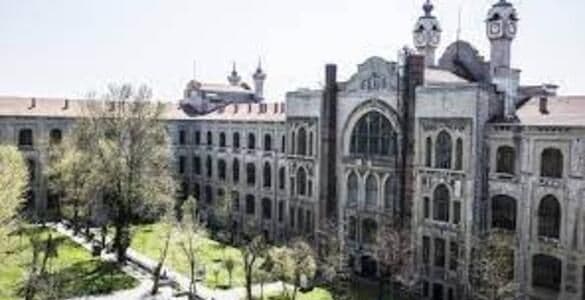
The Bioengineering (English) program at Marmara University offers a four-year undergraduate education that combines engineering principles with life sciences to address medical, environmental and technological challenges. From the beginning, students learn biology, chemistry, molecular biology and engineering fundamentals — giving them a solid base in both biological sciences and technical understanding. As they progress, the curriculum covers bioprocess engineering, biomaterials, biomedical device design, systems biology, and biotechnology — preparing students to work on real-world problems in health, environment, or industry.
Throughout the program, students get both theoretical knowledge and practical skills: they study biological systems, design experiments, understand biochemical processes and learn to apply engineering methods — bridging the gap between biology and engineering. Graduates leave with a versatile profile: able to work in labs, research, biotech companies, environmental engineering, medical device development or further studies. The English instruction gives global relevancy, while the engineering–life sciences combination opens many paths in a changing world.
Key Facts
Program Structure
Semester 1 – Foundations of Bio & Engineering Sciences
- Introductory Biology / Life Sciences Basics
- Chemistry Basics / General Chemistry
- Mathematics / Calculus for Engineering
- Academic English & Communication Skills
- General Education / Supporting Courses
Semester 2 – Core Sciences & Introduction to Bioengineering
- Cell Biology / Molecular Biology Basics
- Physics for Engineering / Biophysics Foundations
- Biostatistics / Basic Statistics & Data Analysis
- Chemistry II / Biochemistry Fundamentals
- General Supporting / Elective Course
Semester 3 – Bioengineering Fundamentals
- Biochemistry & Metabolism Engineering Introduction
- Bioprocess Engineering I (e.g. reaction engineering, mass-transfer basics)
- Biomaterials & Materials Science Basics
- Systems Biology / Biological Systems Modeling Basics
- Elective / Supporting Course
Semester 4 – Applied Bioengineering & Lab-based Courses
- Bioprocess Engineering II (process design, control)
- Biomedical Device Design / Biomedical Engineering Basics
- Biomaterials & Drug Delivery Systems Basics
- Bioethics & Professional Responsibilities in Bioengineering
- Elective / Supporting Course
Semester 5 – Advanced Biotechnology & Specialisation Areas
- Bioprocess Design & Management
- Environmental / Industrial Biotechnology
- Computational Bioengineering / Modeling & Simulation
- Elective Course (e.g. proteomics, systems biology, biomaterials)
- Seminar / Practical Workshop
Semester 6 – Biomedical & Biotechnological Applications
- Medical Device or Tissue Engineering Basics
- Proteomics / Molecular Engineering / Advanced Biotechnology Topics
- Bioprocess Dynamics & Control or Downstream Processes
- Research Project / Laboratory Practice
- Elective / Specialization Course
Semester 7 – Research, Design & Industry-Oriented Training
- Bioengineering Project (lab or industry oriented)
- Biotechnology & Environmental Applications or Biomedical Research Topics
- Elective / Specialization Courses (e.g. biomaterials, systems biology, bioprocess management)
- Seminar / Internship or Industry Collaboration
Semester 8 – Graduation Project & Career Preparation
- Final Research Project / Graduation Thesis (Bioengineering / Biotechnology domain)
- Advanced Elective or Specialization Courses
- Professional Ethics & Regulation in Bioengineering / Biotechnology Industry
- Career Preparation & Planning Courses (or Seminar)
Career Opportunities
Graduates of this Bioengineering program are prepared for a variety of roles in biotechnology, biomedical engineering, pharmaceutical industry, environmental engineering, research laboratories, medical device development, or regulatory affairs. They may work as bioengineers, bioprocess engineers, research scientists, quality control analysts, biomedical device developers, or work in environmental biotechnology and sustainability. The combination of life-sciences and engineering opens paths in hospitals, biotech firms, research institutions, environmental agencies or universities. Graduates can also continue to postgraduate studies (master’s / PhD) in bioengineering, biomedical engineering, biotechnology, systems biology or related fields — giving both scientific and professional flexibility.
Why Choose This Program
Choosing the Bioengineering (English) program at Marmara University means entering a field with broad impact — combining biology, technology and engineering to solve real problems in health, industry, and environment. You will learn both living systems and engineering tools: understand cells, molecules, processes — and design systems, products or solutions based on that knowledge.
The program gives you versatility: you can work in research labs, medical or pharmaceutical industry, biotech companies, environmental projects or continue academic studies. With English education and a modern curriculum covering both theoretical and practical aspects, you’ll be ready for national or international work. If you are curious about biology, technology and want a dynamic career that bridges science and engineering — this Bioengineering program is a strong choice.
Contact Information
Marmara University – Faculty of Engineering, Department of Bioengineering
Göztepe Campus,
Kadıköy, Istanbul, Türkiye
Tel: +90 216 777 35 00
Fax: +90 216 777 35 10
Email: bioengineering@eng.marmara.edu.tr
