Bachelor of Arts · Full-time · On Campus

Stanford University
Stanford, United States
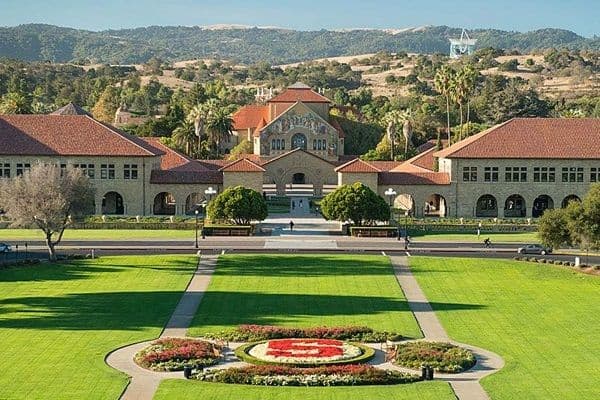
The Master of Science in Aeronautics and Astronautics is designed to provide students with a comprehensive understanding of aerospace engineering principles and applications. The program covers aerodynamics, propulsion systems, spacecraft design, and flight mechanics, enabling students to analyze and solve complex engineering challenges in both atmospheric and space environments. Students gain hands-on experience in computational modeling, laboratory experiments, and design projects, preparing them to develop innovative solutions in aviation, space exploration, and related high-technology industries.
Throughout the program, students engage in research projects, simulations, and collaborative coursework that emphasize critical thinking, problem-solving, and technical proficiency. The curriculum includes courses in aerodynamics, control systems, spacecraft systems, and advanced propulsion, allowing graduates to translate theoretical knowledge into practical engineering applications. By the end of the program, students possess the technical expertise, research experience, and professional insight necessary to excel in academia, aerospace industry, and governmental or private space programs.
Semester 1 – Foundations in Aeronautics and Astronautics
Semester 2 – Advanced Aerospace Systems
Semester 3 – Applied Research & Specialization
Semester 4 – Master’s Thesis & Capstone Project
Graduates of this program are prepared for careers in aerospace engineering, spacecraft design, aeronautical research, defense and aviation industries, and space exploration programs. They can work in government agencies, private aerospace companies, research laboratories, or space technology startups. The program develops analytical, computational, and design skills, enabling graduates to tackle complex engineering problems, develop innovative aerospace solutions, and contribute to cutting-edge technology development. Alumni are positioned to influence aircraft and spacecraft design, improve system efficiency, and advance aerospace research and innovation.
This program offers a rigorous and interdisciplinary approach to aerospace engineering, combining theoretical foundations with practical, hands-on projects. Students gain advanced training through laboratory experiments, computational modeling, and design projects, allowing them to address real-world challenges in aviation and space systems. The curriculum emphasizes problem-solving, innovation, and technical expertise, preparing graduates to lead research, engineering, and design initiatives in aerospace technology. By choosing this program, students acquire the knowledge, skills, and professional experience necessary to excel in aerospace engineering, space exploration, and high-technology industries.
For further information, please contact the admissions office at:
Phone: +1 650 000 0000
Email: admissions@standord.edu
Address: University of Standord, 450 Serra Mall, Stanford, CA 94305, United States
Bachelor of Arts · Full-time · On Campus
Stanford University
Stanford, United States
Bachelor of Science · Full-time · On Campus
Stanford University
Stanford, United States
Bachelor of Science · Full-time · On Campus
Stanford University
Stanford, United States
Bachelor of Science · Full-time · On Campus
Stanford University
Stanford, United States
