Master of Arts · Full-time · On Campus

University of Michigan
Ann Arbor, United States
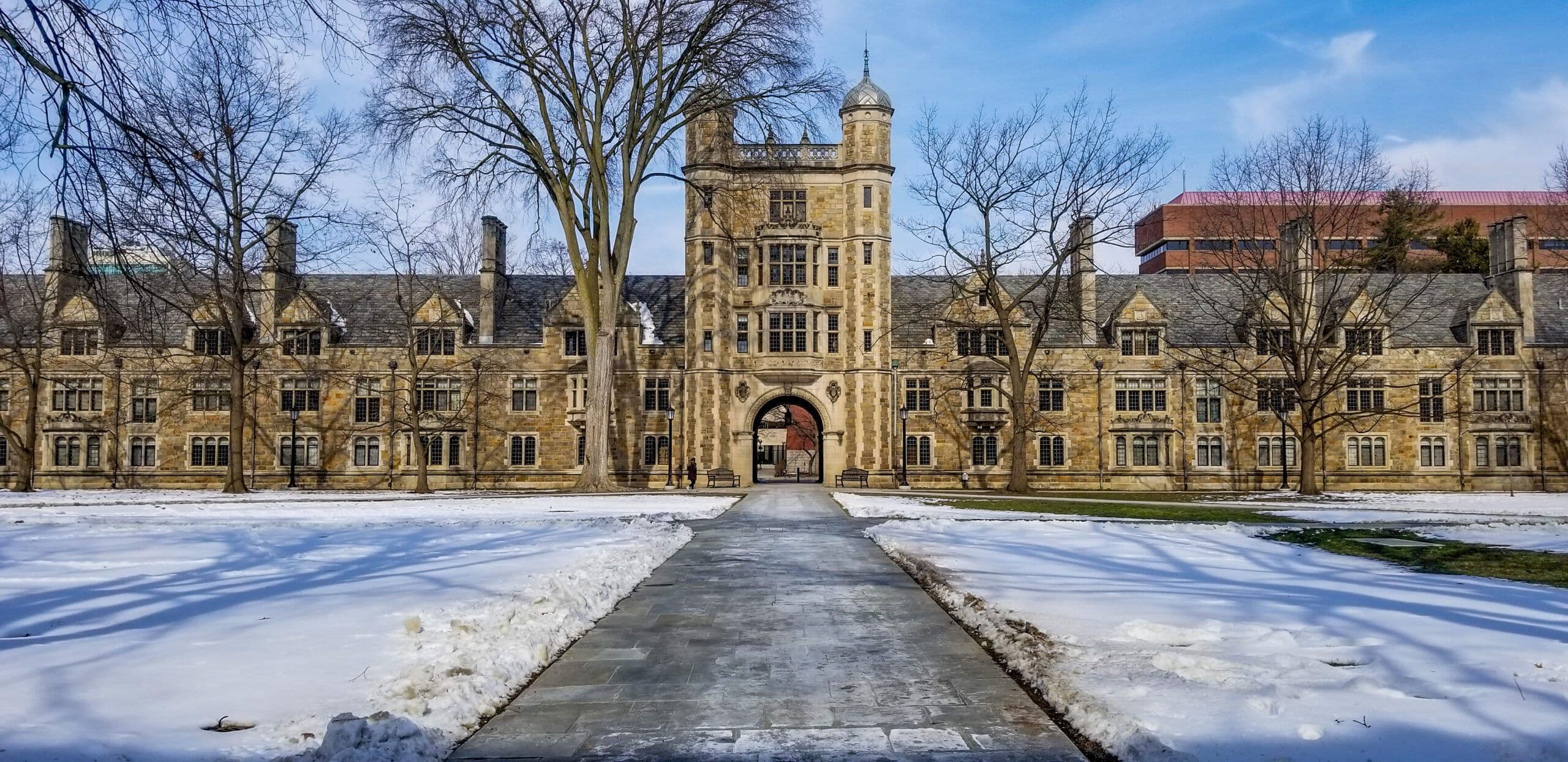
The Aerospace Engineering Bachelor of Science program at University of Michigan offers a comprehensive study of the design, development, and analysis of aircraft and spacecraft. The program integrates aerodynamics, propulsion, structural mechanics, and systems engineering, equipping students with analytical, problem-solving, and technical skills. Learners engage in laboratory experiments, computational simulations, and design projects, developing the ability to design, test, and optimize aerospace systems. The program emphasizes engineering principles, technical analysis, and applied research, preparing graduates for careers in aviation, space exploration, and aerospace industries.
As a four year full time program, it provides a structured progression from foundational courses in mathematics, physics, and engineering principles to advanced studies in aerodynamics, propulsion systems, and aerospace design projects. Students strengthen their expertise in flight mechanics, propulsion, structural analysis, and systems engineering, applying analytical and technical skills to aerospace challenges. The program equips graduates to pursue careers in aircraft and spacecraft design, aerospace manufacturing, research, or to continue advanced studies in aerospace engineering, mechanical engineering, or related fields.
Year 1 - Foundations in Aerospace Engineering
• Introduction to Aerospace Engineering
• Calculus and Linear Algebra
• General Physics
• Engineering Mechanics and Materials
Year 2 - Intermediate Aerospace Studies
• Aerodynamics I
• Thermodynamics and Propulsion Basics
• Flight Mechanics
• Laboratory and Computational Methods
Year 3 - Advanced Aerospace Applications
• Propulsion Systems
• Aerostructures and Materials
• Control Systems and Flight Dynamics
• Applied Design Projects
Year 4 - Capstone and Independent Research
• Senior Design Project
• Aerospace Systems Integration
• Computational Simulations and Testing
• Academic Portfolio and Presentation
Graduates of this program pursue careers in aerospace design, aviation, spacecraft development, research, and engineering consulting where analytical, technical, and design skills are essential. Many work as aerospace engineers, propulsion specialists, flight dynamics analysts, structural engineers, or systems integration engineers, applying expertise in aerodynamics and engineering principles to professional and industrial contexts. Others continue in graduate programs in aerospace engineering, mechanical engineering, or space systems engineering. The program’s emphasis on design projects, computational simulations, and technical analysis ensures graduates are prepared to succeed in professional and academic environments.
Students choose this program for its combination of aerodynamics, propulsion systems, and applied engineering, which equips them to design and optimize aerospace technologies. The curriculum emphasizes analytical skills, technical problem-solving, practical application, and interdisciplinary engineering, preparing learners to work in aerospace manufacturing, research, aviation, and space exploration roles. Students benefit from faculty mentorship, hands-on laboratory projects, and applied design challenges that enhance technical, analytical, and problem-solving skills. By focusing on aerospace engineering and systems design, the program ensures graduates are prepared for careers in aviation, aerospace industries, research, and advanced studies.
For further information, please contact the admissions office at:
Phone: 734-764-8129
Email: rackadmis@umich.edu
Address: Graduate Admissions Office, University of Michigan, Ann Arbor, MI 48109, USA
Master of Arts · Full-time · On Campus
University of Michigan
Ann Arbor, United States
Bachelor of Science · Full-time · On Campus
University of Michigan
Ann Arbor, United States
Bachelor of Science · Full-time · On Campus
University of Michigan
Ann Arbor, United States
Bachelor of Science · Full-time · On Campus
University of Michigan
Ann Arbor, United States
