
American Studies
The American Studies program at University of Stanford provides an extensive interdisciplinary framework designed to help students understand the cultural, political, and social transformations that have shaped both the United States and Australasian regions. By integrating history, sociology, literature, and regional studies, the curriculum supports a well-rounded academic journey that encourages students to build meaningful connections between major historical developments and contemporary issues. Throughout this progression, learners develop strong analytical abilities while gaining experience in critical inquiry, interpretive research, contextual evaluation, and comparative assessment, all of which strengthen their academic maturity.
Over the course of four years, students engage with diverse scholarly materials and participate in seminars, writing-intensive courses, and structured research projects that allow them to develop an informed, nuanced understanding of regional identities. This program emphasizes the importance of understanding cultural patterns within broader global contexts, guiding learners to evaluate social narratives with precision and depth. As they advance, students refine their skills in historical synthesis, cultural analysis, academic methodology, and cross-regional interpretation, forming a strong foundation for both professional pathways and advanced academic study.
Key Facts
Key Facts
- Program Title: American Studies
- Degree Type: Bachelor of Arts
- Duration: 4 years
- Mode of Study: Full-time, On Campus
- Application Deadline: 05 January 2026
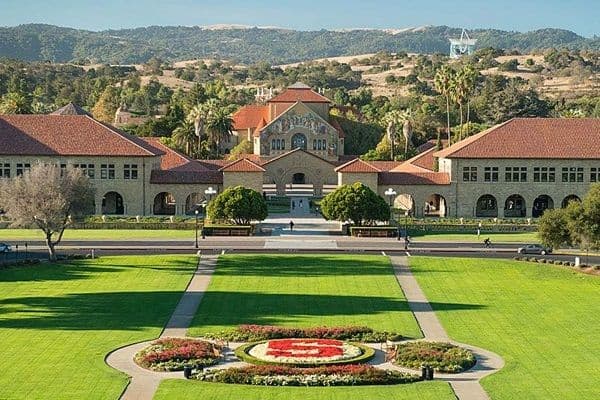
- Location: Stanford University, United States
- Field of Study: American and Australasian studies
- Language of Instruction: English
Program Structure
Year 1 – Foundations in American & Australasian Studies
· Introduction to American Cultural History
· Australasian Social and Political Landscapes
· Academic Writing and Research Techniques
· Themes in Modern Literature
Year 2 – Developing Analytical Perspectives
· Social Transformations in the United States
· Indigenous Cultures of Australasia
· Media, Identity, and Society
· Research Methods in Humanities
Year 3 – Specialization & Applied Study
· Contemporary American Political Issues
· Comparative Cultural Dynamics
· Fieldwork or Regional Case Study
· Electives in History, Literature, or Sociology
Year 4 – Thesis & Advanced Scholarship
· Bachelor’s Thesis
· Advanced Seminar in Regional Studies
· Theory and Method in Cultural Analysis
· Academic Portfolio and Presentation Development
Career Opportunities
Graduates of this program are equipped with broad analytical and communication skills that allow them to contribute meaningfully across multiple sectors where cultural understanding and critical thinking are highly valued. Many find fulfilling positions in cultural research, public policy, education sectors, and media organizations, applying their ability to interpret social narratives, evaluate regional developments, and present complex ideas with clarity. The interdisciplinary training also supports adaptability in evolving fields, preparing students for roles involving program coordination, community engagement, writing and analysis, and long-term project development. Additionally, the program serves as a strong foundation for graduate-level work in humanities, communication, political studies, or regional cultural studies.
Why Choose This Program
This program appeals to students who seek an academic environment that encourages depth, flexibility, and continuous intellectual growth through an interdisciplinary approach. By engaging with multiple perspectives and regional contexts, learners develop a refined understanding of how cultural identities form and shift over time. The curriculum is structured to promote independent reasoning, strong research habits, and meaningful participation in academic discussions. With opportunities to explore subjects that connect historical events to contemporary issues, students gain both perspective and confidence throughout their studies. This development is strengthened by comprehensive interdisciplinary training, allowing graduates to enter academic or professional spaces with clarity, adaptability, and a solid grounding in cultural analysis.
Contact Information
For further information, please contact the admissions office at:
Phone: +1 650 000 0000
Email: admissions@standord.edu
Address: University of Standord, 450 Serra Mall, Stanford, CA 94305, United States
