Master of Science · Full-time · On Campus

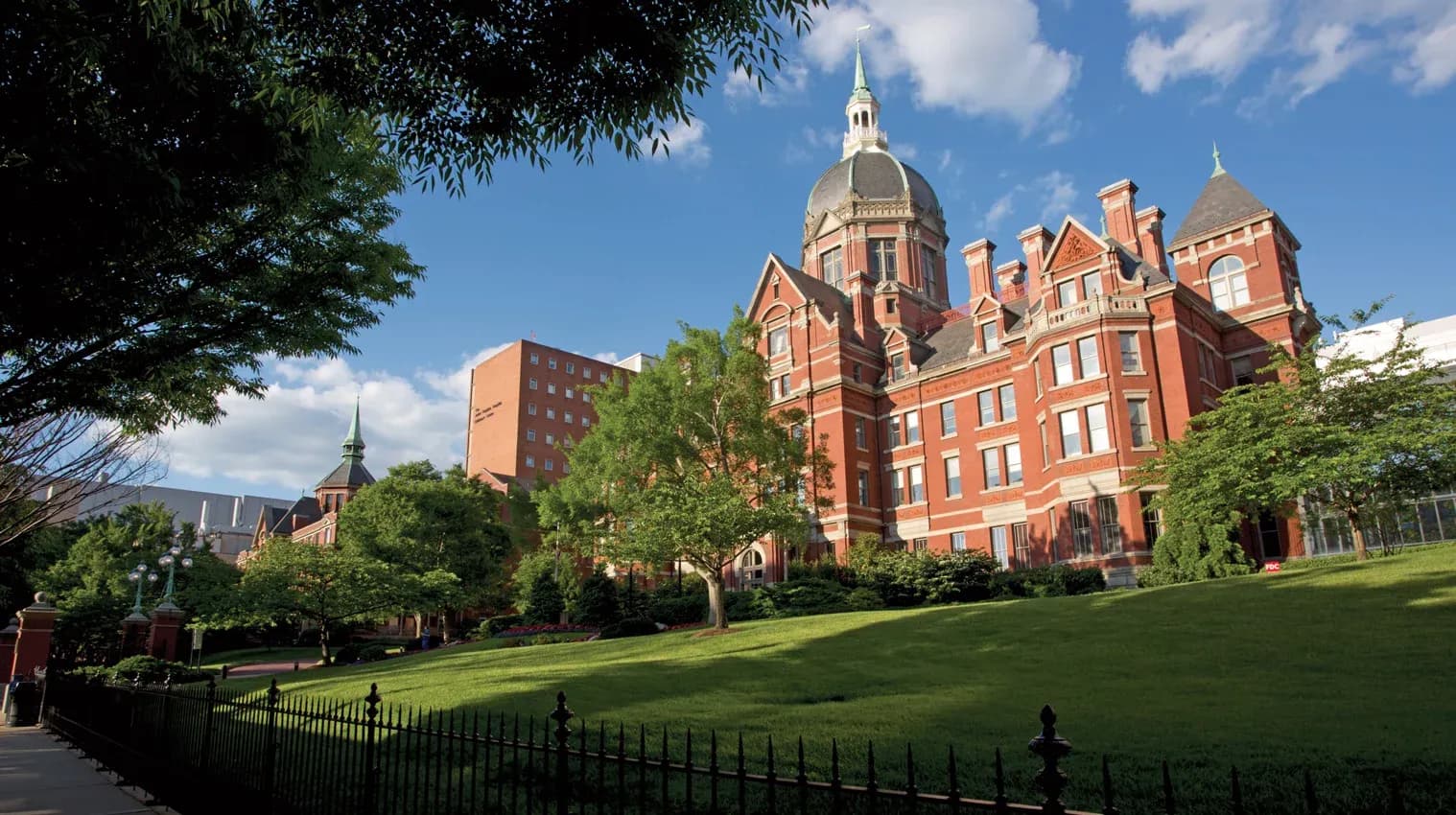
Johns Hopkins University
Baltimore, United States
The Anthropology program offers students an intellectually expansive and interdisciplinary examination of human cultures, societies, and evolutionary histories. Drawing from fields such as archaeology, linguistic anthropology, cultural studies, and biological anthropology, the curriculum explores how people across time and geography create meaning, organize communities, and respond to social, environmental, and political forces. Students are introduced to the comparative study of belief systems, kinship, gender, economy, power, and ritual, allowing them to approach human experience with cultural sensitivity and critical perspective. Through this lens, learners examine both global patterns and local practices, preparing to analyze diverse social realities with clarity and nuance.
In addition to theoretical foundations, the program emphasizes ethnographic research, field methods, and hands-on learning through lab work, community engagement, and archival analysis. Students are encouraged to pursue regional or thematic concentrations, such as urban anthropology, health and inequality, or indigenous knowledge systems, fostering specialized expertise within a flexible curriculum. With faculty guidance and access to interdisciplinary resources, students develop the analytical tools and methodological awareness needed to ask meaningful questions and interpret human behavior in a deeply contextualized manner. The result is a dynamic educational experience that connects critical theory with grounded, real-world inquiry.
Year 1 – Introduction to Anthropological Thinking
Year 2 – Core Concepts and Comparative Study
Year 3 – Advanced Methods and Field Exploration
Year 4 – Capstone and Specialization
Graduates of the Anthropology program bring a unique blend of cultural awareness, critical thinking, and research expertise to careers in a wide variety of fields. Many go on to work in nonprofit organizations, cultural institutions, global development agencies, and community research centers, where they contribute to programming, analysis, and public engagement. Others enter fields such as education, museum studies, public health, user experience design, journalism, or international relations—sectors where understanding diverse human experiences is essential. With training in qualitative research, comparative analysis, and communication, students are also well equipped for roles in policy, environmental advocacy, or urban planning. The program offers a strong foundation for graduate study in anthropology, sociology, public policy, or law. Whether working in academic, corporate, or grassroots settings, graduates use their skills to bridge differences, interpret complexity, and apply ethical reasoning in environments that require empathy and insight.
This program is ideal for students who are curious about how humans live, organize, and give meaning to their worlds—past and present. At Johns Hopkins University, learners benefit from a department known for its commitment to theoretical depth, field-based research, and interdisciplinary collaboration. Students have the opportunity to conduct original ethnographic or archaeological research, engage with community organizations, and study social issues through both global and local lenses. The curriculum emphasizes practical experience in analysis, data collection, and interpretive writing, all of which prepare students for real-world problem-solving. With personalized mentorship and access to rich academic resources, students build intellectual flexibility and cultural fluency that extends far beyond graduation. Whether seeking to understand inequality, belief, ecology, or identity, this program equips graduates with the perspective and skills to think critically and act ethically in a rapidly changing world.
For further information, please contact the admissions office at:
Phone: +1 410 516 8000
Email: admissions@jhu.edu
Address: Johns Hopkins University, 3400 N. Charles Street, Baltimore, MD 21218, USA
Master of Science · Full-time · On Campus
Johns Hopkins University
Baltimore, United States
Master of Arts · Full-time · On Campus
Johns Hopkins University
Baltimore, United States
Master of Arts · Full-time · On Campus
Johns Hopkins University
Baltimore, United States
Master of Science · Full-time · On Campus
Johns Hopkins University
Baltimore, United States
