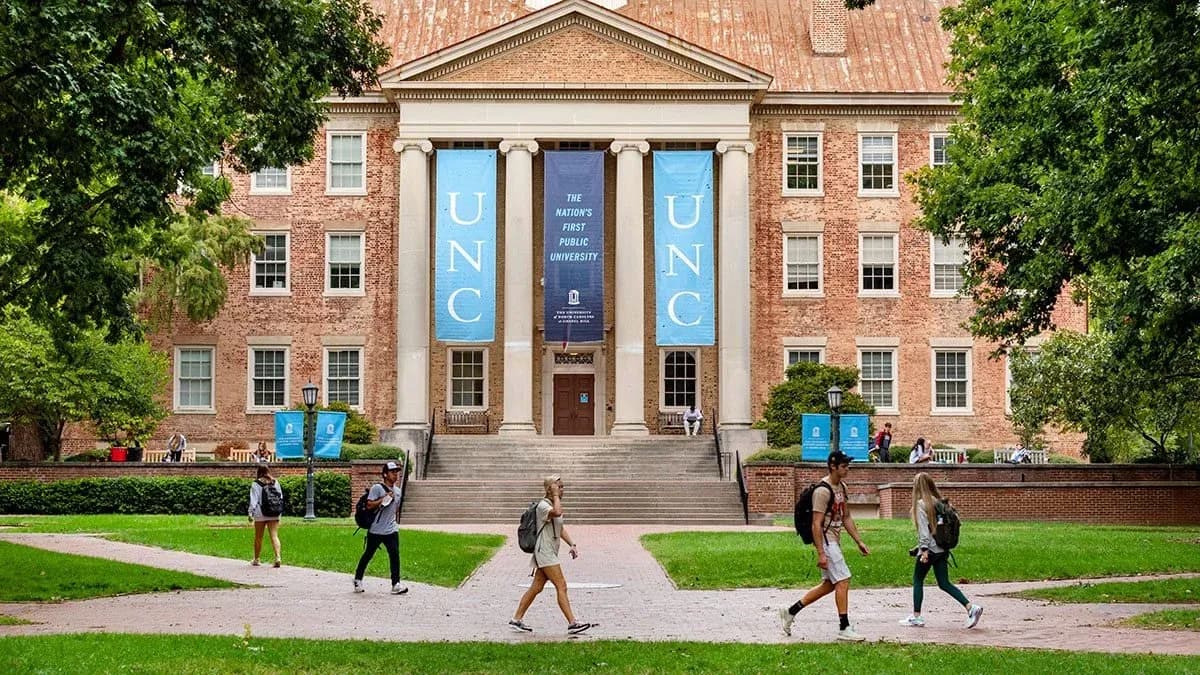

Anthropology
The Bachelor of Arts in Anthropology at the University of North Carolina is a four year program designed for students who want to explore human societies, cultures, and evolutionary processes across time and space. The curriculum emphasizes cultural anthropology, archaeology, biological anthropology, and ethnographic research, providing students with a comprehensive understanding of human behavior, social organization, and cultural diversity. Students analyze social structures, material culture, and human adaptation while learning to apply critical thinking and research methods to real world problems. This interdisciplinary approach equips graduates with analytical, observational, and communication skills essential for understanding complex human phenomena.
Throughout the program, students engage in fieldwork, laboratory research, and applied projects that connect theoretical knowledge with practical experience. Coursework emphasizes qualitative and quantitative research, cultural analysis, data interpretation, and critical reflection, preparing graduates for careers in cultural resource management, research, education, and policy development. By integrating scientific inquiry with social and cultural perspectives, the program develops professionals capable of interpreting human behavior, conducting field studies, and contributing to organizations that address social, cultural, and environmental challenges.
Key Facts
Key Facts
- Program Title: Anthropology
- Degree Type: Bachelor of Arts
- Duration: 4 years
- Mode of Study: Full-time, On Campus
- Application Deadline: 01 February 2026
- Location: University of North Carolina at Chapel Hill, United States
- Field of Study: Anthropology
- Language of Instruction: English
Program Structure
Year 1 - Foundations in Anthropology
• Introduction to Cultural Anthropology
• Introduction to Archaeology
• Biological Anthropology
• Academic Writing and Research
Year 2 - Developing Analytical and Research Skills
• Sociocultural Theory
• Archaeological Methods and Analysis
• Human Evolution and Adaptation
• Statistics and Research Methods
Year 3 - Advanced Anthropological Study
• Ethnographic Fieldwork
• Global and Comparative Anthropology
• Applied Anthropology
• Internship or Research Project
Year 4 - Capstone and Professional Integration
• Senior Seminar in Anthropology
• Advanced Research Project
• Anthropological Analysis and Interpretation
• Capstone Portfolio and Presentation
Career Opportunities
Graduates of this program are prepared for careers in research, education, cultural resource management, public policy, and international development. Potential roles include cultural analysts, archaeologists, museum curators, research associates, and community development specialists. The program also provides a foundation for graduate studies in anthropology, archaeology, public policy, or related social sciences. Graduates gain research expertise, analytical skills, and cross cultural understanding, enabling them to contribute to organizations addressing human, social, and cultural challenges in both local and global contexts.
Why Choose This Program
This program is ideal for students seeking a curriculum that combines cultural understanding, applied research, and scientific inquiry. Learners benefit from fieldwork, laboratory experiences, and mentorship that strengthen analytical, observational, and communication skills. The program emphasizes understanding human diversity, interpreting cultural and biological evidence, and applying research to real world challenges, preparing graduates to work effectively in research, education, policy, and cultural institutions. By integrating theory, practice, and professional development, students gain the knowledge, skills, and perspective necessary to pursue impactful careers in anthropology and related fields.
Contact Information
Phone: +1 (919) 966-3621
Email: unchelp@admissions.unc.edu
Address: Jackson Hall, 174 Country Club Road, Chapel Hill, NC 27514, USA
