
Applied Mathematics
The Bachelor of Science in Applied Mathematics is a four-year interdisciplinary program that equips students with a rigorous foundation in mathematical theory, computational methods, and practical problem-solving. Students explore calculus, linear algebra, differential equations, probability, statistics, and numerical analysis, developing analytical and quantitative skills essential for modeling and solving complex problems in science, engineering, economics, and technology. The program emphasizes both theoretical understanding and applied techniques, preparing graduates to analyze data, construct models, and make informed decisions across diverse professional contexts.
Throughout the program, students engage in hands-on projects, computational simulations, and research experiences that integrate mathematical theory with practical applications. The curriculum fosters critical thinking, quantitative reasoning, and computational proficiency, enabling students to apply mathematics to real-world challenges in business, technology, research, and policy. By combining rigorous analysis with interdisciplinary application, the program prepares graduates to pursue careers, advanced studies, and research opportunities in both academic and professional environments.
Key Facts
Key Facts
- Program Title: Applied Mathematics
- Degree Type: Bachelor of Science
- Duration: 4 years
- Mode of Study: Full-time, On Campus
- Application Deadline: 01 January 2026
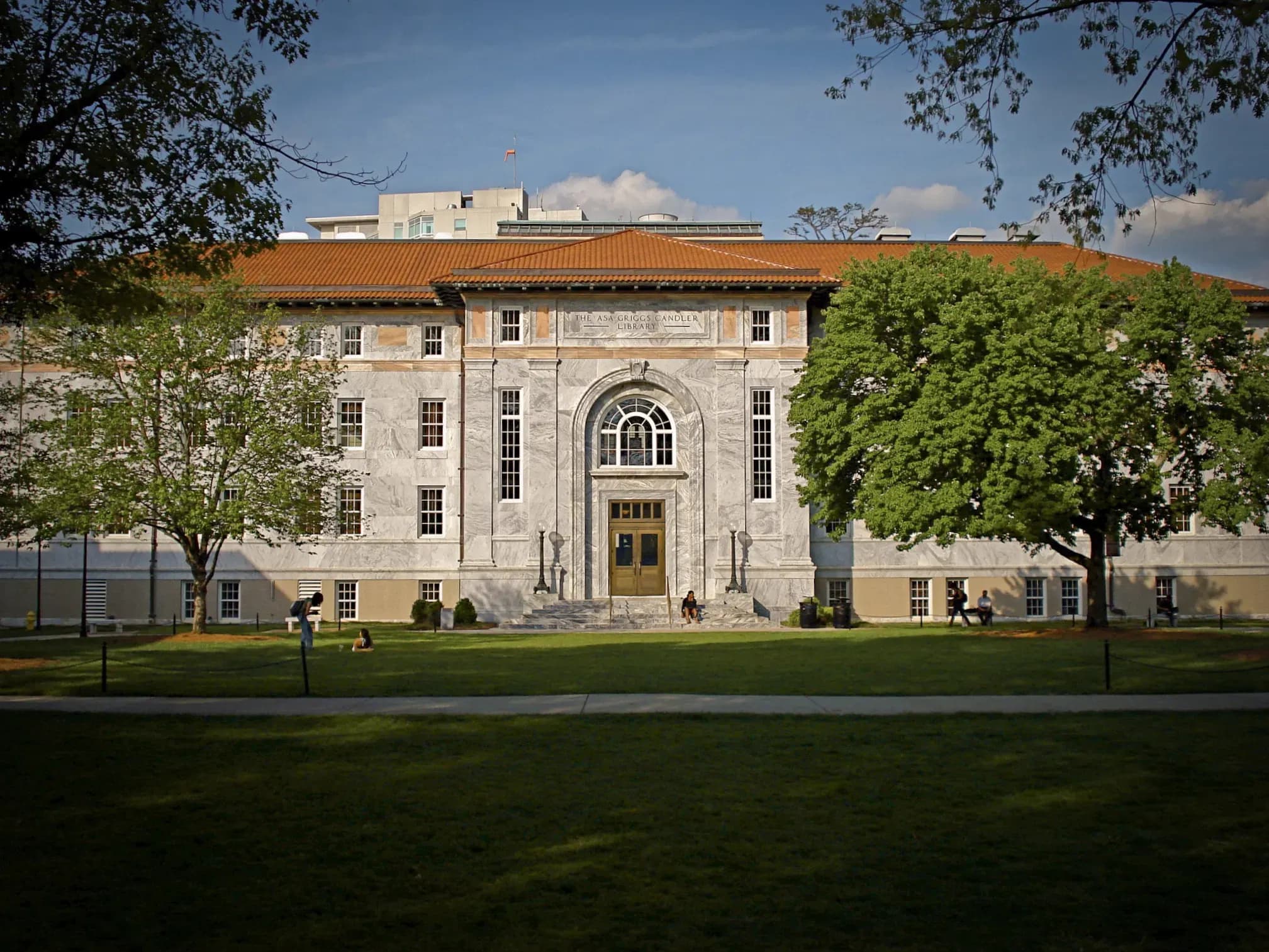
- Location: Emory University, United States
- Field of Study: Applied Mathematics
- Language of Instruction: English
Program Structure
Year 1 – Foundations in Mathematics
• Calculus I & II
• Linear Algebra
• Introduction to Probability and Statistics
• Academic Writing and Research
Year 2 – Core Quantitative Methods
• Multivariable Calculus
• Differential Equations
• Discrete Mathematics
• Introduction to Computational Methods
Year 3 – Applied Mathematical Techniques
• Numerical Analysis and Simulation
• Mathematical Modeling
• Statistical Inference and Regression
• Elective: Operations Research / Data Science
Year 4 – Integration and Capstone
• Advanced Applied Mathematics Topics
• Senior Research Project or Thesis
• Elective: Financial Mathematics / Machine Learning
• Capstone Seminar and Presentation
Career Opportunities
Graduates of Applied Mathematics are prepared for careers in data analysis, actuarial science, operations research, finance, technology, business analytics, and engineering. They may also pursue advanced studies in applied mathematics, statistics, data science, computational modeling, or economics, expanding their professional and academic opportunities. Employers value graduates’ analytical thinking, problem-solving skills, and computational proficiency, enabling them to tackle complex quantitative challenges in diverse industries. Alumni are equipped to contribute to research institutions, corporations, government agencies, and technology firms, applying mathematical insight to practical and innovative solutions.
Why Choose This Program
This program is ideal for students passionate about solving complex problems using mathematical reasoning and computational tools. Emory University provides a rigorous curriculum, hands-on research opportunities, and access to computational resources, fostering both theoretical understanding and practical expertise. The program emphasizes critical thinking, quantitative analysis, and interdisciplinary application, preparing students to excel in professional, academic, and research-oriented environments. Graduates leave with the knowledge, analytical skills, and computational competence necessary to address complex problems, contribute to innovative solutions, and pursue careers or advanced studies in diverse quantitative fields.
Contact Information
For further information, please contact the admissions office at:
Phone: +1 404 727 6123
Email: contentedit@emory.edu
Address: University of Emory, 201 Dowman Drive, Atlanta, GA 30322, United States
