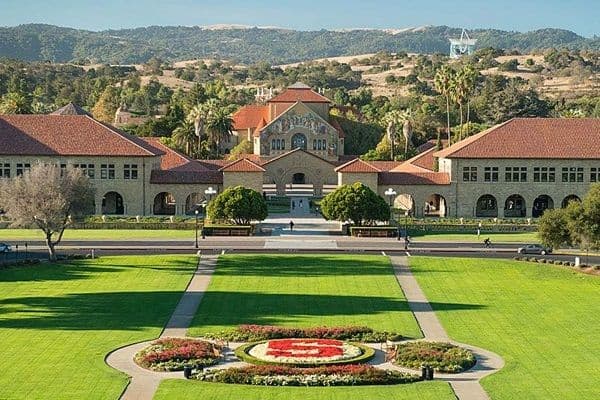

Biology - Ecology and Evolution
The Biology – Ecology and Evolution Bachelor of Science program at the University of Stanford offers a deeply integrated scientific framework designed to help students explore how organisms interact with each other and with their environments across evolutionary timescales. Over four years of full-time, on-campus study, learners examine ecological patterns, biodiversity processes, evolutionary mechanisms, and environmental dynamics through research-driven coursework and hands-on field experiences. The curriculum strengthens scientific analysis, ecological reasoning, evolutionary interpretation, and research methodology, enabling students to understand how biological systems respond to natural pressures, climate change, and human impact. Through a structured blend of lectures, laboratories, and field-based inquiry, students develop a grounded and expansive view of life’s adaptability and interconnectedness.
The program also emphasizes interdisciplinary perspectives, integrating genetics, environmental science, conservation strategies, and computational tools to provide a holistic understanding of ecological and evolutionary questions. Students engage with faculty-led research, participate in long-term ecosystem studies, and immerse themselves in specialized seminars that expand their scientific perspective and deepen their technical skills. By studying population dynamics, species interactions, evolutionary genetics, and ecosystem resilience, learners gain the capacity to contribute to evidence-based conservation, promote biodiversity protection, support environmental assessment, and participate in scientific solutions that address global ecological challenges. This immersive academic environment prepares graduates for advanced study and influential roles across the environmental and biological sciences.
Key Facts
Key Facts
- Program Title: Biology - Ecology and Evolution
- Degree Type: Bachelor of Science
- Duration: 4 years
- Mode of Study: Full-time, On Campus
- Application Deadline: 05 January 2026
- Location: Stanford University, United States
- Field of Study: Biology
- Language of Instruction: English
Program Structure
Year 1 – Foundations in Biological and Environmental Science
• General Biology I & II
• Principles of Chemistry
• Introduction to Ecology and Environmental Systems
• Scientific Communication and Data Literacy
Year 2 – Core Ecology, Evolution & Analytical Methods
• Evolutionary Biology
• Ecology and Population Studies
• Genetics and Heredity
• Quantitative Methods in Ecology
Year 3 – Advanced Ecological Research & Field Studies
• Ecosystem Ecology
• Evolutionary Dynamics and Adaptation
• Field Methods in Ecology
• Elective Modules in Conservation Biology, Biogeography, or Environmental Genetics
Year 4 – Research, Specialization & Capstone Work
• Independent Research Project
• Advanced Topics in Ecology and Evolution
• Senior Seminar
• Capstone Thesis and Scientific Portfolio
Career Opportunities
Graduates of this program can pursue professional roles in environmental research organizations, conservation agencies, ecological consulting firms, and biological field study institutions, where ecological knowledge and analytical expertise are essential. The program equips students with the skills needed for positions such as field ecologist, conservation biologist, environmental impact analyst, wildlife research assistant, sustainability project coordinator, and biodiversity monitoring specialist. Learners also gain the scientific foundation necessary for entry into competitive graduate programs focused on ecology, conservation science, evolutionary biology, and environmental management. With strong preparation in ecological assessment, evolutionary theory, and data-driven research, graduates contribute meaningfully to environmental stewardship and evidence-informed decision-making across public, private, and non-profit sectors.
Why Choose This Program
This program is ideal for students who want to build their education around advanced ecological understanding, evolutionary scientific inquiry, interdisciplinary environmental analysis, and long-term academic development. Its structure allows learners to progress from foundational knowledge to high-level specialization while engaging in field-based research that deepens both practical skills and conceptual insight. With access to experienced faculty, field stations, and research laboratories dedicated to ecological and evolutionary study, students benefit from an environment where scientific curiosity and applied investigation work hand in hand. The program’s commitment to understanding natural systems and evolutionary processes ensures that graduates are exceptionally well-prepared to address ecological challenges and contribute to impactful environmental solutions.
Contact Information
For further information, please contact the admissions office at:
Phone: +1 650 000 0000
Email: admissions@standord.edu
Address: University of Standord, 450 Serra Mall, Stanford, CA 94305, United States
