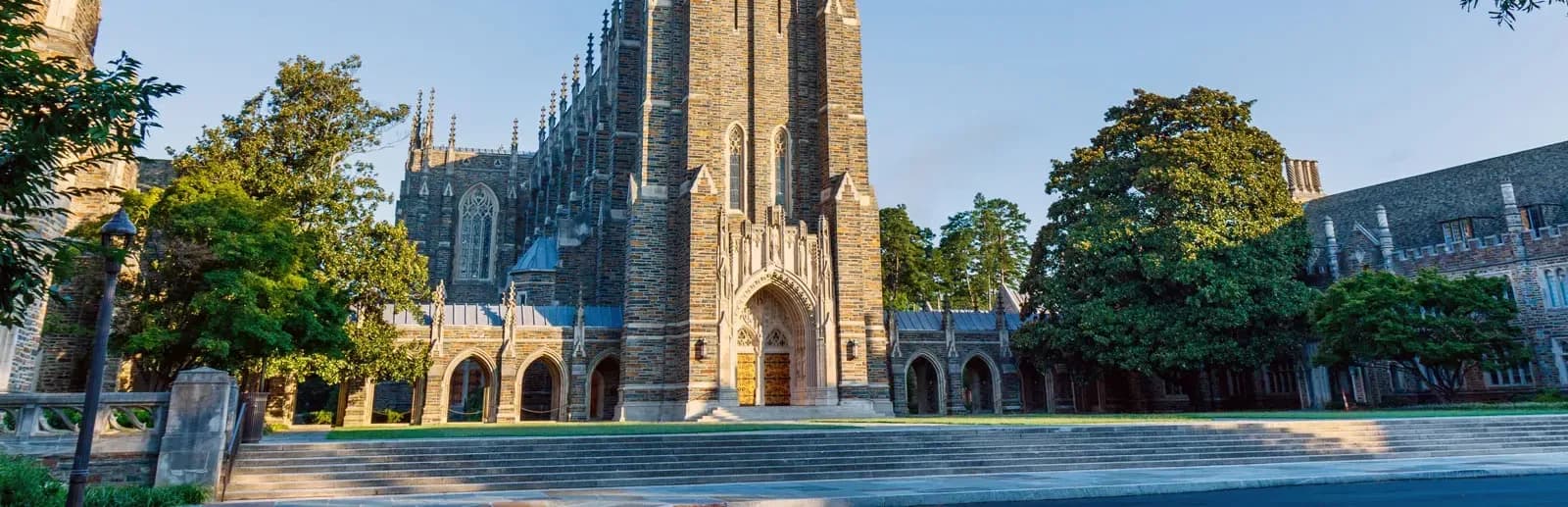

Biology (Ecology)
The Bachelor of Science in Biology with a concentration in Ecology at University of Duke provides students with a comprehensive understanding of the relationships between organisms and their environments. The curriculum emphasizes the study of ecosystems, biodiversity, conservation, and environmental processes, allowing students to explore the scientific principles that govern life and ecological interactions. Learners develop essential skills in field research, data analysis, and ecological modeling while engaging with faculty whose research expertise spans conservation biology, ecosystem management, and environmental policy.
The program encourages interdisciplinary exploration by integrating biology with environmental science, chemistry, and geography. Students gain hands-on experience through laboratory work, field studies, and research projects, developing the ability to conduct independent investigations, evaluate complex ecological data, and interpret findings within broader environmental contexts. By graduation, learners are equipped with strong analytical and critical thinking skills, as well as the ability to communicate scientific insights effectively, preparing them for careers or advanced study in ecology and environmental science.
Key Facts
Key Facts
- Program Title: Biology (Ecology)
- Degree Type: Bachelor of Science
- Duration: 4 years
- Mode of Study: Full-time, On Campus
- Application Deadline: 05 January 2026
- Location: Duke University, United States
- Field of Study: Biology
- Language of Instruction: English
Program Structure
Year 1 – Foundations in Ecology and Biology
- Introduction to Biology
- Principles of Ecology
- General Chemistry and Laboratory Practice
- Elective in Environmental or Life Sciences
Year 2 – Core Ecological Concepts
- Population and Community Ecology
- Evolutionary Biology
- Biostatistics and Data Analysis
- Field Methods in Ecology
Year 3 – Applied and Specialized Study
- Conservation Biology
- Ecosystem Dynamics
- Thematic Elective in Ecology
- Research Seminar: Field and Laboratory Studies
Year 4 – Capstone Research & Professional Preparation
- Senior Thesis or Independent Research Project
- Advanced Topics in Ecology and Environmental Management
- Seminar on Contemporary Ecological Challenges
- Academic Portfolio and Presentation Workshop
Career Opportunities
Graduates of this program are prepared for diverse careers where ecological knowledge and analytical skills are essential. Many pursue positions in environmental consulting, wildlife management, conservation organizations, and governmental environmental agencies, contributing to ecosystem management, policy development, and biodiversity conservation. Others find opportunities in research institutions, ecological data analysis, environmental education, nonprofit organizations, and ecological restoration projects. Graduates may also work in environmental advocacy, sustainable resource management, or environmental technology sectors, applying their expertise to address pressing ecological challenges. For those pursuing further education, the program provides a strong foundation for graduate studies in ecology, environmental science, conservation biology, and related disciplines. The degree equips graduates with the ability to conduct independent research, synthesize complex data, and make informed decisions that support both ecological preservation and scientific advancement.
Why Choose This Program
This program is ideal for students passionate about understanding the natural world and its complex interactions through hands-on ecological training, interdisciplinary research, and field-based learning experiences. The four-year curriculum allows learners to progress from foundational biological concepts to advanced ecological studies, integrating laboratory, computational, and field methods. Faculty mentorship and research projects help students develop strong analytical skills, scientific writing abilities, and practical experience in ecosystem assessment and environmental monitoring. The program balances theoretical depth with practical application, enabling students to design independent studies, explore conservation challenges, and contribute meaningfully to ecological knowledge. Graduates leave prepared for both professional careers and advanced study, equipped with critical insight, technical expertise, and the confidence to address ecological issues on local, regional, and global scales.
Contact Information
For further information, please contact the admissions office at:
Phone: +1 (919) 684-8111
Email: admissions@duke.edu
Address: University of Duke, Durham, North Carolina, United States
