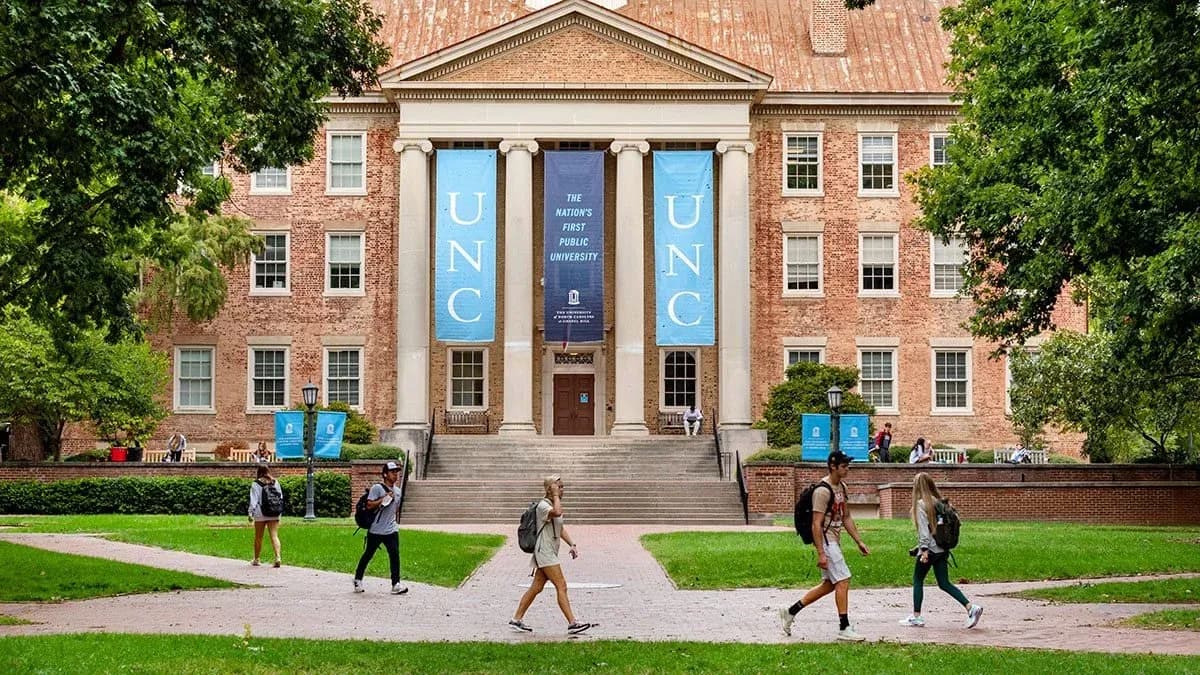

Chemistry
The Chemistry Bachelor of Arts program at the University of North Carolina offers a flexible yet scientifically rigorous curriculum that blends core chemical principles with interdisciplinary breadth. Designed for students interested in combining chemistry with fields such as education, law, policy, or business, this degree path focuses on essential topics like organic, inorganic, physical, and analytical chemistry while allowing space for electives and double majors. The program fosters both theoretical knowledge and hands-on laboratory skills, enabling students to build strong scientific foundations in a broader academic context.
Students benefit from a dynamic learning environment that emphasizes critical thinking, quantitative analysis, and problem-solving abilities. Faculty provide close mentorship and encourage undergraduate research, fostering intellectual growth and collaboration. Whether students plan to enter the workforce or pursue advanced studies, this program offers the academic flexibility and scientific depth needed for success in a variety of professional settings. The B.A. in Chemistry is ideal for those seeking a versatile degree that opens doors to science-based roles across multiple sectors
Key Facts
Key Facts
- Program Title: Chemistry
- Degree Type: Bachelor of Arts
- Duration: 4 years
- Mode of Study: Full-time, On Campus
- Application Deadline: 01 February 2026
- Location: University of North Carolina at Chapel Hill, United States
- Field of Study: Chemistry
- Language of Instruction: English
Program Structure
Year 1 – Chemical Principles and Academic Foundations
• General Chemistry I with Lab
• College Algebra or Calculus I
• Academic Writing and Communication
• General Education Elective
• Introduction to the Scientific Method
Year 2 – Intermediate Chemistry and Applications
• General Chemistry II with Lab
• Organic Chemistry I
• Data Analysis in Chemistry
• Public Speaking or Scientific Literacy
• Interdisciplinary Elective
Year 3 – Advanced Concepts and Lab Practice
• Organic Chemistry II
• Analytical Chemistry with Lab
• Physical Chemistry I
• Research Skills in Chemistry
• General Education Elective
Year 4 – Integration and Specialization
• Inorganic Chemistry
• Chemistry Seminar or Capstone
• Chemistry Elective (e.g., Biochemistry, Environmental Chemistry)
• Undergraduate Research or Independent Study
• Ethics in Science or Policy Elective
Career Opportunities
Graduates with a B.A. in Chemistry enter a wide array of career fields where scientific knowledge intersects with broader societal needs. Common roles include chemical technician, technical sales representative, science policy analyst, and environmental consultant. Students who pair their chemistry degree with studies in law, business, or public health often pursue careers in regulatory affairs, patent law, or healthcare administration. Others continue to graduate programs in fields such as chemistry, medicine, education, or pharmacology. The program equips students with essential skills in research, communication, and critical analysis, which are highly sought after in both technical and interdisciplinary professions. Whether working in labs, classrooms, boardrooms, or government agencies, graduates bring scientific expertise into roles that require adaptability and informed decision-making.
Why Choose This Program
This program is ideal for students who want to gain a solid chemistry education while maintaining the freedom to explore other academic interests or career paths. With its emphasis on academic flexibility, scientific rigor, and interdisciplinary connections, the B.A. in Chemistry at the University of North Carolina enables students to tailor their studies to align with diverse goals. The program encourages active learning through labs, seminars, and undergraduate research, all guided by supportive faculty with a range of specialties. Whether your future lies in industry, education, public policy, or beyond, this degree gives you the knowledge and adaptability to thrive. Its balanced approach ensures you graduate not only with scientific insight, but also with the broader perspective necessary to apply chemistry in meaningful, real-world contexts.
Contact Information
Phone: +1 (919) 966-3621
Email: unchelp@admissions.unc.edu
Address: Jackson Hall, 174 Country Club Road, Chapel Hill, NC 27514, USA
