Master of Science · Full-time · Online
University of Pennsylvania
Philadelphia, United States
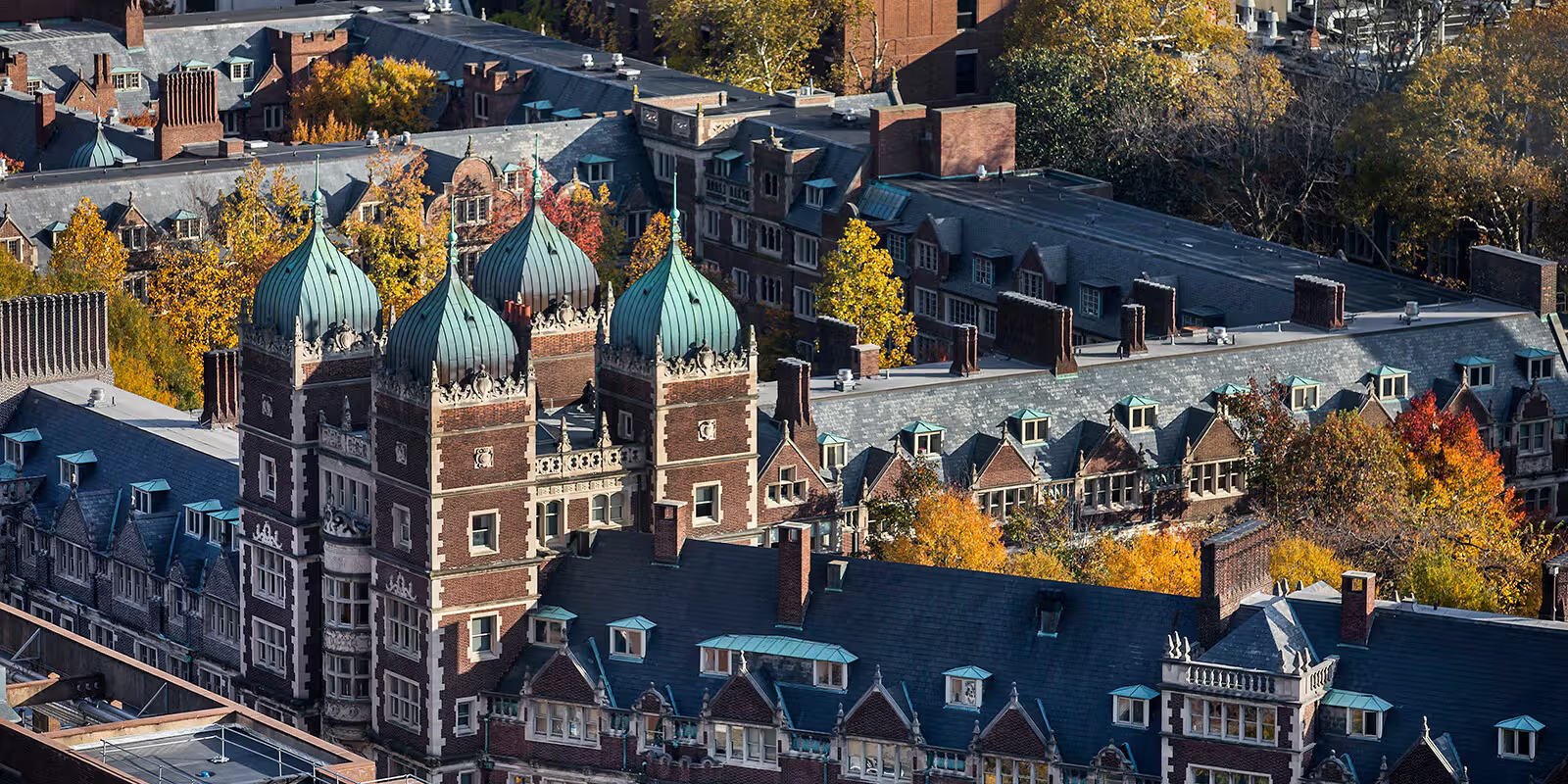
The City and Regional Planning – Urban Design program at Pennsylvania University offers a rigorous and interdisciplinary exploration of how urban spaces are shaped, experienced, and transformed. Spanning two years of full-time, on-campus study, this master’s program equips students with advanced theoretical insights and practical design skills to address pressing challenges in contemporary urban development. Through an integrated curriculum that fuses urban planning, architecture, environmental studies, and policy, students gain a comprehensive perspective on the built environment. Core areas include sustainable city-making, spatial justice, design theory, and infrastructure planning. Studio courses, site analyses, and hands-on workshops form the backbone of the program, ensuring that students can translate their ideas into responsive, community-based urban designs.
The program emphasizes the importance of human-centered design, equity, and environmental sustainability in the reshaping of cities and regions. Guided by experienced faculty and in collaboration with public agencies and private stakeholders, students engage with real-world projects that demand innovative and inclusive design thinking. Fieldwork, site visits, and community engagement activities deepen students’ understanding of the social and cultural dimensions of planning. The program’s strong design focus allows graduates to move fluidly between the conceptual and the practical, preparing them to reimagine urban spaces not just for aesthetic impact, but for long-term livability and resilience in an evolving global landscape.
Semester 1 – Design Principles and Urban Theory
Semester 2 – Urban Systems and Community Engagement
Semester 3 – Advanced Design Application
Semester 4 – Capstone and Professional Integration
Graduates of this program are uniquely prepared for roles at the intersection of design and planning, with opportunities in urban planning departments, architecture and design firms, municipal development agencies, and non-profit organizations focused on community development. They may lead urban design strategies for cities, contribute to comprehensive planning initiatives, or consult on public space revitalization and land-use reform. Skills in visual communication, public engagement, and cross-sector collaboration enable them to influence decision-making processes across scales—from neighborhood redesigns to regional infrastructure planning. Additionally, the program’s strong research and analytical components open pathways toward roles in policy advisory bodies, design think tanks, or academic institutions. As urbanization accelerates worldwide, demand for professionals who can plan and design inclusive, climate-resilient, and equitable cities continues to grow—giving graduates a powerful edge in the global job market.
What sets this program apart is its seamless integration of design thinking, planning expertise, and real-world application. Students don’t just study urban design—they practice it through iterative studio work, interdisciplinary collaboration, and partnerships with city governments and local communities. The program's commitment to sustainability, social equity, and practical impact ensures that graduates are not only technically skilled but ethically grounded and socially aware. Access to expert faculty, a wide network of alumni professionals, and one of the nation’s most dynamic urban environments make this a truly immersive and future-ready education. For those who aspire to shape the cities of tomorrow through thoughtful, evidence-based, and inclusive design, this program offers the tools, mentorship, and vision to lead.
For further information, please contact the admissions office at:
Phone: +1 215 898 5000
Email: admissions@upenn.edu
Address: University of Pennsylvania, Philadelphia, PA 19104, United States
Master of Science · Full-time · Online
University of Pennsylvania
Philadelphia, United States
Bachelor of Arts · Full-time · On Campus
University of Pennsylvania
Philadelphia, United States
Bachelor of Science · Full-time · On Campus
University of Pennsylvania
Philadelphia, United States
Bachelor of Arts · Full-time · On Campus
University of Pennsylvania
Philadelphia, United States
