
Civil and Environmental Engineering
The Master of Science in Environmental Engineering offers a rigorous and interdisciplinary curriculum designed for students who want to address environmental challenges using advanced engineering principles and scientific analysis. The program integrates coursework in sustainable systems, water quality, environmental chemistry, and pollution control technologies, allowing students to explore how engineered solutions can mitigate ecological risks and protect public health. Through a combination of theoretical lectures, applied modeling exercises, and problem-based learning, students gain a deep understanding of how environmental processes function and how engineered interventions can be optimized for long-term resilience. This curriculum prepares learners to analyze complex environmental systems while developing practical engineering strategies for real-world issues.
The program also emphasizes interdisciplinary collaboration, connecting students with faculty experts in civil engineering, hydrology, ecology, and environmental policy. Learners participate in seminars, research discussions, and hands-on laboratory activities that expose them to the latest innovations in environmental monitoring, treatment processes, and sustainability-driven engineering. Field experiences and engineering design projects further reinforce their abilities in data evaluation, system modeling, impact assessment, and the application of scientific evidence to environmental decision-making. The overall academic structure equips graduates with the technical insight and analytical flexibility needed to work effectively on environmental challenges across diverse professional settings.
Key Facts
Key Facts
- Program Title: Civil and Environmental Engineering
- Degree Type: Master of Science
- Duration: 1 year
- Mode of Study: Full-time, On Campus
- Application Deadline: 15 January 2026
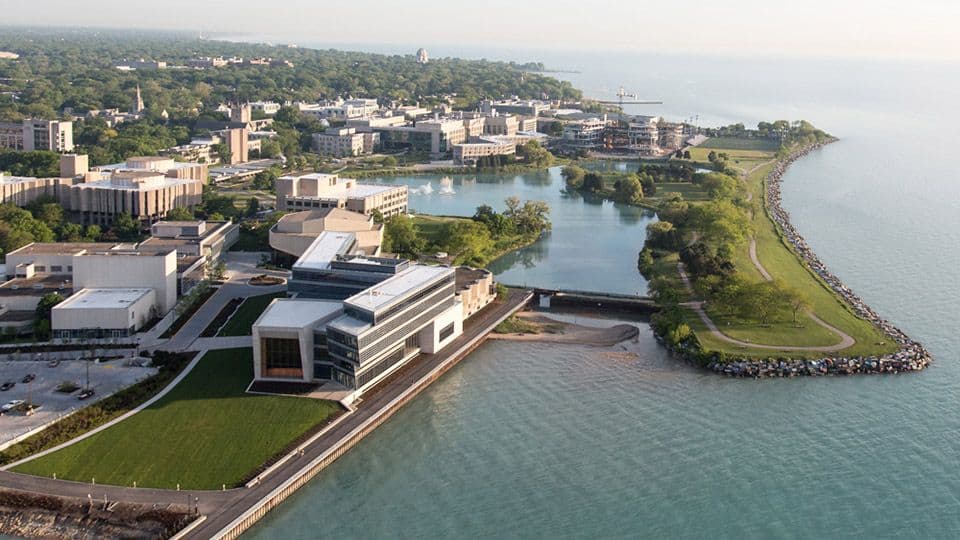
- Location: Northwestern University, United States
- Field of Study: Environmental Engineering
- Language of Instruction: English
Program Structure
Program Structure
Semester 1 – Core Foundations in Environmental Engineering
• Environmental Chemistry and Microbiology
• Hydrologic Systems and Water Resources
• Engineering Methods for Environmental Assessment
• Modeling Tools for Environmental Processes
Semester 2 – Advanced Applications & Environmental Systems Design
• Water and Wastewater Treatment Engineering
• Air Quality Control and Pollution Prevention
• Environmental Risk Analysis and Sustainability Planning
• Research Project in Environmental Engineering
Career Opportunities
Graduates of this program are equipped to pursue impactful roles across engineering, environmental science, and sustainability-focused industries where technical expertise and analytical precision are essential. Many professionals work in environmental consulting firms, government agencies, infrastructure engineering companies, and research institutions, contributing to the design, evaluation, and implementation of systems that protect natural resources and support public health. Their responsibilities often include analyzing environmental data, developing pollution control strategies, optimizing water treatment processes, modeling ecological impacts, and advising organizations on regulatory compliance. With the growing need for environmentally responsible infrastructure and sustainable development practices, graduates find opportunities to collaborate with engineers, scientists, and policy specialists to address issues related to climate resilience, resource management, and environmental restoration. The program’s blend of scientific depth and engineering application positions its graduates for leadership in both technical and advisory roles within the environmental sector.
Why Choose This Program
This program is an excellent choice for students seeking advanced engineering training that directly contributes to environmental protection and sustainable development. Its curriculum emphasizes analytical rigor, engineering innovation, and applied research, enabling students to build a strong foundation in both the scientific and technical dimensions of environmental systems. The one-year structure provides an efficient yet comprehensive academic experience supported by experienced faculty, interdisciplinary research opportunities, and applied project work that strengthens professional readiness. Students emerge prepared to tackle complex environmental challenges, contribute to sustainable engineering practices, and pursue meaningful careers at the intersection of science, engineering, and public welfare. For individuals aiming to make a tangible impact through data-driven environmental solutions, this program offers a focused and highly relevant pathway.
Contact Information
For further information, please contact the admissions office at:
Phone: +1 312 555 2040
Email: admissions@northwestern.edu
Address: University of Northwestern, 633 Clark Street, Evanston, IL 60208, United States
