Bachelor of Science · Full-time · On Campus

University of North Carolina at Chapel Hill
Chapel Hill, United States
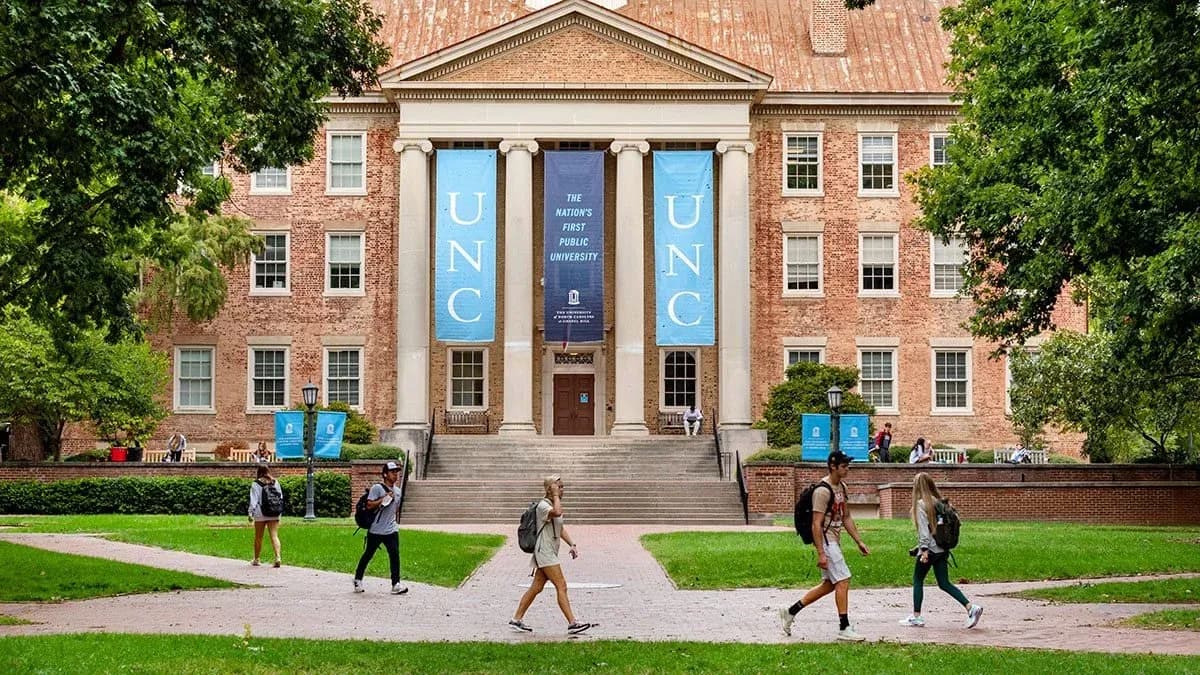
The Bachelor of Arts in Criminal Justice at the University of North Carolina is a four year program designed for students who want to understand the structures, policies, and practices of the criminal justice system. The curriculum emphasizes law enforcement, criminal law, criminology, and justice administration, providing students with a comprehensive understanding of crime, legal processes, and societal responses. Students examine the roles of policing, courts, corrections, and community programs while analyzing ethical, social, and policy issues that affect the justice system. This interdisciplinary approach equips graduates with critical thinking, analytical, and communication skills essential for addressing complex challenges in criminal justice and public safety.
Throughout the program, students participate in research projects, case studies, and experiential learning that integrate classroom knowledge with practical application. Coursework emphasizes policy analysis, crime prevention, legal research, and ethical decision making, preparing graduates to work in law enforcement, corrections, policy analysis, and advocacy. By combining theoretical frameworks with applied experience, the program cultivates professionals capable of evaluating criminal justice practices, contributing to reform initiatives, and pursuing graduate study or leadership roles in law enforcement and justice administration.
Year 1 - Foundations in Criminal Justice
• Introduction to Criminal Justice
• Criminology and Crime Theory
• Sociology of Law and Society
• Academic Writing and Research Methods
Year 2 - Developing Analytical and Research Skills
• Criminal Law and Procedure
• Policing and Community Safety
• Research Methods in Criminal Justice
• Ethics and Justice Administration
Year 3 - Advanced Study and Applied Practice
• Corrections and Rehabilitation
• Juvenile Justice and Policy
• Criminal Investigation Techniques
• Internship or Applied Project
Year 4 - Capstone and Professional Integration
• Senior Seminar in Criminal Justice
• Policy Analysis and Program Evaluation
• Advanced Research Project
• Capstone Portfolio and Presentation
Graduates of this program are prepared for careers in law enforcement, corrections, policy analysis, public safety, and criminal justice administration. Potential roles include police officers, probation and parole officers, policy analysts, criminologists, and public safety consultants in government agencies, nonprofit organizations, and private sector security firms. The program also provides a foundation for graduate study in criminal justice, law, public administration, or criminology. Graduates gain research, analytical, and practical skills, enabling them to evaluate justice policies, implement community programs, and contribute effectively to public safety and criminal justice initiatives.
This program is ideal for students seeking a curriculum that integrates policy analysis, applied practice, and theoretical understanding of criminal justice. Learners benefit from internships, research projects, and mentorship that develop analytical, ethical, and decision making skills. The program emphasizes understanding legal systems, evaluating crime prevention strategies, and applying justice principles, preparing graduates to work effectively in law enforcement, policy, corrections, and public safety. By combining theory with practical experience, students acquire the knowledge, skills, and professional perspective necessary to pursue impactful careers or advanced study in criminal justice and related fields.
Phone: +1 (919) 966-3621
Email: unchelp@admissions.unc.edu
Address: Jackson Hall, 174 Country Club Road, Chapel Hill, NC 27514, USA
Bachelor of Science · Full-time · On Campus
University of North Carolina at Chapel Hill
Chapel Hill, United States
Bachelor of Science · Full-time · On Campus
University of North Carolina at Chapel Hill
Chapel Hill, United States
Master of Arts · Full-time · On Campus
University of North Carolina at Chapel Hill
Chapel Hill, United States
