Documentary Media
The Master of Arts in Documentary Media provides an immersive, interdisciplinary environment for students seeking to explore documentary as both an artistic practice and a tool for cultural reflection. The curriculum encourages learners to work across visual, audiovisual, and narrative forms, integrating coursework in documentary theory, visual storytelling, media production, and research methodology. Students examine how documentary works shape public understanding, influence social discourse, and preserve personal or collective narratives. Through intensive seminars and creative workshops, learners develop the skills needed to conceptualize, structure, and produce documentary projects that convey meaningful and compelling stories grounded in real-world experiences.
The program also emphasizes hands-on practice and critical engagement with contemporary documentary landscapes. Students participate in production labs, collaborative fieldwork, and mentorship-driven studio projects that strengthen competencies in cinematic technique, narrative analysis, production planning, and post-production workflows. Working alongside faculty and media professionals, learners gain insight into ethical representation, audience engagement, emerging documentary technologies, and visual research practices. This comprehensive academic structure prepares graduates to navigate the artistic, technical, and cultural challenges inherent in nonfiction storytelling while developing a personal documentary voice supported by strong conceptual grounding.
Key Facts
Key Facts
- Program Title: Documentary Media
- Degree Type: Master of Arts
- Duration: 2 years
- Mode of Study: Full-time, On Campus
- Application Deadline: 15 December 2025
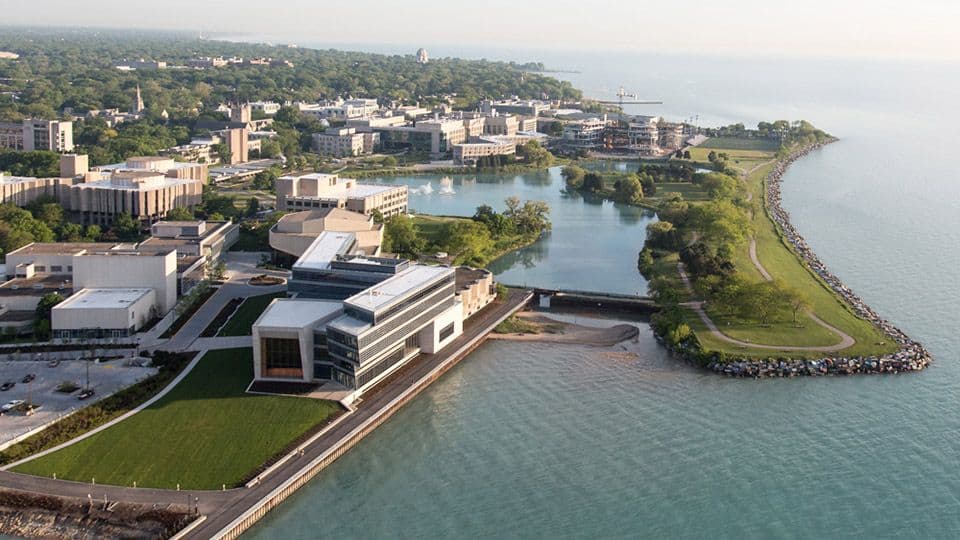
- Location: Northwestern University, United States
- Field of Study: Film Studies
- Language of Instruction: English
Program Structure
Semester 1 – Foundations of Documentary Practice & Storytelling
• Introduction to Documentary Forms
• Fundamentals of Cinematography
• Research Methods for Nonfiction Media
• Writing for Documentary Narrative
Semester 2 – Production Techniques, Visual Craft & Creative Development
• Documentary Production Laboratory
• Sound Design and Post-Production
• Ethics, Representation, and Cultural Narratives
• Intermediate Project Workshop
Semester 3 – Advanced Fieldwork, Analysis & Media Innovation
• Advanced Documentary Production
• Visual Anthropology and Field Observation
• Editing Strategies and Narrative Construction
• Specialized Topic Seminar in Nonfiction Media
Semester 4 – Thesis Production, Professional Practice & Exhibition
• Documentary Thesis Project
• Festival Strategy and Audience Development
• Professional Portfolio and Media Career Preparation
• Public Screening and Critical Feedback Sessions
Career Opportunities
Graduates of this program are prepared for careers in nonfiction storytelling, media production, and visual research across a variety of creative and institutional settings. Many professionals work in documentary film studios, media production companies, cultural organizations, and independent filmmaking environments, where they produce feature-length documentaries, short-form nonfiction content, or multimedia installations. Their responsibilities often include researching subjects, capturing field footage, conducting interviews, editing narrative sequences, and overseeing post-production workflows. Some graduates collaborate with journalists, scholars, and advocacy groups to develop socially engaged documentary projects, while others contribute to museum exhibitions, educational initiatives, and digital media platforms. With strong training in creative development, production technique, narrative strategy, and ethical representation, graduates are also well positioned to pursue roles in festival programming, media consultancy, or to advance toward independent artistic careers supported by grants and fellowships.
Why Choose This Program
This program is ideal for students who want to strengthen their creative identity while gaining the technical and conceptual tools needed to produce impactful nonfiction media. Its curriculum emphasizes artistic development, critical media analysis, and professional production practice, offering a clear progression from foundational craft to advanced documentary authorship. The two-year structure allows learners to build a substantial portfolio, engage in sustained research, and produce a thesis project that demonstrates creative maturity and technical competence. Students benefit from mentorship by experienced documentary makers, access to professional production resources, and opportunities for public exhibition and industry engagement. For individuals seeking to contribute meaningfully to documentary cinema, social storytelling, or creative nonfiction media, this program provides a rigorous and inspiring academic path.
Contact Information
For further information, please contact the admissions office at:
Phone: +1 312 555 2040
Email: admissions@northwestern.edu
Address: University of Northwestern, 633 Clark Street, Evanston, IL 60208, United States
