
Economics and Computer Science
The Bachelor of Science in Economics and Computer Science is a four-year interdisciplinary degree program crafted for students who seek to integrate the analytical tools of economics with the computational power of computer science. This innovative curriculum empowers students to develop a dual skill set that is highly valuable in today’s data-driven and technology-focused world. By exploring core subjects such as microeconomics, macroeconomics, programming, algorithms, and data structures, students learn to approach economic problems using computational logic, modeling techniques, and advanced data analysis.
Throughout the program, students are exposed to real-world challenges such as predicting market behavior, building economic simulations, designing intelligent systems for financial modeling, and leveraging big data for public policy evaluation. This blend of theoretical understanding and technical application prepares students to thrive in dynamic environments like fintech, data science, economic consultancy, and software development. Emphasis is placed on hands-on projects, research opportunities, and industry collaborations that help bridge the gap between academic learning and professional implementation.
Key Facts
Key Facts
- Program Title: Economics and Computer Science
- Degree Type: S. Bachelor
- Duration: 4 years
- Mode of Study: Full-time, On Campus
- Application Deadline: 01 January 2026
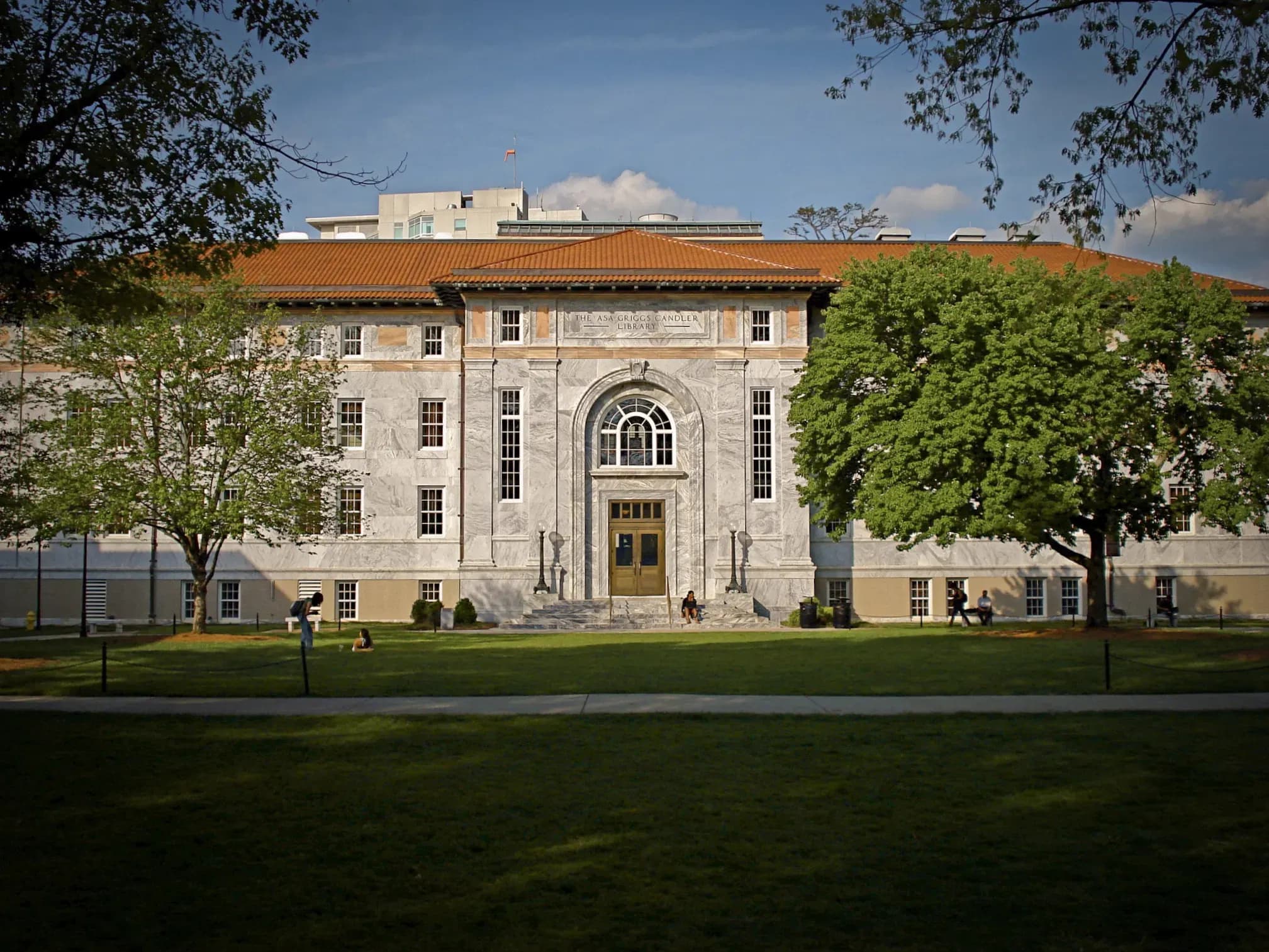
- Location: Emory University, United States
- Field of Study: Economics
- Language of Instruction: English
Program Structure
Year 1 – Foundational Knowledge
• Introduction to Microeconomics
• Principles of Programming
• Introduction to Macroeconomics
• Calculus I & II
Year 2 – Intermediate Concepts
• Intermediate Economics
• Data Structures and Algorithms
• Statistics and Probability
• Database Systems
Year 3 – Applied Analysis
• Econometrics
• Artificial Intelligence or Machine Learning
• Software Engineering Principles
• Game Theory
Year 4 – Capstone and Specialization
• Advanced Economic Modeling
• Research Seminar or Senior Project
• Elective: Computational Economics / Data Ethics
• Optional Internship or Applied Lab
Career Opportunities
Graduates of the Economics and Computer Science program are uniquely qualified for a wide range of career paths that demand a strong foundation in both economic reasoning and technical proficiency. Common roles include data scientist, financial software developer, economic consultant, quantitative analyst, and product manager in tech-centric firms. These graduates are also well-suited for positions in government agencies, central banks, research institutes, and international organizations where economic modeling and computational skills are essential. The dual expertise opens doors in industries such as fintech, artificial intelligence, e-commerce, policy research, and digital marketing analytics. Furthermore, many alumni pursue advanced degrees in economics, computer science, or interdisciplinary programs such as computational social science or data-driven public policy.
Why Choose This Program
This program stands out for its commitment to combining two high-impact fields into a cohesive, future-ready academic experience. Students gain not only a robust understanding of economic systems and theories but also the programming and algorithmic knowledge needed to analyze, model, and innovate within them. The curriculum is designed to foster independent thinking, interdisciplinary problem-solving, and technical excellence. With access to cutting-edge research facilities, experienced faculty from both departments, and a broad range of real-world applications, students emerge as versatile professionals ready to navigate complex global challenges. Choosing this program means embracing a forward-thinking education that empowers students to lead in both the economic and technological domains.
Contact Information
For further information, please contact the admissions office at:
Phone: +1 404 727 6123
Email: contentedit@emory.edu
Address: University of Emory, 201 Dowman Drive, Atlanta, GA 30322, United States
