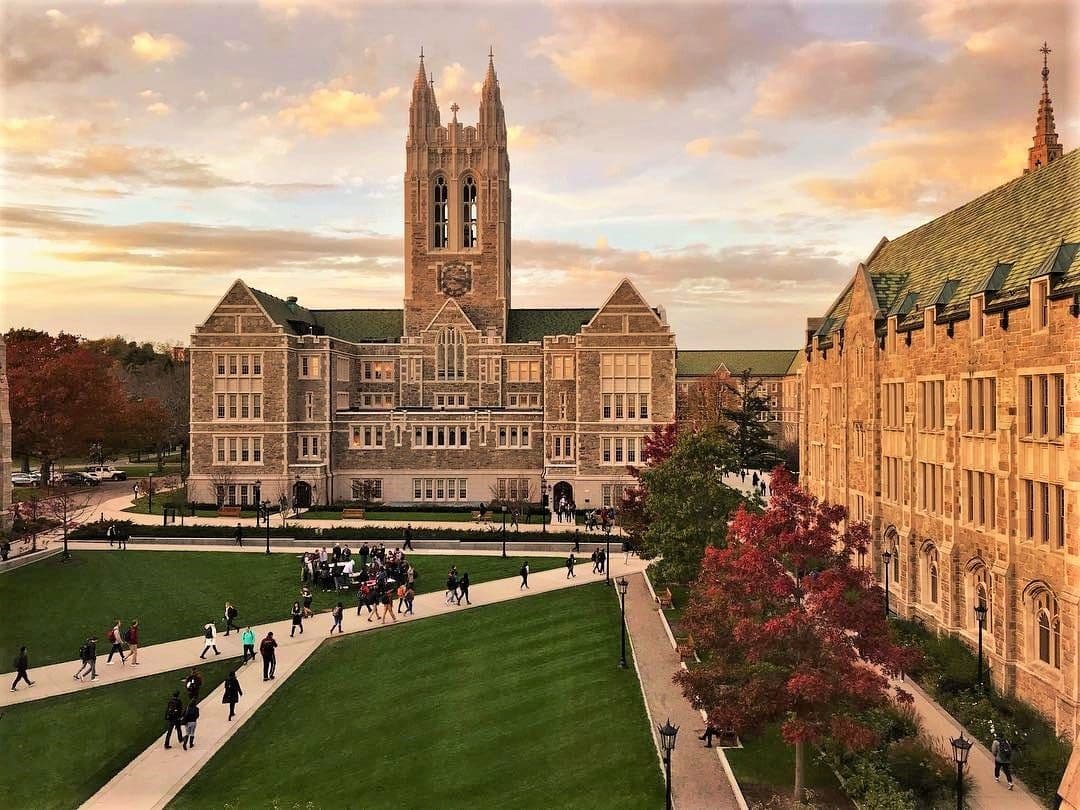

The Bachelor of Arts in Economics at Boston College University is a comprehensive and intellectually rich program designed to provide students with a deep understanding of economic systems, market behavior, and the factors that influence global and domestic decision-making. With a curriculum that balances theory, data analysis, and real-world application, students explore how economic principles shape business strategies, government policies, and societal outcomes. From microeconomic choices to macroeconomic dynamics, learners develop the skills to interpret and assess economic phenomena through rigorous reasoning and evidence-based approaches. The program equips students with the tools necessary to evaluate efficiency, equity, and development in a rapidly changing world.
Throughout the four-year program, students engage with foundational and advanced coursework in areas such as international trade, public policy, labor markets, and economic development. They also receive robust training in quantitative methods, including statistical software, modeling, and econometrics, enabling them to conduct research and assess data with confidence and clarity. The department encourages interdisciplinary exploration by allowing students to integrate economics with fields such as politics, sociology, and finance. Combined with faculty mentorship and real-world opportunities such as internships and research assistantships, the program prepares graduates to be both analytical and adaptable in solving complex economic challenges.
Key Facts
Key Facts
- Program Title: Economics
- Degree Type: Bachelor of Arts
- Duration: 4 years
- Mode of Study: Full-time, On Campus
- Application Deadline: 02 January 2026
- Location: Boston College, United States
- Field of Study: Economics
- Language of Instruction: English
Program Structure
Year 1 – Foundations of Economic Thought
- Principles of Microeconomics
- Principles of Macroeconomics
- Introduction to Statistical Methods
- College Writing and Research
Year 2 – Core Models and Quantitative Methods
- Intermediate Microeconomics
- Intermediate Macroeconomics
- Introduction to Econometrics
- Mathematics for Economics
Year 3 – Applications and Policy Analysis
- Public Economics
- Economics of Development or Labor Economics
- Economic Research Seminar
- Elective: International Trade or Game Theory
Year 4 – Advanced Topics and Capstone
- Advanced Econometrics or Financial Economics
- Senior Thesis or Independent Research Project
- Elective: Health Economics or Urban Economics
- Internship or Directed Study
Career Opportunities
Graduates of the Economics program at Boston College University are prepared for a broad range of professional opportunities that require analytical rigor, data literacy, and critical thinking. Many alumni pursue careers in finance, consulting, government policy, and international organizations, where their economic insight drives decisions on budgeting, investment, regulation, and development. Employers highly value the combination of quantitative and qualitative skills developed through this degree, making graduates competitive candidates for roles such as economic analysts, policy advisors, market researchers, and data consultants. Others enter research institutes or think tanks, where they contribute to evidence-based policy recommendations and long-term strategic planning. The degree also serves as a strong foundation for graduate studies in economics, public policy, business administration, or law, allowing students to deepen their specialization and expand their influence in shaping economic futures.
Why Choose This Program
This program stands out for its balance of academic excellence, applied learning, and interdisciplinary opportunity, offering students a rich environment in which to explore the complexities of modern economies. Boston College University fosters an intellectually vibrant community where students are supported by experienced faculty, encouraged to participate in collaborative research, and exposed to current economic debates and methodologies. The curriculum evolves in response to global economic trends, ensuring that students graduate with the tools necessary to understand and impact the forces shaping markets, institutions, and societies. By blending theory with practice and emphasizing both global awareness and ethical responsibility, the program prepares students to become thoughtful economists, innovators, and leaders capable of addressing today’s most urgent economic challenges.
Contact Information
For further information, please contact the admissions office at:
Phone: +1 617 552 8000
Email: admissions@bostoncollege.edu
Address: University of Boston College, Chestnut Hill, MA 02467, United States
