Bachelor of Arts · Full-time · On Campus

Emory University
Atlanta, United States
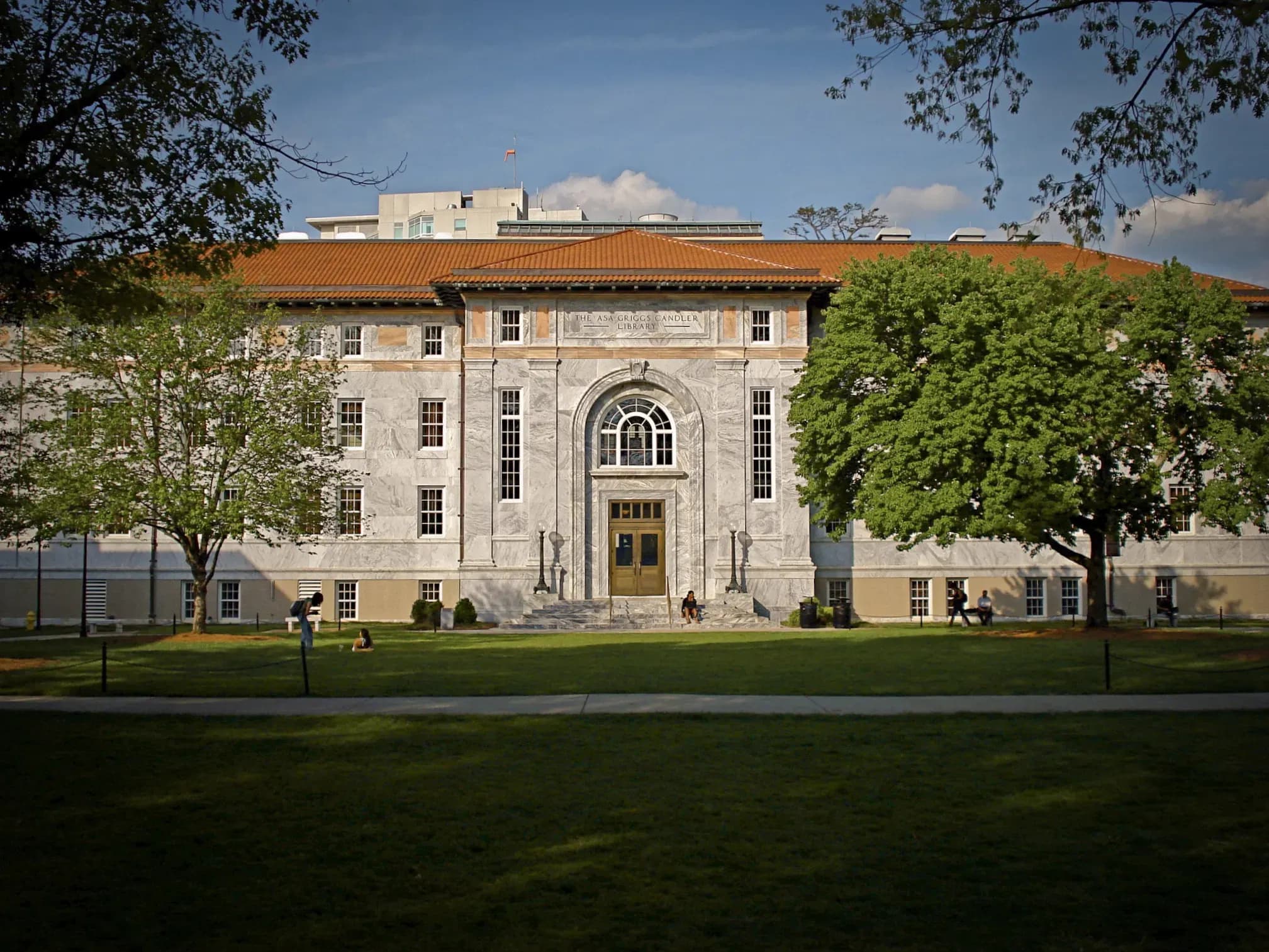
The Bachelor of Arts in Economics is a comprehensive five-year undergraduate program that delves into the study of how societies allocate resources, make decisions, and respond to incentives. This program provides students with a broad foundation in microeconomics, macroeconomics, and quantitative analysis, while also incorporating insights from political science, sociology, and ethics. Students learn to critically evaluate economic theories and apply them to real-world issues such as inflation, unemployment, global trade, public policy, and market regulation. The curriculum combines theoretical knowledge with practical tools such as statistical software, econometric modeling, and data interpretation to develop well-rounded, analytically skilled graduates.
As students progress through the program, they explore specialized topics such as environmental economics, development economics, labor markets, and international finance, enhancing their understanding of both domestic and global economies. The extended five-year format allows for deeper exploration of interdisciplinary electives, independent research projects, and internship opportunities. This structure ensures that students graduate not only with strong technical skills but also with a solid grasp of the societal, historical, and ethical dimensions of economic decision-making.
Year 1 – Foundations
• Principles of Microeconomics
• Principles of Macroeconomics
• Introduction to Statistics
• Academic Writing and Communication
Year 2 – Core Theories and Tools
• Intermediate Microeconomics
• Intermediate Macroeconomics
• Calculus for Economics
• Economic History
Year 3 – Quantitative and Policy Analysis
• Econometrics
• Public Economics
• Global Economic Development
• Elective: Political Economy
Year 4 – Specialization and Research
• International Trade and Finance
• Behavioral Economics
• Advanced Topics in Economic Theory
• Research Methods in Economics
Year 5 – Capstone and Application
• Senior Thesis or Applied Research Project
• Internship or Field Study
• Elective: Environmental or Health Economics
• Seminar in Economic Policy
Graduates of the Economics program are exceptionally well-prepared for a wide range of professional careers and academic pathways. They often pursue positions in finance, banking, consulting, government agencies, economic research institutions, and multinational corporations. Common job titles include financial analyst, economic consultant, policy advisor, market research analyst, and data economist. Those interested in further education frequently go on to earn graduate degrees in economics, law, business administration, or public policy. The program’s emphasis on critical thinking, statistical reasoning, and real-world application ensures that graduates are equipped to tackle complex challenges across industries. Employers across sectors value the analytical discipline and structured problem-solving skills that economics graduates bring to the table.
This program is ideal for students who are intellectually curious about how economies function and how economic policies shape the world around them. Emory University offers a uniquely rigorous and interdisciplinary economics education that blends theory with practice, supported by a faculty actively engaged in cutting-edge research. The five-year format allows students to deepen their learning through hands-on experiences such as research assistantships, internships, and advanced elective coursework. Small class sizes, mentoring opportunities, and access to economic data labs foster an environment of collaboration and innovation. Choosing this program means developing the skills and perspectives needed to become a thoughtful economist, capable of making informed, responsible decisions that drive progress in both local and global contexts.
For further information, please contact the admissions office at:
Phone: +1 404 727 6123
Email: contentedit@emory.edu
Address: University of Emory, 201 Dowman Drive, Atlanta, GA 30322, United States
Bachelor of Arts · Full-time · On Campus
Emory University
Atlanta, United States
Bachelor of Arts · Full-time · On Campus
Emory University
Atlanta, United States
Bachelor of Arts · Full-time · On Campus
Emory University
Atlanta, United States
Bachelor of Science · Full-time · On Campus
Emory University
Atlanta, United States
