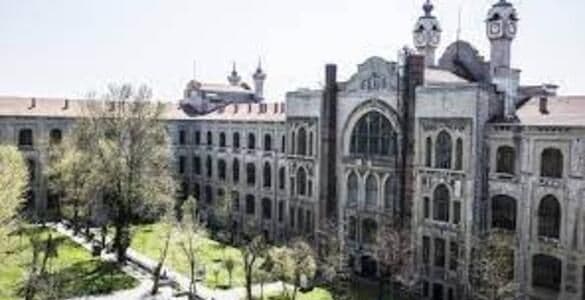
The English-taught Economics programme at Marmara University is a four-year undergraduate degree offering students a strong foundation in economic theory, quantitative methods, and global economic issues. Students learn subjects such as microeconomics, macroeconomics, econometrics, international trade and finance, and economic policy — all in English, helping them build both economic knowledge and language skills. The curriculum balances theoretical courses with practical, quantitative training and encourages critical thinking about national and global economies.
With its location in Istanbul and instruction in English, the programme gives students the chance to study in a multicultural and international environment, connect with diverse peers, and gain skills useful for both domestic and international economic careers. Graduates leave with a broad, globally informed understanding of economics and the ability to analyse economic trends — making this programme a good match for those interested in economics, finance, research or global economic issues.
Key Facts
Key Facts
- Degree: Bachelor of Arts in Economics
- Standard period of study: 4 years (8 semesters)
- Location: Istanbul, Turkey
- Study Type: Undergraduate (full-time, international)
- Admission semester: Fall semester only
- Area of study: Economics, Econometrics, International Trade & Finance, Economic Policy
- Admission modus: Without admission restriction
- Main language: English
Program Structure
Semester 1 – Foundations of Economics
- Introduction to Economics I
- Calculus I / Basic Mathematics for Economics
- Introduction to Business / Accounting Basics
- English / Academic Skills
Semester 2 – Core Economic Concepts & Quantitative Tools
- Introduction to Economics II
- Microeconomics I
- Statistics / Quantitative Methods I
- Business / Social Sciences Elective
Semester 3 – Intermediate Economics & Quantitative Analysis
- Macroeconomics I
- Microeconomics II
- Econometrics / Statistics II
- International Economics / Trade Fundamentals
Semester 4 – Economic Theory & International Economics
- Macroeconomics II
- Public Finance / Economic Policy
- International Trade & Finance
- Elective / General Course
Semester 5 – Applied Economics & Specialization
- Money and Banking / Financial Economics
- Development / Growth Economics
- Economic History / Institutional Economics
- Elective / General Course
Semester 6 – Advanced Economics & Data Analysis
- Econometrics II / Applied Statistics
- International Finance / Global Economics
- Labour Economics / Public Economics
- Elective / General Course
Semester 7 – Economic Policy & Research Methods
- Economic Policy Analysis
- Research Methods in Economics
- Economic Modelling / Computational Economics
- Elective / General Course
Semester 8 – Thesis / Capstone & Preparation for Career
- Graduation Project / Thesis or Capstone Course
- Advanced Electives (Finance, International Economics, Econometrics, etc.)
- Internship / Practical Experience / Seminar
- Portfolio & Career Preparation
Career Opportunities
Graduates from this programme are prepared for many roles in both the public and private sectors: in financial institutions, banking, economic research, consulting firms, governmental agencies, and international organizations. They can work as economists, financial analysts, policy advisors, economic consultants, data analysts, or economic researchers. With strong English and quantitative skills, they also have the opportunity to work internationally or with multinational companies. For those interested in academia or research, the programme provides a solid foundation for postgraduate studies in economics, finance, or econometrics. In a globalizing world economy, this degree helps build flexible, analytical thinking — valuable wherever economic analysis and decision-making are needed.
Why Choose This Program
Choosing the English Economics program means studying in an international environment where economic theories and real-world issues come together. Students learn how markets work, how countries grow, and how decisions affect people and businesses. With courses taught fully in English, the program helps students improve their language skills while learning to think clearly and solve economic problems. The combination of theory, quantitative training, and global perspectives makes this program a strong foundation for many different career paths in economics and related fields.
The program also offers a chance to work with experienced instructors and study alongside students from diverse backgrounds. Through research projects, elective courses, and practical learning opportunities, students learn how to analyse data, understand economic trends, and make informed decisions. This supportive and international academic environment helps students build confidence, develop communication skills, and prepare for jobs in finance, business, government, or international organisations. It is an excellent choice for anyone who wants a flexible and future-oriented economics education.
Contact Information
Marmara University – Faculty of Economics, Department of English Economics
Maltepe Campus, K2 Building,
Istanbul, Türkiye
Tel: +90 216 777 30 00 (extension 3136)
Direct line: +90 216 777 31 36
Email: economics@marmara.edu.tr
