Master of Science · Full-time · On Campus

Johns Hopkins University
Baltimore, United States
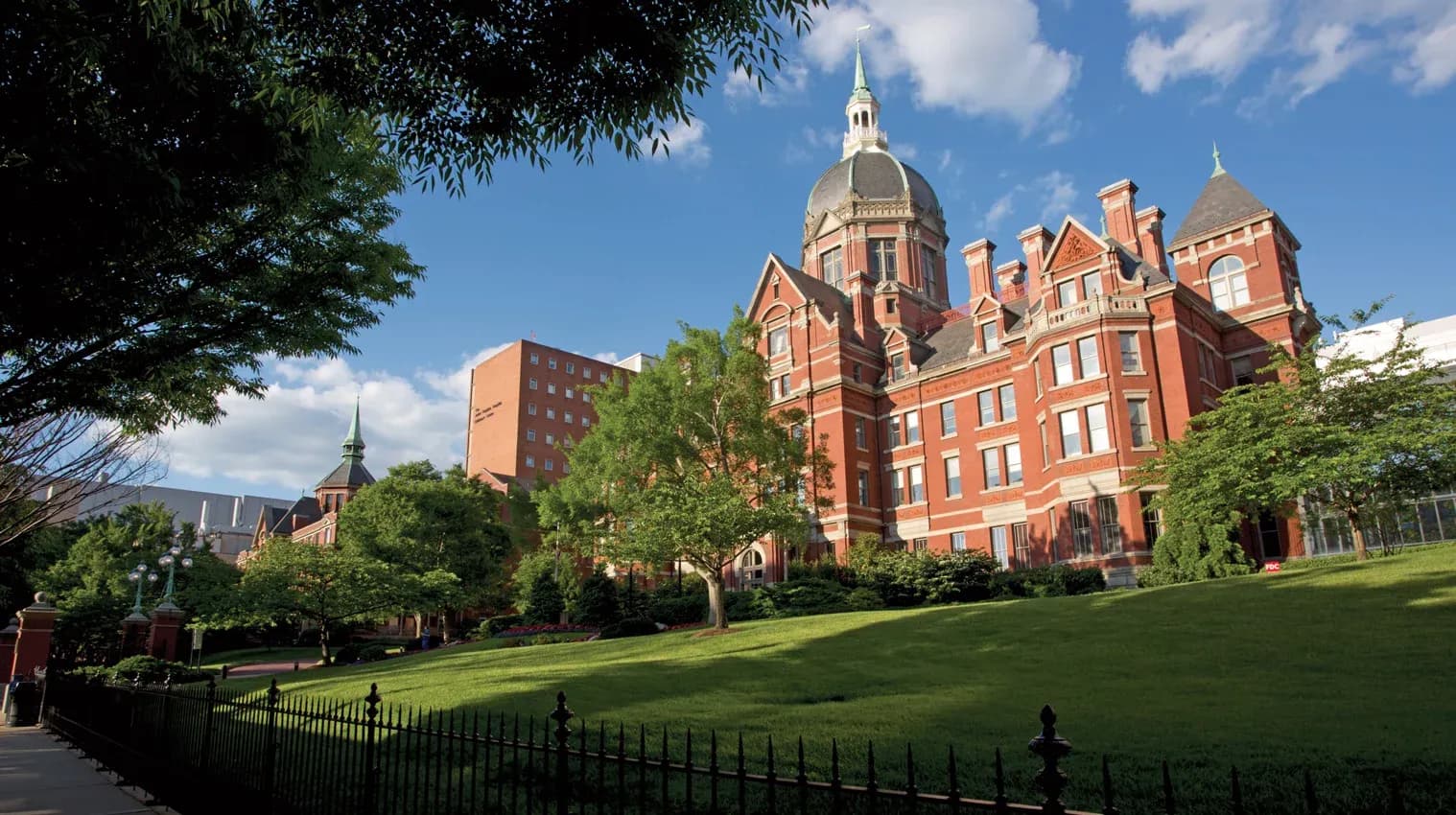
The Electrical Engineering program at Johns Hopkins University delivers a rigorous and innovative education focused on the principles, technologies, and systems that drive modern electronics and communication. Students explore topics such as circuit design, signal processing, electromagnetics, and embedded systems, while gaining practical experience through labs and project-based learning. This program provides a solid theoretical foundation in mathematics and physics, enabling students to understand and develop the technologies that power everything from smartphones to satellite systems.
Beyond core engineering knowledge, students are encouraged to engage in interdisciplinary collaboration and undergraduate research. They have access to advanced laboratories, faculty-led research initiatives, and industry partnerships that support hands-on experimentation and innovation. Whether designing microchips or working on large-scale power systems, students are trained to solve complex problems, communicate ideas effectively, and apply ethical and sustainable engineering practices to real-world challenges.
Year 1 – Core Foundations
Year 2 – Analytical Tools and Techniques
Year 3 – Advanced Systems and Applications
Year 4 – Specialization and Capstone
Graduates of the Electrical Engineering program are highly sought after in a wide range of industries. Many pursue careers in semiconductor design, telecommunications, robotics, or aerospace engineering, while others work in medical technology, automotive systems, or energy infrastructure. The program also prepares students for roles in research and development, systems engineering, or technical consulting. Thanks to their strong analytical, programming, and problem-solving skills, alumni are also well-equipped for graduate study in engineering, computer science, or applied physics, positioning them to become leaders in technologically intensive sectors.
Johns Hopkins University offers a dynamic and supportive environment for electrical engineering education. With state-of-the-art labs, distinguished faculty, and access to real-world research opportunities, students gain the skills and confidence to create impactful solutions. The program encourages innovation through hands-on projects and collaboration with peers from other STEM disciplines. Its flexible curriculum allows students to tailor their experience through elective specializations, internships, and global learning opportunities. Choosing this program means preparing for a future where you can design and improve the systems that power our connected world.
For further information, please contact the admissions office at:
Phone: +1 410 516 8000
Email: admissions@jhu.edu
Address: Johns Hopkins University, 3400 N. Charles Street, Baltimore, MD 21218, USA
Master of Science · Full-time · On Campus
Johns Hopkins University
Baltimore, United States
Master of Arts · Full-time · On Campus
Johns Hopkins University
Baltimore, United States
Master of Arts · Full-time · On Campus
Johns Hopkins University
Baltimore, United States
Master of Science · Full-time · On Campus
Johns Hopkins University
Baltimore, United States
