Bachelor of Arts · Full-time · On Campus
Northwestern University
Evanston, United States
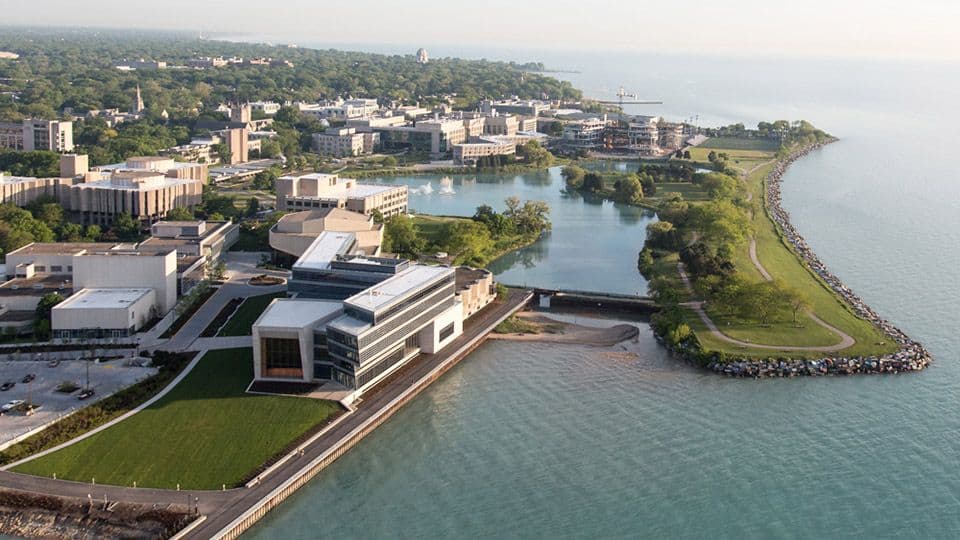
The Electrical Engineering undergraduate program at Northwestern University offers a dynamic and comprehensive education designed to equip students with a strong foundation in electrical systems, signal processing, and electronics. This four-year, full-time program combines rigorous theoretical instruction with hands-on experience in laboratories and design studios. Students explore fundamental areas such as circuit theory, electromagnetics, and digital systems, while gaining exposure to modern technologies including microelectronics, embedded systems, and wireless communication. The curriculum balances engineering depth with creative problem-solving, enabling students to engage with complex challenges in power, communication, and control systems.
As students progress through the program, they develop expertise in designing, analyzing, and implementing innovative electrical solutions that meet real-world demands. The program offers flexibility through technical electives and interdisciplinary coursework in areas such as computer engineering, robotics, biomedical systems, and renewable energy. Faculty with industry experience and active research portfolios guide students through emerging topics like machine learning, nanotechnology, and smart grid design. With a strong emphasis on teamwork, ethics, and design thinking, the program ensures that graduates are not only technically proficient but also capable of leading multidisciplinary projects and driving innovation in a constantly evolving field.
Year 1 – Foundations in Engineering and Math
• Introduction to Electrical and Computer Engineering
• Calculus and Linear Algebra
• Physics for Engineers
• Programming Fundamentals
Year 2 – Core Electrical Concepts
• Circuit Analysis
• Signals and Systems
• Digital Logic and Design
• Probability and Statistics for Engineers
Year 3 – Applications and Systems Integration
• Electromagnetic Fields
• Microprocessors and Embedded Systems
• Communication Systems
• Control Systems Engineering
Year 4 – Advanced Topics and Capstone
• Capstone Design Project in Electrical Engineering
• Technical Electives: Power Electronics, Biomedical Devices, etc.
• Engineering Ethics and Professional Practice
• Seminar on Emerging Technologies
Graduates of the Electrical Engineering program are well-positioned for impactful careers in both established industries and cutting-edge technology sectors. They take on roles such as electrical engineers, systems designers, embedded systems developers, and R&D engineers in industries including telecommunications, aerospace, automotive, consumer electronics, and energy. Opportunities also exist in robotics, semiconductors, medical technology, and artificial intelligence applications. Many pursue advanced degrees in engineering, computer science, or applied physics, while others transition into technology management, entrepreneurship, or consulting, leveraging their technical training and problem-solving mindset to innovate across disciplines.
This program is ideal for students who want to combine scientific inquiry with real-world impact by building and shaping technologies that power modern life. Northwestern’s Electrical Engineering curriculum encourages both technical mastery and creative interdisciplinary exploration, offering students the chance to specialize in high-demand fields while participating in collaborative research, industry partnerships, and entrepreneurial initiatives. With access to cutting-edge labs, supportive faculty, and a culture of innovation, students are prepared not only to succeed in today’s job market but to shape the future of electrical systems and technology with purpose, precision, and vision.
For further information, please contact the admissions office at:
Phone: +1 312 555 2040
Email: admissions@northwestern.edu
Address: University of Northwestern, 633 Clark Street, Evanston, IL 60208, United States
Bachelor of Arts · Full-time · On Campus
Northwestern University
Evanston, United States
Bachelor of Science · Full-time · On Campus
Northwestern University
Evanston, United States
Bachelor of Science · Full-time · On Campus
Northwestern University
Evanston, United States
Bachelor of Science · Full-time · On Campus
Northwestern University
Evanston, United States
