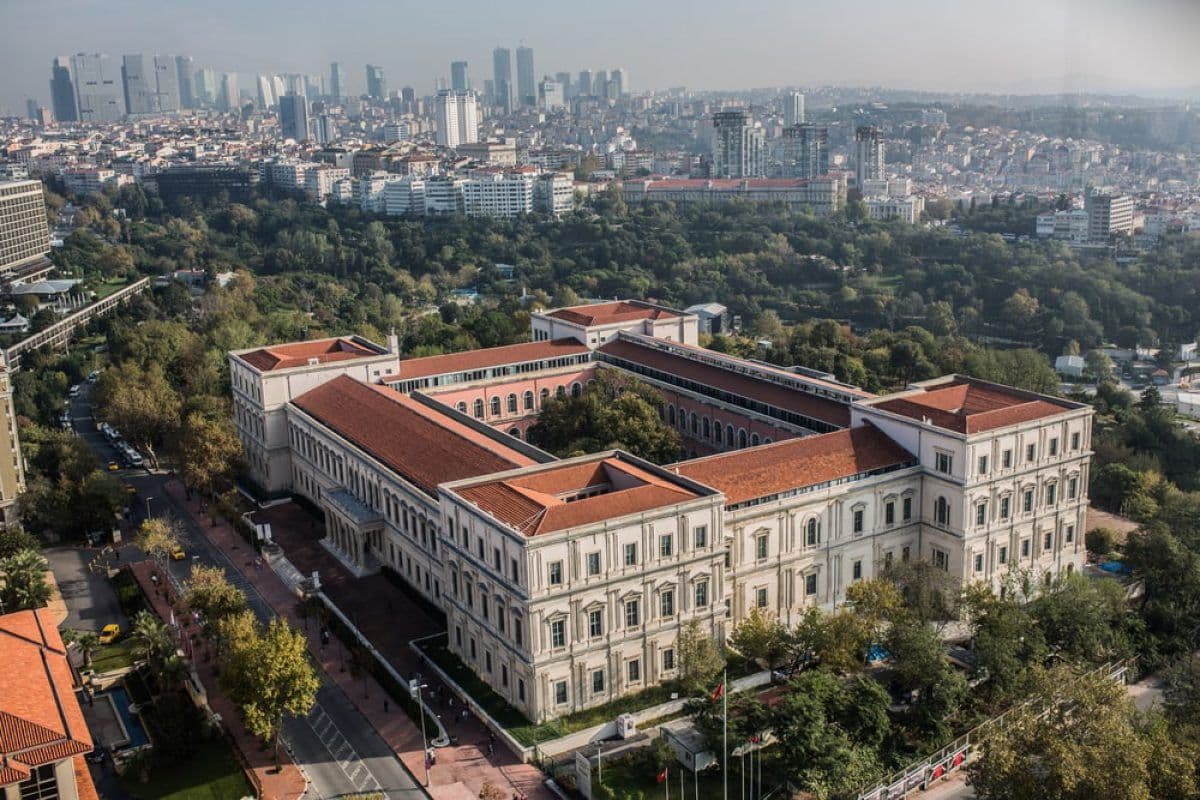

Electronics and Communication Engineering (B.Sc., English, UOLP – ITU & IUS)
The Electronics and Communication Engineering (B.Sc., English, UOLP – ITU & IUS) programme is an international dual-degree bachelor’s degree offered jointly by Istanbul Technical University and the International University of Sarajevo. It is designed for students who want to learn how electronic circuits, communication systems and modern networks work. In the first years, students build a strong base in mathematics, physics, programming and basic electronics. In the later years, they study communication theory, signal processing, wireless systems, digital electronics and network technologies. The goal is to give students both solid theoretical knowledge and practical engineering skills in electronics and communication.
The programme is fully taught in English and takes place in two countries, which helps students gain a global point of view. Students spend part of their studies at IUS in Sarajevo and part at ITU in Istanbul, experiencing two academic cultures and learning how to work with people from different backgrounds. Through laboratory courses, design projects and teamwork, they practise building and testing circuits and communication systems. By the end of the programme, graduates hold a dual degree and are ready for careers in electronics, telecommunications and related engineering fields, both locally and internationally.
Key Facts
Key Facts
- Degree: Bachelor of Science (B.Sc.)
- Standard period of study: 8 semesters (4 years)
- Location: Sarajevo (IUS) & Istanbul (İTÜ)
- Study Type: Undergraduate, full-time, English-medium, dual-degree
- Admission semester: Fall semester only
- Area of study: Electronics, Communication Systems, Signal Processing, Networks, Telecommunications Engineering
- Main language: English
Program Structure
Semester 1 – Foundations of Engineering & Basics
- Mathematics I
- Physics I
- Introduction to Electrical & Electronic Engineering
- Basic Programming & Computing Skills
Semester 2 – Basic Circuits & Systems
- Mathematics II
- Circuit Theory & Basic Electronics
- Programming & Data Structures
- General Education / English-Based Course
Semester 3 – Core Electronics & Signals I
- Digital Systems / Logic Design
- Signals & Systems
- Analog Electronics / Circuit Analysis
- Elective or General Course
Semester 4 – Core Communications & Systems I
- Communication Systems Fundamentals
- Semiconductor Devices or Electronics II
- Probability & Statistics for Engineers
- Elective or Lab Course
Semester 5 – Advanced Communications & Networks
- Wireless Communications / Mobile Networks
- Digital Communications / Signal Processing
- Embedded Systems or Microprocessors
- Elective Course
Semester 6 – Advanced Topics & International Transition
- Network & Data Communications / Internet Technologies
- Systems Engineering or Control Systems Elective
- Advanced Electronics or Communications Lab
- Project or Practical Course
Semester 7 – Projects & Professional Development
- Electronics & Communication Project (Team-based)
- Advanced Elective (IoT, Data Communications, Security, etc.)
- Seminar / Research Methods / Technical Writing
- Elective Course
Semester 8 – Capstone & Dual Diploma Completion
- Final Year Project / Capstone Design
- Advanced Elective or Specialisation Course
- Professional Development / Career Preparation
- Graduation & Dual Diplomas Awarded
Career Opportunities
Graduates can work as electronics engineers, communication systems engineers, network or telecom specialists, embedded systems developers, signal processing experts, hardware-software integration engineers, R&D engineers, or in electronics & communications consultancy. With a dual-university background and English-medium education, they are ready for international companies, global projects or further studies abroad. They may join telecommunication firms, electronics manufacturers, IT and hardware-software firms, research labs, or start-ups working on communications, networks, data transmission, IoT or related technology fields.
Why Choose This Program
This programme is a strong choice for students who want both technical engineering education and international experience. Because it is a dual-degree programme, you study in two different countries and learn from two universities, which helps you grow academically and personally. You work on real projects, practise in labs, and learn how communication systems, circuits and networks work in real life. This hands-on approach makes learning easier and helps you gain confidence in your engineering skills.
Another reason to choose this programme is the flexibility it offers for your future career. Electronics and communication engineering is needed in many areas such as telecommunications, networks, IoT, embedded systems, wireless technologies and digital systems. With two diplomas from ITU and IUS, you have a strong advantage when applying for jobs or graduate programmes abroad. The combination of technical knowledge, practical training and international experience makes this programme an excellent starting point for a successful engineering career.
Contact Information
Istanbul Technical University – Faculty of Electrical & Electronics Engineering
Ayazağa / Maslak Campus,
Istanbul, Turkey
Tel: +90 212 285 36 00
Email: info@itu.edu.tr
UOLP – International Joint Degree Office (İTÜ)
Ayazağa / Maslak Campus,
Istanbul, Turkey
Tel: +90 212 285 36 00
Email: uolp@itu.edu.tr
International University of Sarajevo – Partner Office
Sarajevo, Bosnia and Herzegovina
Contact via IUS International Admissions Office
