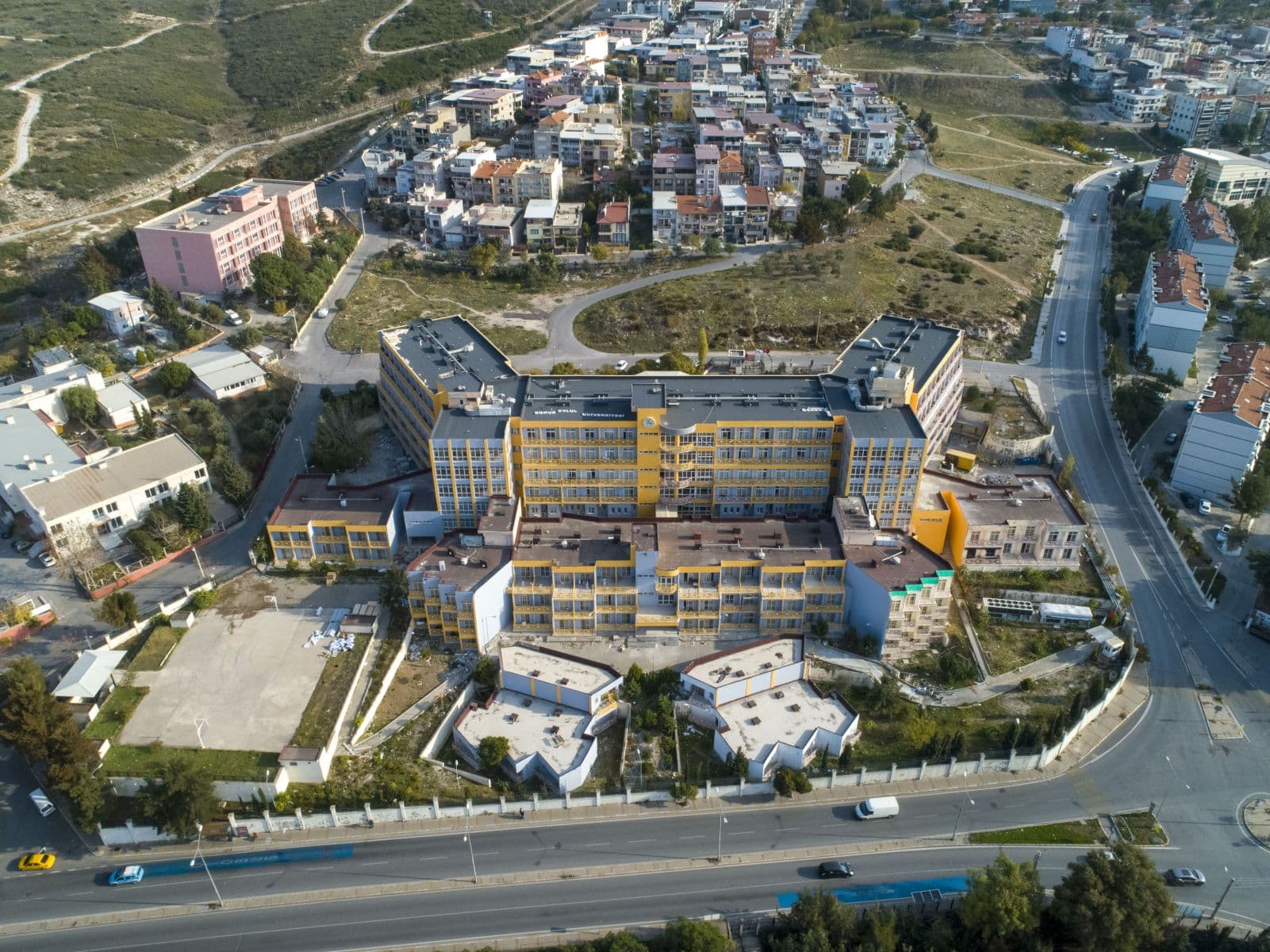

Electronics and Communication Engineering
The English-medium Electronics and Communication Engineering programme offers students a modern engineering education in English, covering core and advanced topics in electronics, communications, signal processing, networks, embedded systems, and telecommunications technologies. The programme combines theoretical foundation with practical laboratory and project-based training. Students engage in coursework, labs, and hands-on projects in areas such as digital and analog electronics, communication systems, wireless networks, microprocessors, and signal processing algorithms — preparing them for careers in engineering and communication technology. The instruction language is English, making the programme suitable for both local and international students.
Located at a university with strong technological and academic infrastructure, this programme provides access to well-equipped electronics and communication labs, experienced faculty, and opportunities for research or industry collaborations. The curriculum balances fundamental engineering theory with applied practice and emphasizes both hardware and software aspects of modern communication systems. Graduates will be ready for global engineering environments, have strong technical foundations, and be capable of adapting to evolving technology and industry demands.
Key Facts
Key Facts
- Degree: Bachelor of Science (B.Sc.)
- Standard period of study: 4 years (8 semesters)
- Location: —
- Study Type: Undergraduate (full-time)
- Admission semester: Fall semester
- Area of study: Electronics Engineering, Communication Systems, Signal Processing, Networks, Embedded Systems
- Admission modus: With admission requirement
- Main language: English
Program Structure
Semester 1 – Foundations of Electronics & Mathematics
- Mathematics I (Calculus & Linear Algebra)
- Introduction to Programming & Problem Solving
- Physics I (Mechanics & Waves)
- Seminar: Fundamentals of Electronics
Semester 2 – Core Electronics & Basics of Communication
- Mathematics II (Probability & Statistics)
- Basic Electronics and Circuit Theory
- Digital Logic Design
- Seminar: Signals and Systems
Semester 3 – Signals, Systems & Electronics
- Signals and Systems Theory
- Analog & Digital Electronics
- Electromagnetics and Field Theory
- Seminar: Telecommunications Basics
Semester 4 – Communication Systems & Network Fundamentals
- Communication Systems I (Analog & Digital)
- Computer Networks & Data Communications
- Microprocessors and Embedded Systems I
- Seminar: Modern Communication Technologies
Semester 5 – Advanced Electronics & Signal Processing
- Digital Signal Processing
- Embedded Systems II
- Wireless Communications & Mobile Networks
- Seminar: Communication System Design
Semester 6 – Specialization & Applied Systems
- Communication Systems II (Advanced Topics)
- Control Systems & Automation
- Antennas, Propagation & RF Systems
- Seminar: Networking and IoT Systems
Semester 7 – Projects & Industry-Oriented Studies
- Senior Design Project I (Electronics & Communications)
- Network Security & Telecommunications Policy
- Optional Elective (e.g. Data Communications, Optical Networks)
- Seminar: Emerging Technologies and Innovation
Semester 8 – Graduation Project & Professional Preparation
- Senior Design Project II
- System Integration & Testing
- Seminar: Professional Ethics & Engineering Practice
- Graduation Requirements & Degree Completion
Career Opportunities
Graduates of this programme are qualified to work as electronics engineers, communications engineers, network engineers, embedded systems developers, or R&D engineers in telecommunications firms. They may also find roles in mobile communications, wireless networks, IT infrastructure, electronics manufacturing, or embedded system design companies. With strong foundations in both hardware and software, graduates can work in research centers, technology firms, or pursue postgraduate studies in signal processing, telecommunications, computer engineering or related fields.
Why Choose This Program
Choosing the English Electronics and Communication Engineering programme means joining a curriculum that combines fundamental engineering knowledge with modern communication technologies and global standards. Students benefit from rigorous theoretical courses as well as practical lab and project work, which fosters analytical, technical, and problem-solving skills. The English-medium instruction enables international collaboration, global mobility, and access to worldwide academic and industry networks.
Moreover, the programme offers a broad and up-to-date curriculum that reflects current technology trends — from embedded systems to wireless communications — giving students flexibility to specialize according to their interests. Through projects, labs, and elective courses, graduates build versatile skills that are valuable in many sectors, ensuring they are ready to meet evolving demands in electronics and communication industries.
Contact Information
Dokuz Eylül University – Student Affairs Directorate
Dokuzçeşmeler Yerleşkesi, Buca
35160 İzmir, Türkiye
Tel: +90 232 301 00 00
Fax: +90 232 420 48 00
Email: ogrenci.isleri@deu.edu.tr
Department of Electronics and Communication Engineering – Programme Contact
Dokuz Eylül University, Faculty of Engineering
Tinaztepe Campus, Buca
35160 İzmir, Türkiye
Tel: +90 232 412 72 00
Email: ecm.eng@deu.edu.tr
International Office – Dokuz Eylül University
Dokuz Eylül University, Rectorate Building
Cumhuriyet Bulvarı No: 144
35210 Alsancak/İzmir, Türkiye
Tel: +90 232 412 12 12
Fax: +90 232 464 78 50
Email: international@deu.edu.tr
