Bachelor of Science · Full-time · On Campus
Ankara University
Turkey
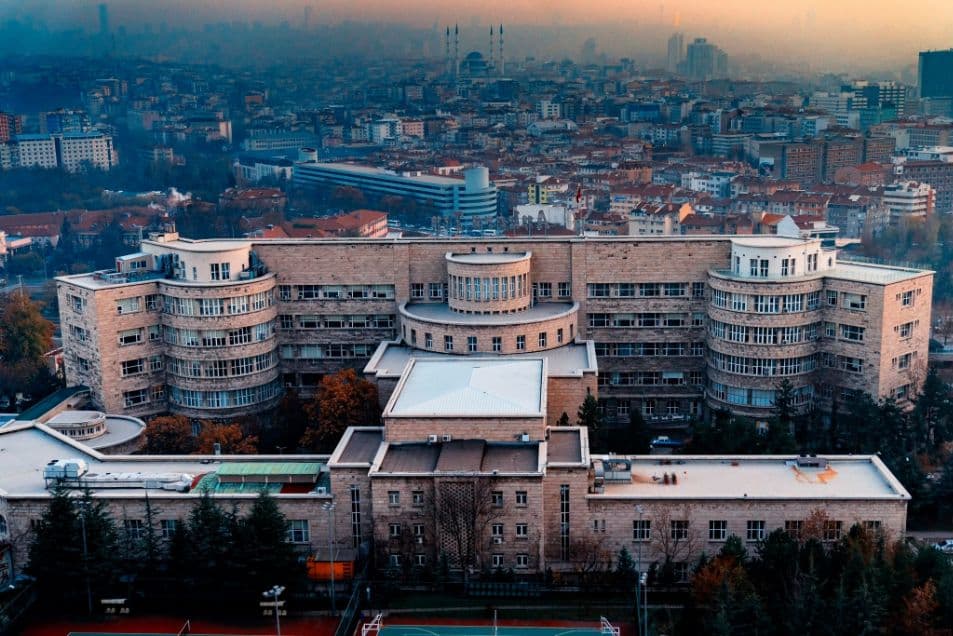
Energy Engineering at Ankara University is a forward-thinking undergraduate program taught in English, combining fundamentals of science with engineering and energy technologies. The programme is designed to educate future engineers who can tackle global energy challenges through a multidisciplinary approach — covering energy production, conversion, storage, efficiency, and sustainable energy systems. Students gain both theoretical knowledge and practical skills, including thermodynamics, fluid mechanics, material science, energy systems design and environmental awareness.
The program aims to produce engineers capable of working in energy generation, renewable energy technologies, energy materials development, and energy management. Located in Ankara — within the 50th Year Campus of the university — this programme benefits from modern facilities and research-oriented infrastructure. With an English-taught curriculum and a strong focus on interdisciplinary engineering, students are prepared for national and international careers in energy engineering, innovation, and sustainability-oriented sectors.
Semester 1 – Foundations of Energy Engineering
Semester 2 – Core Mathematics & Computer Skills
Semester 3 – Materials & Fundamentals of Energy Systems
Semester 4 – Thermodynamics & Fluid Mechanics
Semester 5 – Energy Conversion & Power Systems
Semester 6 – Applied Energy Technologies & Labs
Semester 7 – Design, Project & Professional Skills
Semester 8 – Graduation Project & Professional Preparation
Graduates of Energy Engineering are qualified to work in a variety of energy-related fields: renewable energy companies, power generation and distribution firms, energy consulting, energy materials and systems design companies, environmental and energy policy institutions, research & development centers, and sustainable energy projects. They may also continue to graduate studies (M.Sc / Ph.D.) or engage in interdisciplinary roles involving energy, environment, and technology.
Choosing Energy Engineering at Ankara University means opting for an English-taught, internationally oriented programme that integrates engineering fundamentals, energy science, and sustainable technologies. The department’s interdisciplinary approach — blending physics, chemistry, materials science and engineering — provides students with a comprehensive skill set relevant to modern energy challenges and global environmental trends.
Students benefit from modern campus facilities, updated curriculum, and a global perspective that prepares them for both national and international careers in energy, sustainability, and technological innovation.
Ankara University – Faculty of Engineering
Department of Energy Engineering
50th Year Campus, Bahçelievler Mh., 06830 Gölbaşı, Ankara, Türkiye
Tel: +90 312 203 33 00
Fax: +90 312 212 74 64
Email: energy@eng.ankara.edu.tr
Student Affairs – Faculty of Engineering
50th Year Campus, Ankara, Türkiye
Tel: +90 312 203 33 00 (Ext. 1204)
Fax: +90 312 212 74 64
Email: ogrenciisleri@eng.ankara.edu.tr
International Office – Ankara University
Dögol Caddesi, 06100 Tandoğan, Ankara, Türkiye
Tel: +90 312 212 60 40
Fax: +90 312 213 67 47
Email: international@ankara.edu.tr
Bachelor of Science · Full-time · On Campus
Ankara University
Turkey
Doctor of Philosophy · Full-time · On Campus
Ankara University
Turkey
Master of Science · Full-time · On Campus

University of Trento
Trento, Italy
S. Master · Full-time · On Campus

ETH Zurich - Swiss Federal Institute of Technology
Switzerland
