
Engineering Sciences and Applied Mathematics
The Master of Science in Engineering Sciences and Applied Mathematics provides a comprehensive academic environment for students who want to explore how advanced mathematical techniques can solve complex engineering and scientific problems. The program integrates theoretical knowledge with practical applications, emphasizing the development of strong analytical skills grounded in mathematical modeling, computational methods, applied analysis, and problem-driven research. Students learn how to translate real-world engineering systems into mathematical frameworks, enabling them to design simulations, evaluate performance, and generate predictive insights relevant to industries ranging from mechanics to climate science.
Beyond its rigorous technical foundation, the program encourages interdisciplinary collaboration with research groups across engineering, physics, and computational sciences. This exposure helps students understand the broader scientific context in which mathematical tools are applied, while also enhancing their ability to evaluate data, test assumptions, and propose innovative solutions. Through seminars, project-based coursework, and close faculty mentorship, learners strengthen skills in numerical analysis, model development, and critical interpretation of complex systems. This multifaceted structure ensures that graduates are prepared to address modern scientific challenges with methodological depth and creative reasoning.
Key Facts
Key Facts
- Program Title: Engineering Sciences and Applied Mathematics
- Degree Type: Master of Science
- Duration: 1 year
- Mode of Study: Full-time, On Campus
- Application Deadline: 15 December 2025
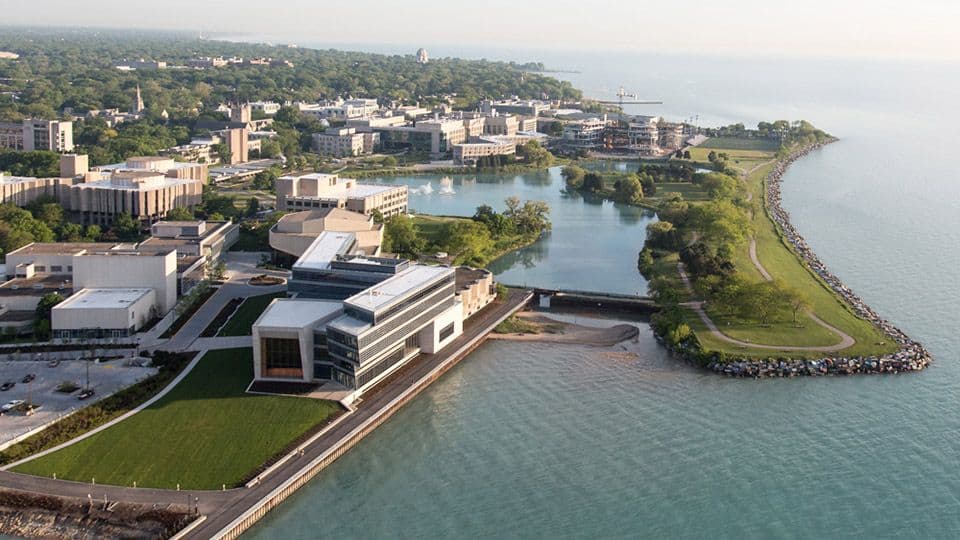
- Location: Northwestern University, United States
- Field of Study: Applied Mathematics
- Language of Instruction: English
Program Structure
Semester 1 – Core Foundations in Applied Mathematical Methods
• Differential Equations and Dynamical Systems
• Computational Methods for Engineering Analysis
• Probability and Stochastic Modeling
• Foundations of Mathematical Modeling
Semester 2 – Advanced Engineering Applications & Research
• Numerical Simulation and Scientific Computing
• Optimization and Control Theory
• Applied Complex Systems
• Research Project in Engineering Mathematics
Career Opportunities
Graduates of this program are equipped to pursue a wide range of analytical and research-focused roles across engineering, technology, and scientific sectors where mathematical problem-solving is central. Many work in engineering consulting, technology development, applied research laboratories, and data-intensive industries, contributing to the modeling, simulation, and optimization of mechanical, electrical, environmental, or computational systems. With strong skills in applied analysis and advanced computation, graduates support teams working on predictive modeling, system design, algorithm development, and performance forecasting. They often collaborate with engineers and scientists to evaluate large datasets, build simulation tools, interpret system behaviors, and provide mathematically grounded solutions that improve efficiency, accuracy, and innovation across various technical domains.
Why Choose This Program
This program stands out for its ability to merge rigorous mathematical theory with real engineering applications, offering students a highly focused and professionally relevant academic experience. Its curriculum emphasizes analytical depth, research-focused learning, and computational expertise, enabling graduates to approach complex technical challenges with both precision and creativity. The one-year structure provides a fast yet comprehensive pathway to advanced mathematical training, supported by expert faculty guidance, interdisciplinary research opportunities, and access to modern computational resources. For students seeking to enhance their quantitative capabilities and contribute meaningfully to engineering-driven innovation, this program delivers a strong and adaptable foundation for long-term professional and academic growth.
Contact Information
For further information, please contact the admissions office at:
Phone: +1 312 555 2040
Email: admissions@northwestern.edu
Address: University of Northwestern, 633 Clark Street, Evanston, IL 60208, United States
