Master of Science · Full-time · On Campus

Johns Hopkins University
Baltimore, United States
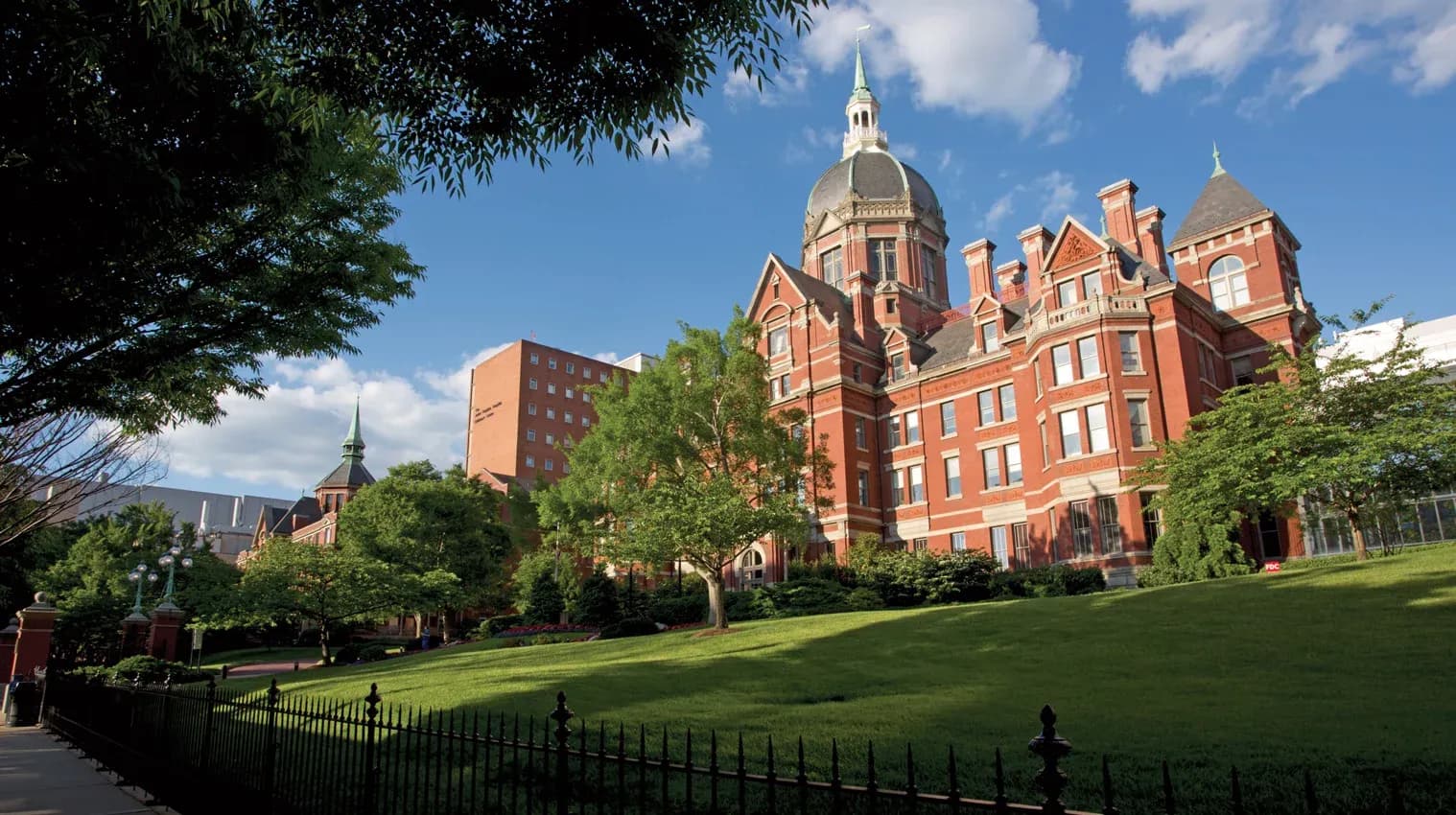
The Environmental Health program is designed to prepare students for addressing complex health challenges that arise from environmental exposures and conditions. Rooted in public health science, this 9-month intensive program explores the relationship between environmental hazards—such as air pollution, toxic substances, water contamination, and climate change—and population health outcomes. Students gain a comprehensive understanding of how to assess environmental risks, apply exposure science, and formulate evidence-based interventions that protect public health at local, national, and global levels.
Through a curriculum that combines theory, data analysis, and field-relevant applications, students develop practical skills in environmental monitoring, epidemiologic assessment, and regulatory frameworks. The program also emphasizes ethical decision-making and public communication, ensuring that graduates can collaborate across disciplines and advocate for vulnerable communities disproportionately affected by environmental health issues. Guided by experienced faculty and practitioners, students are encouraged to think critically and act decisively in environments shaped by policy, science, and public interest.
Semester 1 – Foundations of Environmental Health
• Principles of Environmental Health Sciences
• Exposure Assessment and Toxicology
• Environmental Epidemiology
• Risk Communication and Ethics in Public Health
Semester 2 – Applied Environmental Practice and Analysis
• Climate Change and Global Environmental Policy
• Data Analysis for Environmental Health
• Environmental Justice and Community Interventions
• Capstone Project: Policy or Field-Based Report
Graduates of this program are equipped to work in diverse roles within governmental health departments, environmental consulting firms, international organizations, and nonprofit public health advocacy groups. Career paths include positions such as environmental health analyst, public health advisor, risk assessor, policy researcher, and environmental epidemiologist. Many also work within the regulatory arms of agencies like the EPA or WHO, supporting the development and enforcement of health-protective standards. The program’s applied focus makes it particularly relevant for roles involving data-driven decision making, stakeholder communication, and rapid response to environmental crises. Additionally, graduates are well prepared for further academic study or professional specialization in areas like occupational health, environmental law, or global health policy.
This program offers a powerful combination of scientific depth, practical tools, and policy-oriented insight for individuals committed to improving public health through environmental stewardship. Its accelerated format is ideal for motivated professionals who wish to quickly develop core competencies in environmental risk analysis and intervention planning. With access to leading faculty in public health research, students engage in case studies, simulations, and interdisciplinary learning that mirrors the realities of environmental health practice. The curriculum prioritizes both technical expertise and ethical responsibility, helping students understand the impact of environmental injustice and the importance of community-based solutions. Whether your goal is to influence policy, design public health programs, or lead crisis response teams, this program offers the foundation to effect change where human health and environmental systems intersect.
For further information, please contact the admissions office at:
Phone: +1 410 516 8000
Email: admissions@jhu.edu
Address: Johns Hopkins University, 3400 N. Charles Street, Baltimore, MD 21218, USA
Master of Science · Full-time · On Campus
Johns Hopkins University
Baltimore, United States
Master of Arts · Full-time · On Campus
Johns Hopkins University
Baltimore, United States
Master of Arts · Full-time · On Campus
Johns Hopkins University
Baltimore, United States
Master of Science · Full-time · On Campus
Johns Hopkins University
Baltimore, United States
