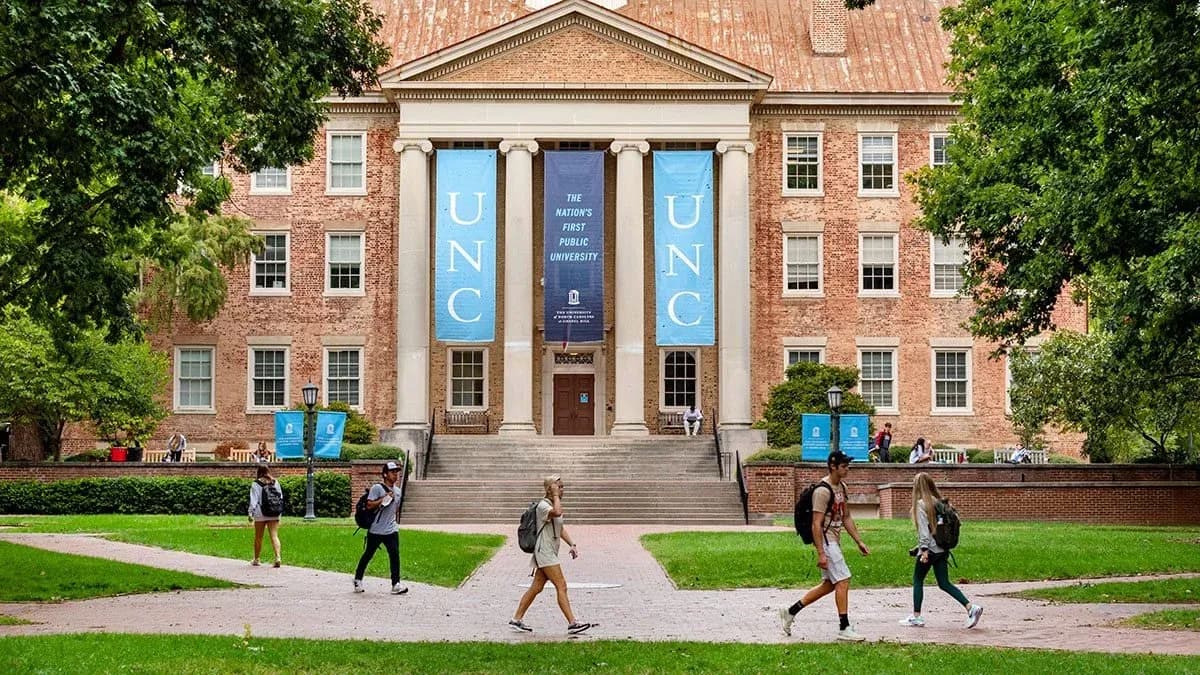

Environmental Studies, Secondary Teaching Option
The Environmental Studies, Secondary Teaching Option program at the University of North Carolina blends ecological science with educational theory to prepare students for careers in secondary education. This interdisciplinary program integrates environmental systems, sustainability, and policy studies with a focused curriculum in pedagogy and classroom practice. Students explore topics such as climate change, biodiversity, and natural resource management while also developing the teaching strategies and licensure qualifications necessary to educate the next generation. Emphasizing both scientific literacy and instructional excellence, the program equips future educators to inspire meaningful environmental awareness in middle and high school classrooms.
Over four years, students engage in coursework that combines environmental field studies, lab-based science, and teaching methodology. In addition to learning about ecological systems and environmental justice, students take part in educational psychology, curriculum design, and classroom management. The program includes observation hours and a full-semester teaching internship, allowing students to apply theory in real-world settings. Graduates leave with the content expertise, pedagogical training, and practical experience needed to meet licensure requirements and make an impact as educators who bring environmental issues into focus for young learners.
Key Facts
Key Facts
- Program Title: Environmental Studies, Secondary Teaching Option
- Degree Type: Bachelor of Arts
- Duration: 4 years
- Mode of Study: Full-time, On Campus
- Application Deadline: 01 February 2026
- Location: University of North Carolina at Chapel Hill, United States
- Field of Study: Teaching
- Language of Instruction: English
Program Structure
Year 1 – Foundations in Environment and Education
• Introduction to Environmental Studies
• General Biology or Earth Science
• Education and Society
• Academic Inquiry and Communication
• Foundations of Teaching
Year 2 – Scientific Knowledge and Classroom Skills
• Environmental Policy and Ethics
• Ecology and Ecosystems
• Learning Theories in Education
• Curriculum Development for Science
• Fieldwork or Lab Practicum
Year 3 – Instructional Methods and Environmental Systems
• Methods of Science Teaching
• Environmental Challenges and Global Impact
• Classroom Management Strategies
• Teaching Diverse Learners
• Elective: Environmental Sociology or GIS
Year 4 – Teaching Practice and Capstone
• Student Teaching Internship (Full Semester)
• Seminar in Secondary Science Education
• Assessment and Instructional Design
• Capstone in Environmental Education
• Reflective Teaching Portfolio
Career Opportunities
Graduates of this program are uniquely positioned to address the urgent need for science educators with a strong environmental background. Most become secondary school science teachers, environmental educators, curriculum specialists, or outreach coordinators in both public and private institutions. Others work with nonprofit organizations, museums, or nature centers where teaching and sustainability intersect. The program also prepares graduates to pursue licensure and meet the requirements for state-level teaching certifications. Those interested in further academic development often pursue graduate degrees in education, environmental science, or curriculum design. This program opens doors to meaningful careers where education and ecological awareness come together to shape future generations.
Why Choose This Program
This program is ideal for individuals who are passionate about both the environment and education, and who seek to make a lasting impact by teaching science through a sustainability-focused lens. The University of North Carolina offers a curriculum grounded in environmental expertise, pedagogical training, and real-world teaching practice, giving students the confidence and skills needed to succeed in today’s classrooms. Faculty mentorship, hands-on experience, and strong support for licensure ensure graduates are ready for the demands of secondary education. If you want to become an advocate for environmental awareness and empower young people to care for the planet, this program provides the essential tools and inspiration to lead with purpose.
Contact Information
Phone: +1 (919) 966-3621
Email: unchelp@admissions.unc.edu
Address: Jackson Hall, 174 Country Club Road, Chapel Hill, NC 27514, USA
