Master of Science · Full-time · On Campus

Johns Hopkins University
Baltimore, United States
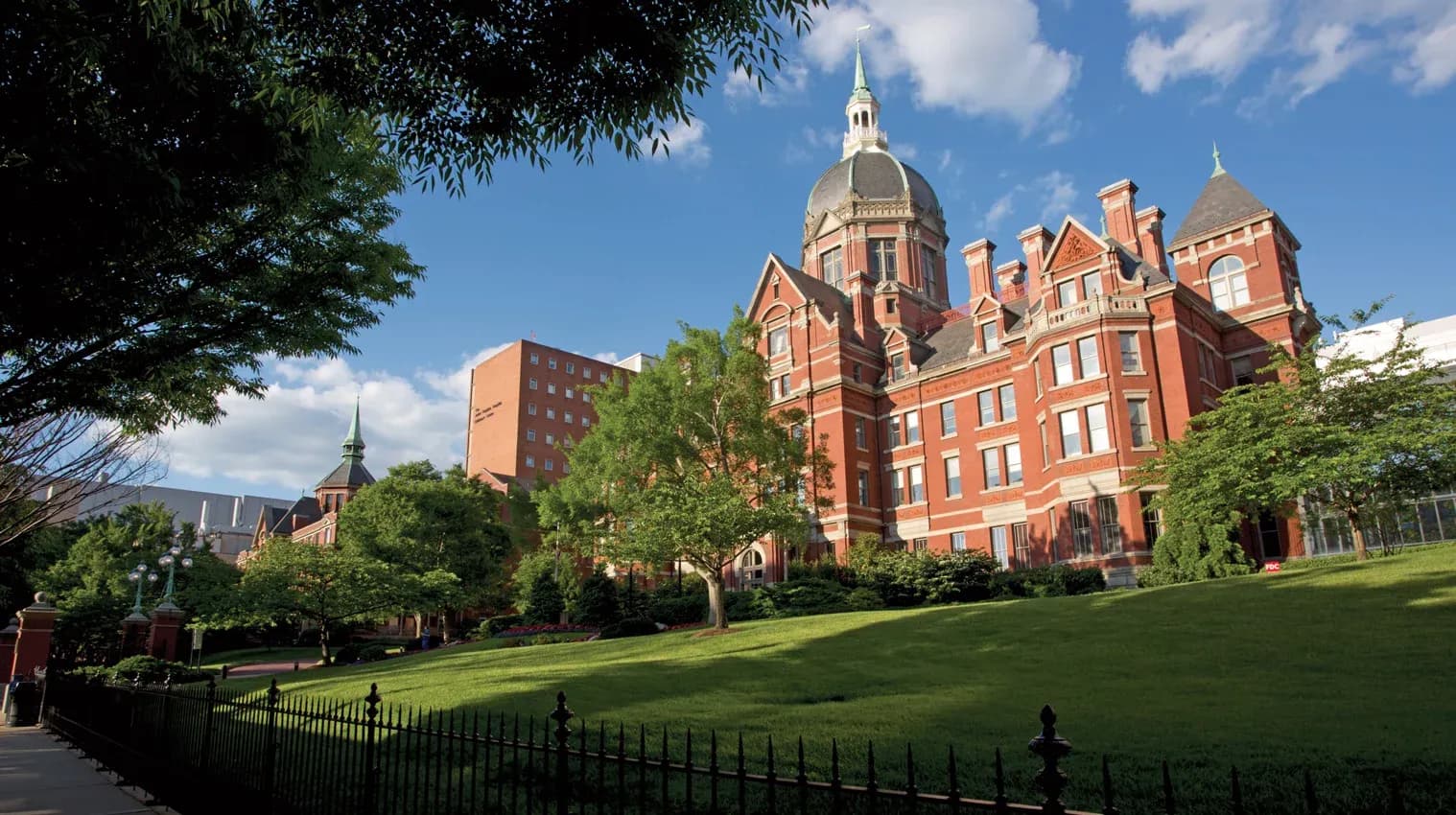
Nine months is short for an engineering master's, and the shape of this one follows from the length. There are two semesters rather than four, and the programme closes with a capstone project in environmental engineering practice rather than a research dissertation. That signals its purpose fairly plainly: it is built to be turned into work quickly, for applicants who want a defined technical repertoire rather than a research apprenticeship.
The repertoire itself is unusually concrete. The first semester covers environmental engineering fundamentals, geographic information systems for environmental analysis, hydrology and watershed processes, and applied statistics for environmental data. The second turns to contaminant transport and remediation, climate adaptation and infrastructure planning, and systems design and decision making. Those map onto the destinations named for graduates: environmental consulting, urban infrastructure planning, sustainability engineering, government environmental agencies, and NGOs or international development organisations working on climate adaptation. Doctoral routes in hydrology, climate science or civil-environmental systems remain open, though the compressed format points mainly towards practice. Study is full-time and on campus in Baltimore.
The Geography and Environmental Engineering Master of Science program at Johns Hopkins University is an interdisciplinary, research-driven degree designed to equip students with the skills to address pressing environmental challenges through an engineering lens. This nine-month, full-time, on-campus program integrates geographical sciences, environmental policy, and engineering methodologies to offer a comprehensive approach to sustainable problem-solving. The curriculum develops core competencies in environmental systems, hydrologic modeling, geospatial data analysis, and infrastructure design, making it ideal for students eager to contribute to environmental restoration and resource management.
By combining classroom instruction with hands-on research and technical training, the program allows students to explore the intersection of human development and environmental change. Faculty members with expertise in engineering, public health, geography, and sustainability guide students in understanding the causes and consequences of environmental degradation and the tools available to address them. Emphasis is placed on data interpretation, systems thinking, ecological resilience, and practical solutions, ensuring that students graduate with not only theoretical insight but also applied skills to confront today’s urgent environmental engineering problems.
Semester 1 – Foundations in Environmental Systems
Semester 2 – Applied Environmental Design and Solutions
Graduates of this program are positioned to contribute to a wide array of roles at the intersection of environmental protection and engineering application. Common career paths include roles in environmental consulting, urban infrastructure planning, sustainability engineering, and government environmental agencies, where professionals are expected to design, assess, and implement systems that mitigate pollution, conserve resources, and enhance environmental resilience. Many also find positions in NGOs or international development organizations working on climate adaptation and environmental justice projects. The program’s technical rigor and interdisciplinary scope also make it an excellent launching point for doctoral study or specialization in fields such as hydrology, climate science, or civil-environmental systems design.
This program is a powerful option for students seeking to develop practical engineering solutions to some of the planet’s most complex environmental issues within a short, intensive academic format. The nine-month structure is ideal for learners who wish to advance their careers quickly while gaining access to a curriculum grounded in real-world application. The integration of geographic tools such as GIS with advanced environmental modeling techniques provides students with a modern and versatile skill set. With strong ties to research centers and environmental initiatives both within and beyond the university, the program encourages applied innovation and systems-level thinking. On-campus access to state-of-the-art laboratories and collaboration with faculty from multiple disciplines further enhances the learning experience. For individuals looking to specialize in environmental engineering, sustainable system design, geospatial analytics, and climate-resilient infrastructure, this program delivers the technical expertise, policy insight, and field readiness needed to create lasting environmental impact in both public and private sectors.
For further information, please contact the admissions office at:
Phone: +1 410 516 8000
Email: admissions@jhu.edu
Address: Johns Hopkins University, 3400 N. Charles Street, Baltimore, MD 21218, USA
Master of Science · Full-time · On Campus
Johns Hopkins University
Baltimore, United States
Master of Arts · Full-time · On Campus
Johns Hopkins University
Baltimore, United States
Master of Arts · Full-time · On Campus
Johns Hopkins University
Baltimore, United States
Master of Science · Full-time · On Campus
Johns Hopkins University
Baltimore, United States
