
Geography
The Geography program offers an in-depth understanding of the spatial relationships that shape our natural environments, urban systems, and global connections. It explores the intersection of people, places, and processes, helping students analyze how human and physical systems interact across scales—from local communities to global networks. Core courses introduce students to physical geography, human geography, geographic information systems (GIS), and environmental change. With a focus on both theory and practice, the program encourages students to critically engage with pressing global challenges such as climate change, urbanization, migration, and resource management.
As students advance through the program, they gain skills in data collection, spatial analysis, cartography, and critical thinking. Fieldwork, lab-based experiences, and GIS training allow students to apply classroom knowledge to real-world problems. The curriculum is flexible, enabling students to specialize in areas like environmental studies, urban geography, or geospatial technologies. Through interdisciplinary coursework and independent research opportunities, students explore the dynamic relationships between humans, environments, and the built world, making geography a powerful tool for understanding and improving our planet.
Key Facts
Key Facts
- Program Title: Geography
- Degree Type: Bachelor of Arts
- Duration: 4 years
- Mode of Study: Full-time, On Campus
- Application Deadline: 02 January 2026
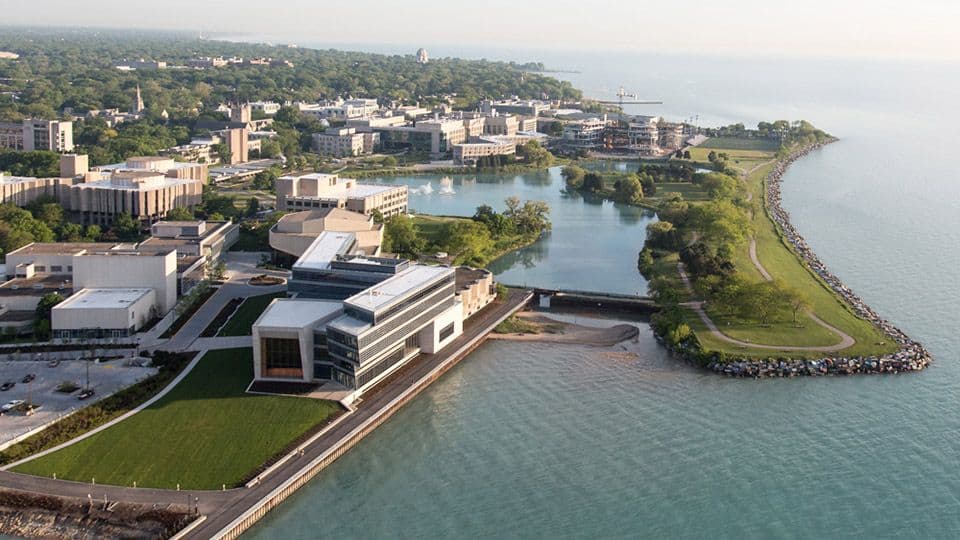
- Location: Northwestern University, United States
- Field of Study: Geography
- Language of Instruction: English
Program Structure
Year 1
• Introduction to Physical Geography
• Introduction to Human Geography
• Fundamentals of Cartography
• World Regional Geography
• Academic Writing in the Social Sciences
Year 2
• GIS and Spatial Analysis
• Environmental Systems and Sustainability
• Urban Geography or Cultural Geography
• Quantitative Methods in Geography
• Elective: Political Geography or Global Development
Year 3
• Advanced GIS or Remote Sensing
• Climate Change and Society
• Research Methods in Geography
• Elective: Natural Hazards or Migration Studies
• Field Methods in Geography
Year 4
• Geography Capstone Seminar
• Independent Research Project or Thesis
• Advanced Topics in Urban or Environmental Geography
• Professional Development in Geography
• Elective: Planning and Policy or Water Resources
Career Opportunities
Graduates of the Geography program find opportunities in a wide variety of fields that require spatial thinking, environmental awareness, and research skills. They work in urban planning, environmental consulting, GIS and geospatial technology, disaster management, and public policy. Employers include government agencies, non-profits, tech companies, research institutions, and international development organizations. Roles such as GIS analyst, sustainability coordinator, transportation planner, and environmental researcher are common career paths. The program also prepares students for graduate studies in geography, urban studies, environmental science, and related disciplines, equipping them with the tools to address global and local challenges in innovative ways.
Why Choose This Program
This program appeals to students who are passionate about understanding how space, place, and environment shape our lives. It blends scientific analysis with critical thinking to explore real-world issues that affect communities and ecosystems worldwide. By integrating technical skills such as GIS and fieldwork with conceptual frameworks in social and environmental geography, students graduate with both analytical strength and global perspective. The curriculum supports intellectual curiosity while offering practical tools that are highly valued in today’s job market. Whether your interests lie in sustainability, mapping, urban change, or global inequality, the Geography program provides the knowledge and flexibility to pursue meaningful and impactful careers.
Contact Information
For further information, please contact the admissions office at:
Phone: +1 312 555 2040
Email: admissions@northwestern.edu
Address: University of Northwestern, 633 Clark Street, Evanston, IL 60208, United States
