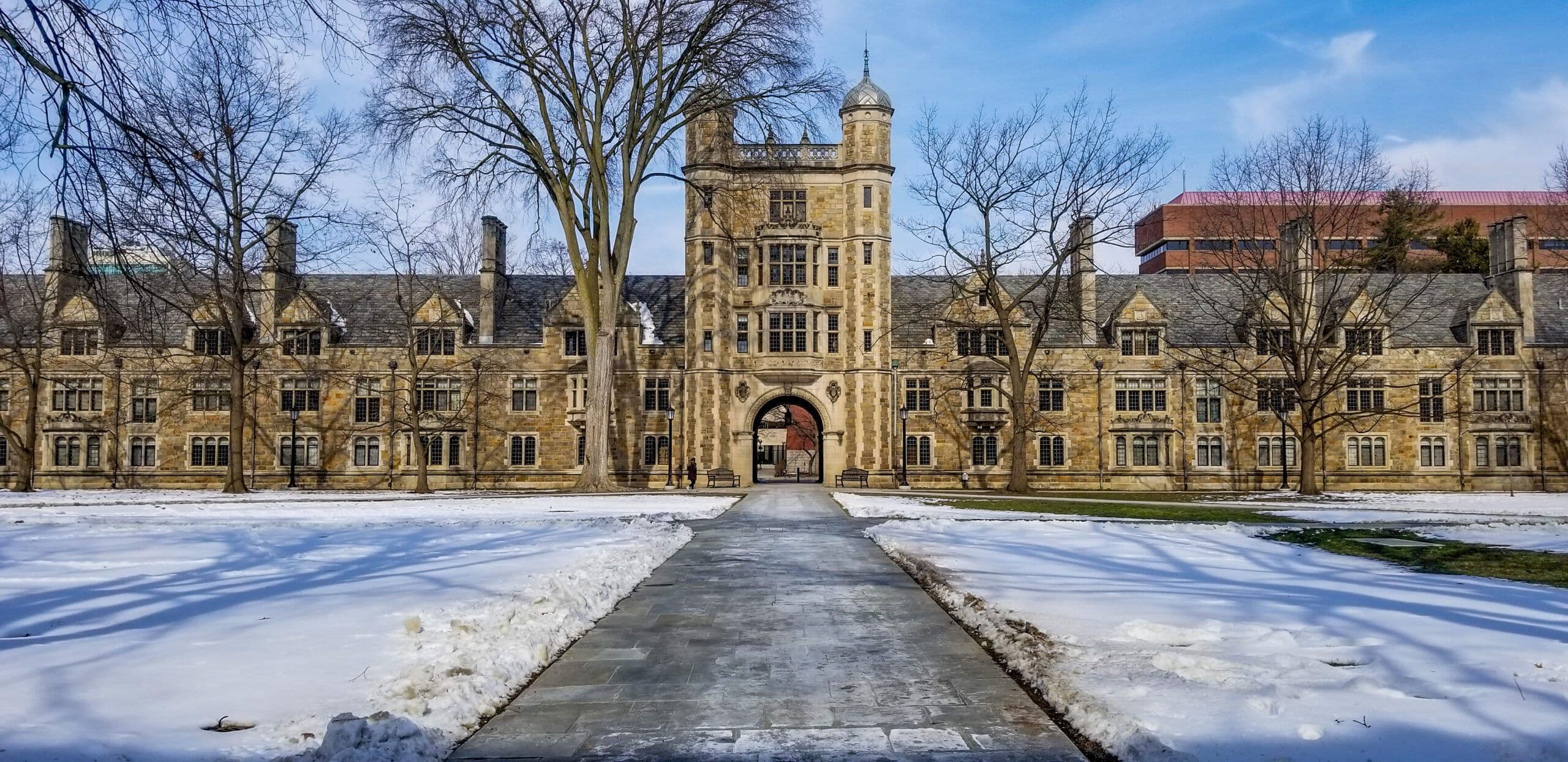

Geospatial Data Sciences
The Geospatial Data Sciences Master program at University of Michigan provides a comprehensive academic framework for students interested in analyzing, interpreting, and applying spatial data to solve real world problems. The curriculum integrates geographic information systems (GIS), remote sensing, spatial analysis, and data visualization, allowing learners to understand how geographic patterns influence environmental, social, and economic systems. Students develop strong analytical and technical skills to manage large geospatial datasets, design predictive models, and produce actionable insights for diverse applications ranging from urban planning to environmental monitoring. This program emphasizes the combination of technical proficiency, analytical reasoning, and applied problem solving in the context of spatial sciences.
As a one year full time program, it offers an intensive learning experience that combines theory, practical application, and project based research. Students engage in workshops, field projects, and collaborative studies that strengthen their abilities in spatial data analysis, geospatial modeling, and data driven decision making. With a focus on integrating computational methods with geographic knowledge, the program equips graduates to address complex challenges in research, policy, and industry, while enabling them to design, implement, and evaluate solutions using geospatial technologies.
Key Facts
Key Facts
- Program Title: Geospatial Data Sciences
- Degree Type: S. Master
- Duration: 1 year
- Mode of Study: Full-time, On Campus
- Application Deadline: 01 April 2026
- Location: University of Michigan, United States
- Field of Study: Geography
- Language of Instruction: English
Program Structure
Semester 1 - Foundations in Geospatial Data Sciences
• Geographic Information Systems
• Remote Sensing and Spatial Data Collection
• Statistical Methods for Geospatial Analysis
• Research Methods in Geography
Semester 2 - Advanced Applications and Spatial Modeling
• Geospatial Data Visualization
• Spatial Modeling and Predictive Analytics
• Environmental and Urban Applications
• Capstone Project and Independent Study
Career Opportunities
Graduates of this program pursue careers where geospatial data analysis, spatial modeling, and applied research are essential. Many work in urban planning, environmental consulting, government agencies, and GIS technology companies, applying their skills to analyze geographic data, support decision making, and manage spatial projects. Others continue into advanced research or doctoral programs in geography, environmental studies, or geospatial sciences. The program’s focus on applied spatial analysis, data management, and technical expertise ensures that graduates are prepared to handle complex geospatial challenges and contribute effectively in research, industry, and policy contexts.
Why Choose This Program
Students choose this program for its integration of technical geospatial skills, applied research, and problem solving, allowing them to transform data into actionable insights. The curriculum emphasizes spatial analysis, computational methods, and practical applications, preparing learners to address real world challenges in diverse sectors. Students benefit from faculty expertise, field based projects, and opportunities to engage with advanced geospatial tools. By focusing on data driven geospatial solutions, the program ensures graduates are equipped to lead initiatives, support research, and contribute meaningfully to decision making in geography and related fields.
Contact Information
For further information, please contact the admissions office at:
Phone: 734-764-8129
Email: rackadmis@umich.edu
Address: Graduate Admissions Office, University of Michigan, Ann Arbor, MI 48109, USA
