Bachelor of Arts · Full-time · On Campus

Yale University
New Haven, United States
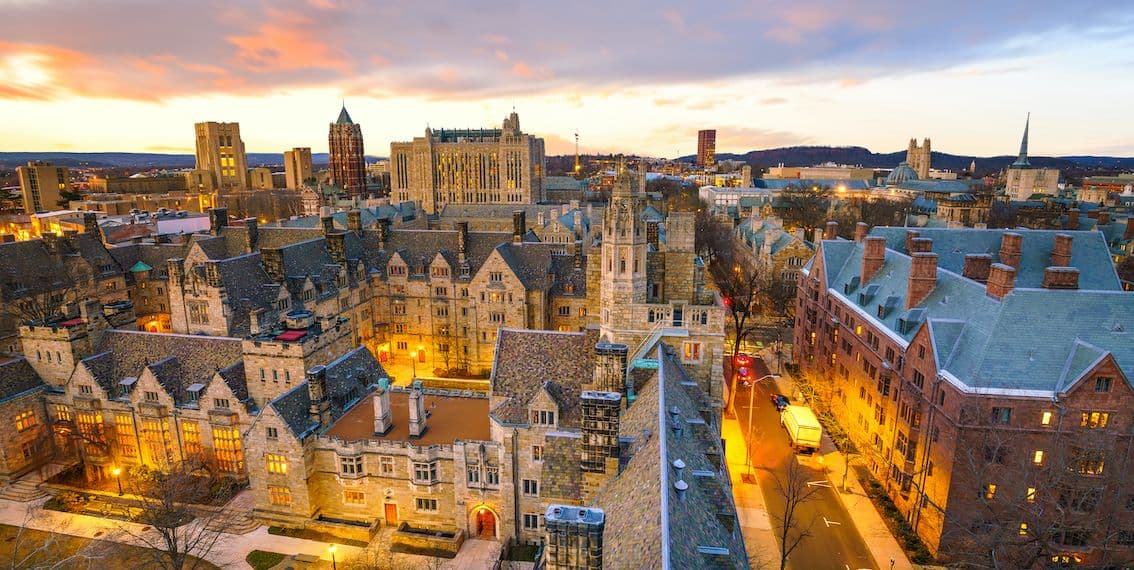
The Bachelor of Arts in History provides a comprehensive exploration of human experience through the study of political systems, cultural developments, social movements, and global transformations across time. Students engage with primary sources, archival materials, and historical narratives to understand how societies evolve and how individuals and institutions shape historical change. Through coursework that spans ancient civilizations to modern global dynamics, learners develop the tools necessary to interpret events, evaluate evidence, and analyze cause-and-effect relationships. This foundational training strengthens contextual awareness, critical analysis, historical insight, and argumentative clarity, enabling students to approach the past with intellectual rigor.
Across four years, the program invites students to examine diverse regions, themes, and historiographical debates, exploring topics such as empire, revolution, migration, warfare, gender, and cultural exchange. Courses integrate methodological approaches from political history, social history, economic history, and cultural studies, allowing learners to build a multifaceted understanding of the forces shaping human societies. Through seminars, writing-intensive assignments, research projects, and independent study, students refine their ability to construct persuasive interpretations and engage critically with complex historical questions. This sustained academic engagement fosters methodological precision, research competence, comparative evaluation, and scholarly independence, preparing graduates for advanced study or professional work that requires deep historical understanding.
Year 1 – Foundations of Historical Study
· Introduction to Historical Methods
· Ancient & Medieval Civilizations
· World History: Cultural and Social Developments
· Writing and Critical Interpretation
Year 2 – Core Themes in Global & Regional History
· Early Modern and Modern Europe
· History of the Americas
· Asian, African, or Middle Eastern History
· Research Methods in Historical Studies
Year 3 – Advanced Historical Inquiry
· Revolutions, Empires, and Global Exchange
· Social & Cultural History
· War, Politics, and State Formation
· Independent Study / Historical Research Project
Year 4 – Thesis & Scholarly Integration
· Senior Thesis / Advanced Historical Research
· Advanced Seminar in Historical Theory
· Topics in Global or Comparative History
· Academic Portfolio & Presentation Skills
Graduates of this program pursue careers that value strong analytical reasoning, research proficiency, and clear communication. Many find roles in museums and archives, education and academic settings, government or policy institutions, and nonprofit or cultural organizations, where they contribute to historical research, program development, public engagement, and documentation efforts. Additional opportunities arise in journalism, law, consulting, international organizations, and cultural heritage management, all of which benefit from the historian’s ability to interpret complex information and contextualize contemporary issues. With training in source evaluation, narrative construction, and comparative analysis, graduates can assess diverse forms of evidence, collaborate on interdisciplinary projects, and contribute thoughtfully to discussions about identity, memory, and social change.
This program is ideal for students seeking a curriculum grounded in comprehensive historical inquiry, offering a broad understanding of global developments and the tools needed to analyze the past critically. Over four years, learners build strong research, writing, and interpretive skills through seminars, primary-source analysis, and independent projects. The curriculum supports industry-relevant expertise that prepares students for roles in education, public history, policy analysis, and cultural organizations, as well as for graduate study in history or related fields. With its emphasis on contextual thinking, methodological rigor, and intellectual engagement, the program cultivates strong analytical judgment, enabling graduates to examine historical problems with nuance and contribute meaningfully to conversations about the forces shaping human societies.
For further information, please contact the admissions office at:
Phone: +1 203 432 2300
Email: admissions@yale.edu
Address: University of Yale, New Haven, CT 06520, United States
Bachelor of Arts · Full-time · On Campus
Yale University
New Haven, United States
Master of Science · Full-time · On Campus
Yale University
New Haven, United States
S. Master · Full-time · On Campus
Yale University
New Haven, United States
Bachelor of Arts · Full-time · On Campus
Yale University
New Haven, United States
