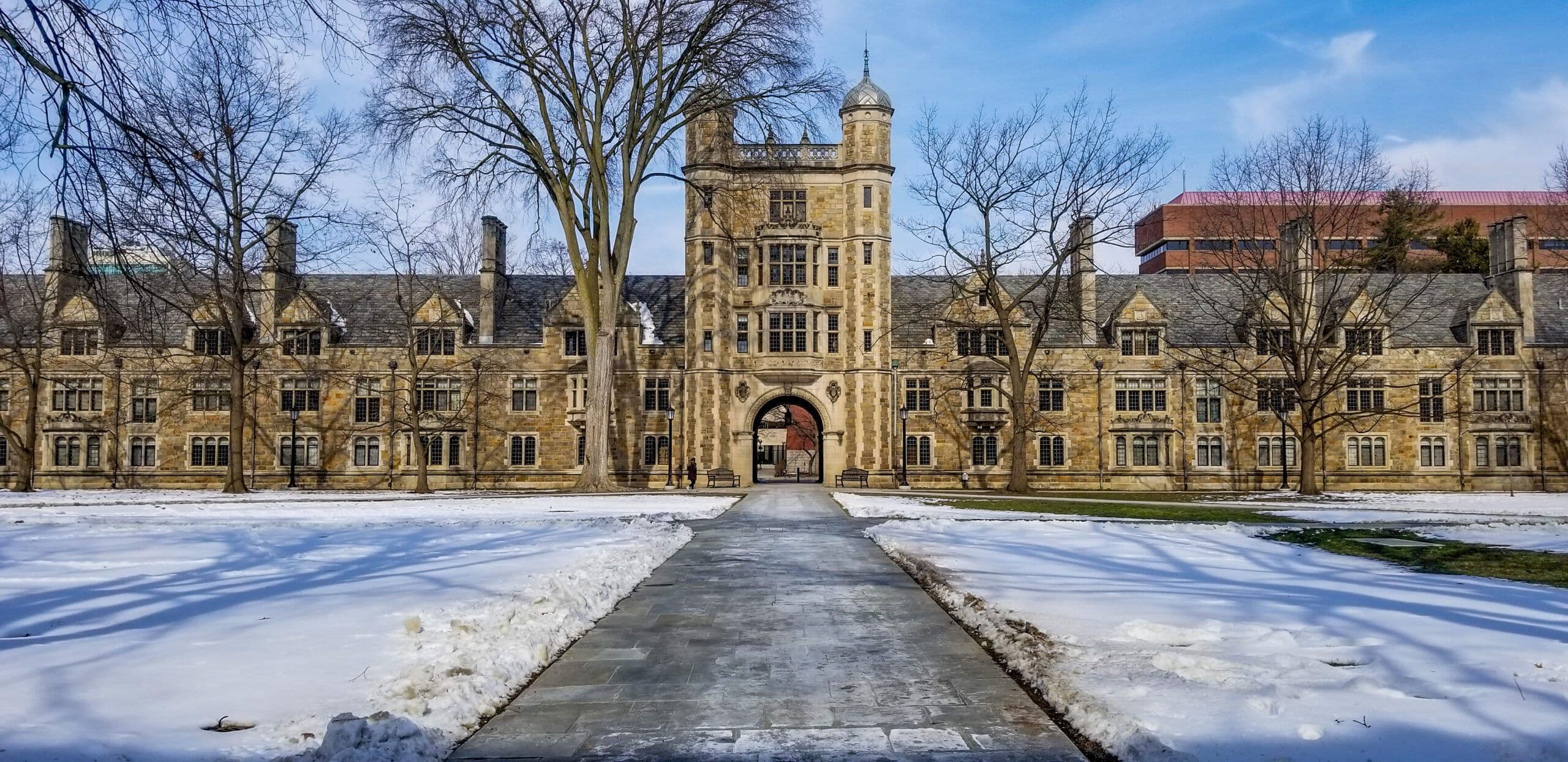

Industrial Ecology - Environmental Justice
The Master of Science in Industrial Ecology and Environmental Justice offered at the University of Michigan provides an extensive academic framework where students study the relationship between industrial systems, environmental equity, and sustainable resource use. The program encourages learners to investigate how social, economic, and ecological factors interact within complex production and consumption networks. Through a combination of analytical coursework, field informed research, and interdisciplinary dialogue, students develop a strong foundation in systems thinking that allows them to understand the environmental consequences of industrial activities and the distributional impacts these activities create for different communities. This approach helps learners evaluate real world ecological challenges with clarity and prepare solutions that prioritize long term resilience and responsible development.
The curriculum is designed to support students who want to contribute to environmental problem solving through research grounded in technical skills and informed by principles of fairness. Learners explore material flow analysis, life cycle assessment, environmental policy, and community oriented sustainability strategies while gaining experience with tools that help measure ecological performance. Faculty mentorship strengthens student understanding of environmental equity, enabling them to recognize how industrial decisions influence vulnerable populations and how scientific evidence can guide better resource management. By the end of the program, students possess the confidence to apply analytical evaluation to environmental systems and engage in research that supports just transitions toward sustainable practices.
Key Facts
Key Facts
- Program Title: Industrial Ecology - Environmental Justice
- Degree Type: Master of Science
- Duration: 2 years
- Mode of Study: Full-time, On Campus
- Application Deadline: 01 April 2026
- Location: University of Michigan, United States
- Field of Study: Ecology
- Language of Instruction: English
Program Structure
Semester 1 - Foundations of Industrial Ecology
• Principles of Industrial Ecology
• Environmental Systems Analysis
• Introduction to Sustainability Metrics
• Methods in Ecological Research
Semester 2 - Environmental Justice and Applied Assessment
• Foundations of Environmental Justice
• Life Cycle Assessment Techniques
• Social Dimensions of Ecological Change
• Community Based Environmental Research
Semester 3 - Systems Integration and Policy Applications
• Industrial Energy Systems
• Policy Tools for Environmental Decision Making
• Material Flow and Resource Management
• Research Seminar in Sustainable Transitions
Semester 4 - Advanced Research and Professional Development
• Master’s Research Project
• Data Interpretation for Environmental Systems
• Applied Sustainability Strategy
• Academic and Professional Portfolio Preparation
Career Opportunities
Graduates of this program are prepared for positions across organizations that require advanced knowledge in ecological systems, industrial sustainability, and equity driven environmental analysis. Many work within environmental consulting firms, sustainability divisions of major industries, public sector environmental agencies, and nonprofit organizations focused on community health and environmental protection. Their training in systems assessment and justice oriented evaluation enables them to contribute to projects involving sustainable supply chains, resource efficiency, corporate responsibility, ecological data modeling, or community resilience planning. Some graduates join interdisciplinary research labs or think tanks addressing climate adaptation, industrial transformation, or environmental inequality, while others pursue doctoral studies to deepen their academic contributions. This diverse set of opportunities allows graduates to engage in roles that combine technical expertise with a strong commitment to fair and science based environmental decision making.
Why Choose This Program
Students choose this program because it brings together scientific evaluation, sustainability analysis, and research guided environmental justice in a single interdisciplinary framework that prepares them for both professional and academic advancement. The curriculum encourages the development of analytical sustainability insight, enhanced by hands on research experiences that help students apply theoretical concepts to real ecological challenges. Faculty mentorship strengthens the ability to approach environmental decisions through evidence based reasoning, creating an academic environment where students can refine their skills in problem solving, interpretation, and ethical assessment. The program’s structure supports independent research while offering collaboration with peers and community partners, giving learners a meaningful, practice oriented pathway toward producing work that contributes to just ecological transformation aligned with the needs of modern society.
Contact Information
For further information, please contact the admissions office at:
Phone: 734-764-8129
Email: rackadmis@umich.edu
Address: Graduate Admissions Office, University of Michigan, Ann Arbor, MI 48109, USA
