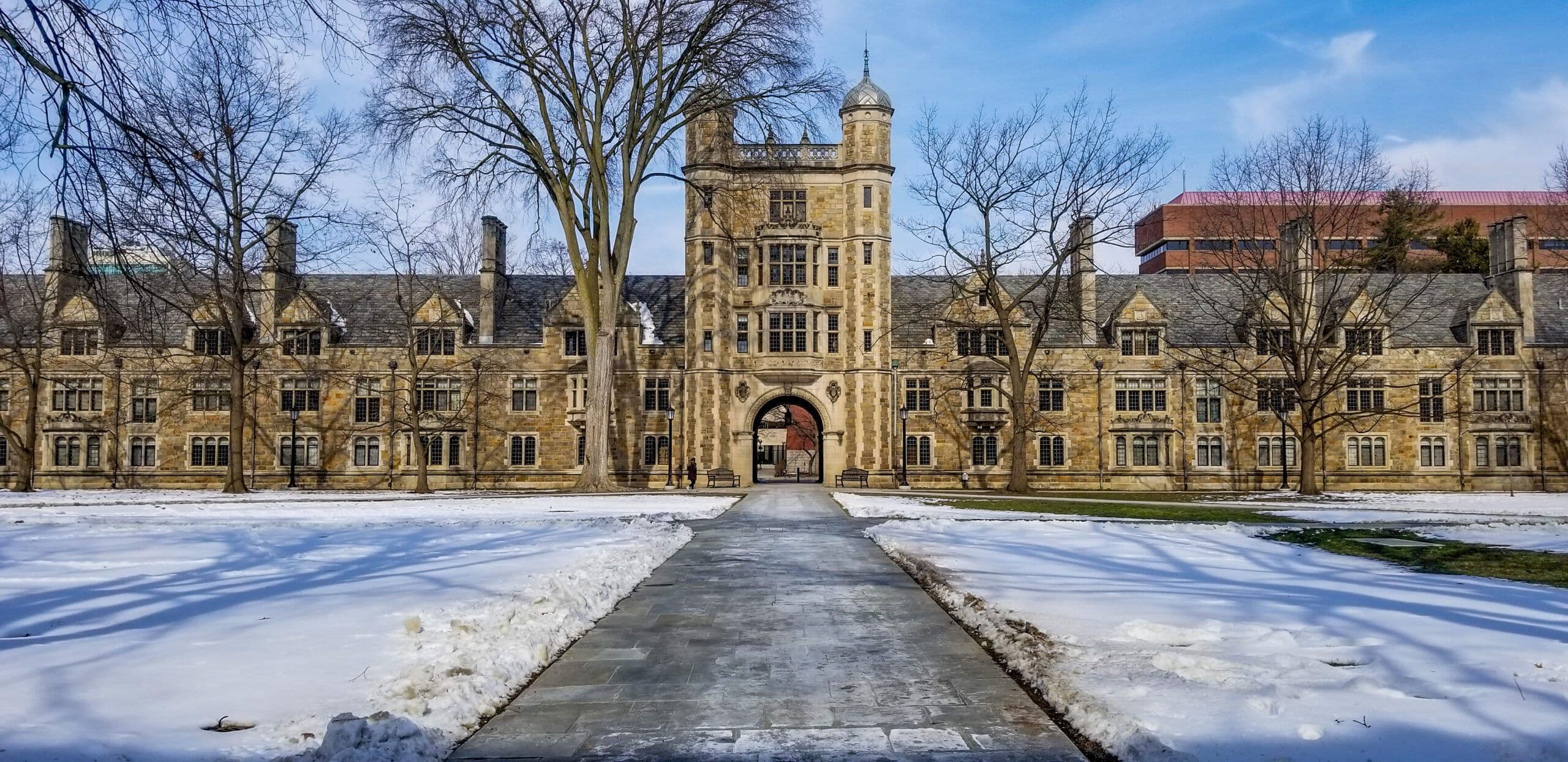

Industrial Ecology - Sustainable Systems
The Master of Science in Industrial Ecology and Sustainable Systems at the University of Michigan provides a comprehensive academic setting where students explore how industrial activities, resource flows, and environmental outcomes interact within complex global systems. The program emphasizes systems thinking and supports learners in understanding how material, energy, and economic processes influence environmental performance at multiple scales. Through exposure to analytical tools, interdisciplinary perspectives, and research based evaluation, students gain the ability to assess sustainable development challenges with clarity and apply structured methods to improve industrial operations, minimize ecological harm, and advance socially responsible decision making. This approach allows learners to build a strong foundation in sustainability analysis while developing practical capabilities that support long term environmental resilience.
The curriculum is designed for individuals who want to investigate how scientific assessment, engineering approaches, and policy strategies intersect in shaping sustainable systems. Students explore resource efficiency, environmental policy, industrial transformation, and advanced modeling tools that reveal the ecological consequences of modern production cycles. Faculty guidance strengthens their capacity to integrate quantitative evaluation with strategic thinking, helping them understand the broader implications of industrial choices for both ecosystems and communities. As students engage in research projects, they refine their abilities in life cycle assessment and engage in inquiry that responds to real world sustainability concerns. By the end of the program, learners develop a mature perspective on industrial innovation, allowing them to contribute meaningfully to projects and policies that aim to support sustainable transitions across sectors.
Key Facts
Key Facts
- Program Title: Industrial Ecology - Sustainable Systems
- Degree Type: Master of Science
- Duration: 2 years
- Mode of Study: Full-time, On Campus
- Application Deadline: 01 April 2026
- Location: University of Michigan, United States
- Field of Study: Sustainable Development
- Language of Instruction: English
Program Structure
Semester 1 - Foundations of Industrial Ecology
• Principles of Industrial Ecology
• Environmental Systems Analysis
• Introduction to Sustainable Metrics
• Methods in Ecological Research
Semester 2 - Sustainable Systems and Applied Assessment
• Life Cycle Assessment
• Sustainable Supply Chain Analysis
• Social Dimensions of Sustainability
• Applied Environmental Modeling
Semester 3 - Integration of Technology and Policy
• Industrial Energy Systems
• Policy Tools for Sustainable Transitions
• Material Flow and Resource Management
• Research Seminar in Sustainable Systems
Semester 4 - Advanced Research and Professional Development
• Master’s Research Project
• Data Interpretation for Sustainable Systems
• Applied Sustainability Strategy
• Academic and Professional Portfolio Development
Career Opportunities
Graduates of this program are well equipped for roles that require deep knowledge of ecological systems, sustainability evaluation, and strategic industrial transformation. Many work within environmental consulting firms, corporate sustainability departments, public environmental agencies, and international development organizations, where they contribute to projects involving resource efficiency, carbon reduction planning, sustainable supply chain design, and ecological performance assessment. Their training enables them to collaborate on long term sustainability strategies, analyze industrial data sets, support compliance with environmental standards, or design initiatives that advance cleaner production and improved social outcomes. Some graduates pursue research positions in policy institutions or interdisciplinary labs focusing on climate adaptation, circular economy development, or technological transitions, while others enter doctoral programs to deepen their academic contributions. This wide range of pathways allows graduates to influence sustainable development efforts across multiple sectors.
Why Choose This Program
Students choose this program because it offers a rigorous educational experience that blends scientific assessment, sustainability strategy, and research driven systems insight in a way that supports both professional growth and intellectual development. The curriculum encourages learners to develop analytical sustainability reasoning supported by hands on research projects that build confidence in interpreting ecological data and evaluating industrial systems. Faculty mentorship provides guidance in understanding complex environmental interactions, allowing students to refine their ability to use evidence based conclusions in shaping sustainable outcomes. With opportunities for interdisciplinary collaboration and exposure to real world challenges, the program helps students cultivate a strong, competitive profile grounded in sustainability focused expertise, preparing them to contribute effectively to the evolving demands of global environmental management.
Contact Information
For further information, please contact the admissions office at:
Phone: 734-764-8129
Email: rackadmis@umich.edu
Address: Graduate Admissions Office, University of Michigan, Ann Arbor, MI 48109, USA
