Integrated Science
The Integrated Science program is designed for students who seek a broad and interdisciplinary foundation in the natural sciences, combining physics, chemistry, biology, and mathematics in a unified academic framework. This three-year degree fosters deep scientific literacy by exploring the core principles that connect physical and life sciences. Students are encouraged to think across traditional boundaries, developing both theoretical understanding and practical laboratory skills. The curriculum begins with an integrated exploration of major scientific concepts and advances toward more specialized knowledge that bridges disciplines and fosters critical inquiry.
Throughout the program, students engage in collaborative research projects, scientific modeling, and real-world problem-solving activities that reflect the interconnected nature of today’s scientific challenges. Topics such as environmental systems, health sciences, and emerging technologies are examined through a multidisciplinary lens. This approach helps students appreciate the role of science in addressing complex global issues while also preparing them to navigate cross-cutting scientific domains. With its emphasis on integration and innovation, the program equips students with the flexibility, analytical capacity, and scientific insight needed in both academic and applied research environments.
Key Facts
Key Facts
- Program Title: Integrated Science
- Degree Type: Bachelor of Science
- Duration: 3 years
- Mode of Study: Full-time, On Campus
- Application Deadline: 03 January 2026
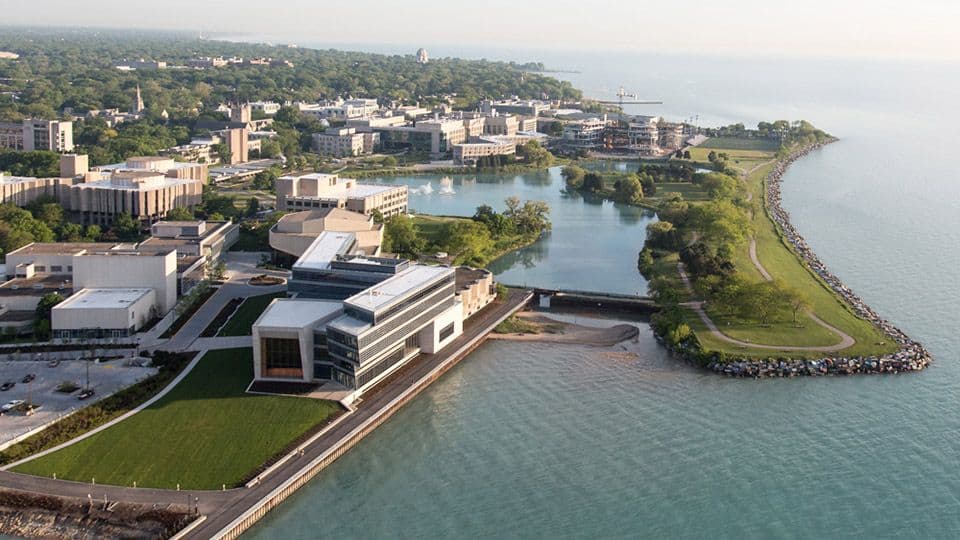
- Location: Northwestern University, United States
- Field of Study: Physics
- Language of Instruction: English
Program Structure
Year 1
• Foundations of Integrated Science
• Calculus and Linear Algebra
• Principles of Chemistry
• Introductory Physics
• Scientific Communication
Year 2
• Molecular and Cellular Biology
• Thermodynamics and Quantum Theory
• Environmental Systems and Modeling
• Statistics for Scientific Research
• Laboratory Techniques in Interdisciplinary Science
Year 3
• Advanced Scientific Integration
• Data-Driven Science and Computing
• Research Methods and Project Design
• Capstone Project in Integrated Science
• Elective: Bioinformatics, Astrobiology, or Neuroscience
Career Opportunities
Graduates of the Integrated Science program are equipped for a variety of career paths that require interdisciplinary scientific knowledge and problem-solving ability. They may work as research assistants, data analysts, science educators, or technical consultants in industries such as healthcare, environmental services, or technology development. Many go on to advanced study in specialized areas like biomedical science, environmental engineering, or computational modeling. The program’s emphasis on cross-disciplinary thinking makes graduates particularly attractive to employers seeking individuals who can bridge scientific domains and apply diverse methodologies to complex real-world problems. Whether in public research institutions, private laboratories, or nonprofit science organizations, alumni bring a well-rounded scientific perspective to the challenges they face.
Why Choose This Program
This program is ideal for students who want to explore science not in isolation but as a cohesive, interconnected discipline. Rather than confining learners to a single branch, the curriculum encourages flexibility and innovation through exposure to multiple scientific fields. Students benefit from hands-on laboratory training, interdisciplinary team projects, and mentoring from faculty engaged in cutting-edge research. The integrated approach not only strengthens core knowledge but also builds essential skills in communication, collaboration, and quantitative reasoning. For those seeking a future in research, policy, education, or technology, this degree offers the tools, context, and scientific agility to thrive in rapidly evolving fields.
Contact Information
For further information, please contact the admissions office at:
Phone: +1 312 555 2040
Email: admissions@northwestern.edu
Address: University of Northwestern, 633 Clark Street, Evanston, IL 60208, United States
