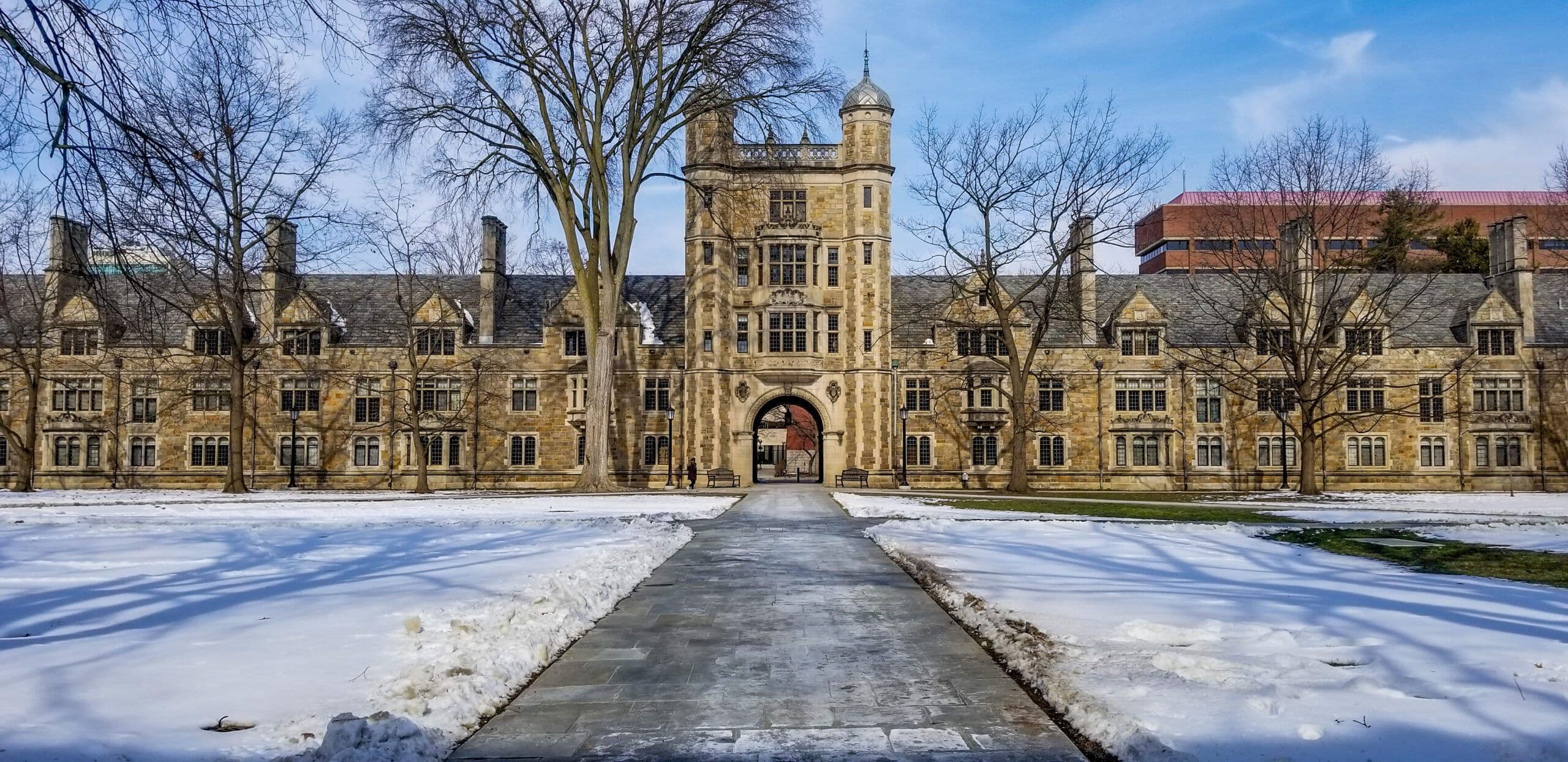

Interdisciplinary Physics
The Interdisciplinary Physics Bachelor of Science program at University of Michigan offers a comprehensive study of physics integrated with mathematics, computer science, and other scientific disciplines. The program provides students with analytical, computational, and experimental skills necessary to approach complex scientific problems from multiple perspectives. Learners engage in laboratory experiments, computational modeling, and interdisciplinary research projects, developing the ability to design and analyze experiments and apply theoretical knowledge to practical challenges. The program emphasizes critical thinking, quantitative reasoning, and applied research, preparing graduates to work in research, technology, and interdisciplinary scientific fields.
As a four year full time program, it provides a structured pathway from foundational physics and mathematics to advanced interdisciplinary applications and independent research projects. Students strengthen their expertise in quantum mechanics, computational modeling, statistical physics, and experimental techniques, applying knowledge across scientific and technological contexts. The program equips graduates to pursue careers in research, technology development, education, engineering, or to continue advanced studies in physics, applied sciences, or interdisciplinary research programs
Key Facts
Key Facts
- Program Title: Interdisciplinary Physics
- Degree Type: Bachelor of Science
- Duration: 4 years
- Mode of Study: Full-time, On Campus
- Application Deadline: 01 February 2026
- Location: University of Michigan, United States
- Field of Study: Physics
- Language of Instruction: English
Program Structure
Year 1 - Foundations in Interdisciplinary Physics
• General Physics I and II
• Calculus and Linear Algebra
• Introduction to Computational Physics
• Laboratory Techniques and Experimental Methods
Year 2 - Intermediate Physics and Applications
• Classical Mechanics and Electromagnetism
• Thermodynamics and Statistical Physics
• Programming for Scientific Applications
• Laboratory Research and Measurement Techniques
Year 3 - Advanced Interdisciplinary Physics
• Quantum Mechanics and Modern Physics
• Computational Modeling and Simulation
• Elective Courses in Physics and Applied Sciences
• Interdisciplinary Research Project
Year 4 - Capstone and Independent Research
• Independent Research Project
• Seminar in Advanced Physics Topics
• Applied Experimental and Computational Analysis
• Academic Portfolio and Presentation
Career Opportunities
Graduates of this program pursue careers in scientific research, data science, engineering, technology, and education where interdisciplinary knowledge, analytical, and experimental skills are essential. Many work as research scientists, computational analysts, data scientists, laboratory physicists, or engineers, applying physics and computational methods to develop innovative solutions. Others continue in graduate programs in physics, applied sciences, or interdisciplinary research. The program’s emphasis on computational and experimental skills, combined with interdisciplinary knowledge, ensures graduates are prepared for professional and academic success.
Why Choose This Program
Students choose this program for its combination of physics, computational methods, and interdisciplinary applications, which equips them to solve complex scientific problems across fields. The curriculum emphasizes quantitative reasoning, research, and applied physics, preparing learners to conduct experiments, model systems, and contribute to technological and scientific advancements. Students benefit from faculty mentorship, laboratory work, and interdisciplinary projects that enhance analytical, experimental, and problem-solving skills. By focusing on interdisciplinary physics and applied research, the program ensures graduates are prepared for careers in research, technology, education, and advanced scientific study.
Contact Information
For further information, please contact the admissions office at:
Phone: 734-764-8129
Email: rackadmis@umich.edu
Address: Graduate Admissions Office, University of Michigan, Ann Arbor, MI 48109, USA
