.png&w=640&q=75)
Interdisciplinary Program in Computational Science, Engineering and Mathematics
The Interdisciplinary Program in Computational Science, Engineering and Mathematics at Texas University is a rigorous one-year, full-time Master of Science program designed for students who seek to integrate mathematical modeling, scientific computing, and engineering principles to solve complex, real-world problems. This program provides a foundation in applied mathematics and computational algorithms while fostering collaboration across engineering disciplines and scientific domains. Students are trained to develop and apply innovative computational tools that enhance decision-making, system design, and predictive modeling in research and industry settings.
Throughout the program, students engage in hands-on work that combines simulation, data analytics, and optimization methods to address challenges in fields such as fluid dynamics, materials science, structural mechanics, and machine learning. The curriculum emphasizes the use of high-performance computing environments, enabling students to develop scalable and efficient solutions for large-scale engineering and scientific computations. Graduates emerge with a solid understanding of computational techniques, numerical analysis, engineering systems, and mathematical problem-solving, preparing them to lead interdisciplinary innovation in data-intensive and computationally demanding environments.
Key Facts
Key Facts
- Program Title: Interdisciplinary Program in Computational Science, Engineering and Mathematics
- Degree Type: Master of Science
- Duration: 1 year
- Mode of Study: Full-time, On Campus
- Application Deadline: 10 December 2025
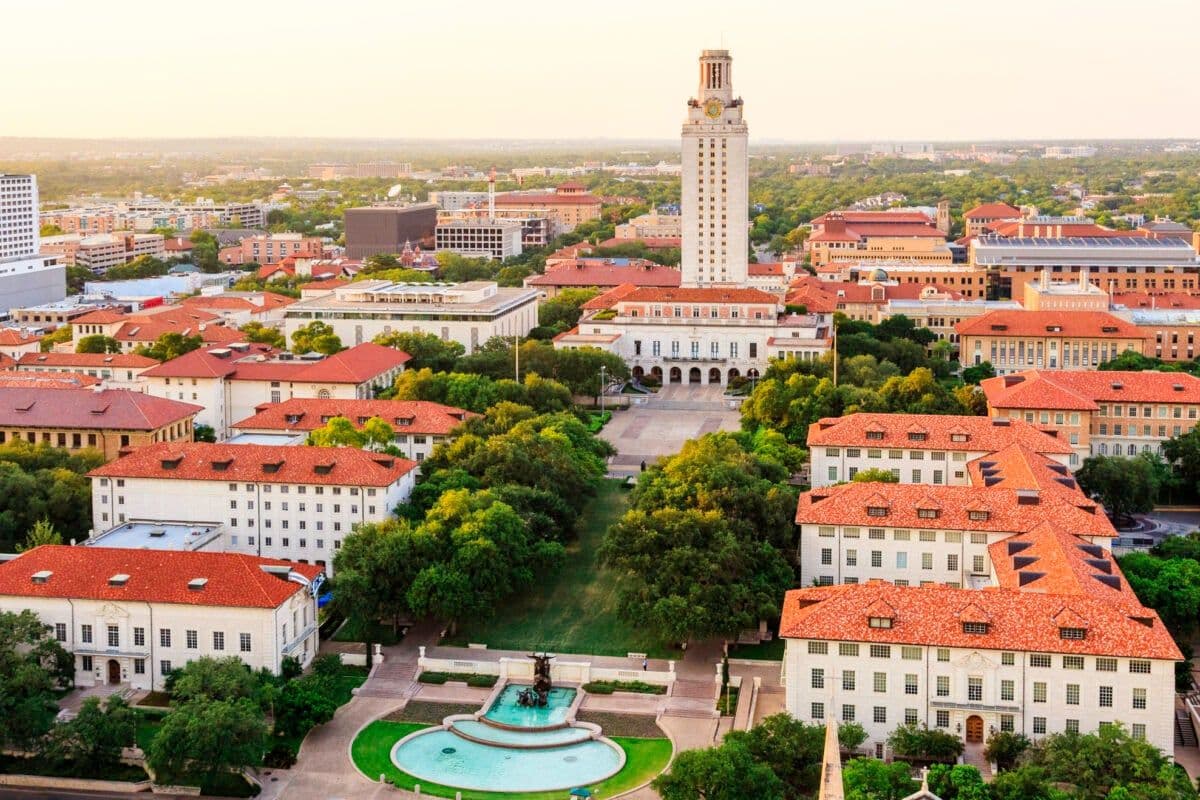
- Location: University of Texas at Austin, United States
- Field of Study: General Engineering & Technology
- Language of Instruction: English
Program Structure
Semester 1 – Foundations in Computation and Engineering
- Scientific Computing and Algorithms
- Numerical Methods for Engineers
- Mathematical Modeling and Simulation
- Introduction to High-Performance Computing
Semester 2 – Applications and Interdisciplinary Projects
- Computational Methods in Engineering and Science
- Optimization and Data-Driven Modeling
- Multiphysics Simulation and Analysis
- Capstone Project in Computational Science
Career Opportunities
Graduates of this program are equipped to take on roles in aerospace engineering, data-intensive scientific research, software development for engineering applications, and advanced manufacturing. Common job titles include computational scientist, modeling and simulation engineer, R&D analyst, and data-driven systems specialist. Their interdisciplinary skill set is especially valued in industries where predictive modeling, algorithm development, and computational accuracy are critical. With the growing reliance on simulation and data analysis across science and technology sectors, these graduates play a vital role in advancing engineering solutions and optimizing complex systems.
Why Choose This Program
This program offers a rare and deeply integrated academic experience, blending mathematical rigor, engineering insight, and computing power within a one-year framework. Students benefit from cross-disciplinary faculty mentorship, access to advanced computing labs, and real-world applications across multiple domains. The focus on both theory and implementation ensures that graduates not only understand complex systems but also have the tools to model, simulate, and solve them. For those seeking to bridge the gap between engineering innovation, scientific computation, and mathematical depth, this program provides a comprehensive and forward-looking education aligned with industry and research needs.
Contact Information
For further information, please contact the admissions office at:
Phone: +1 (512) 471-3434
Email: gradadmissions@utexas.edu
Address: 110 Inner Campus Drive, Stop G1800, Austin, TX 78712, USA
