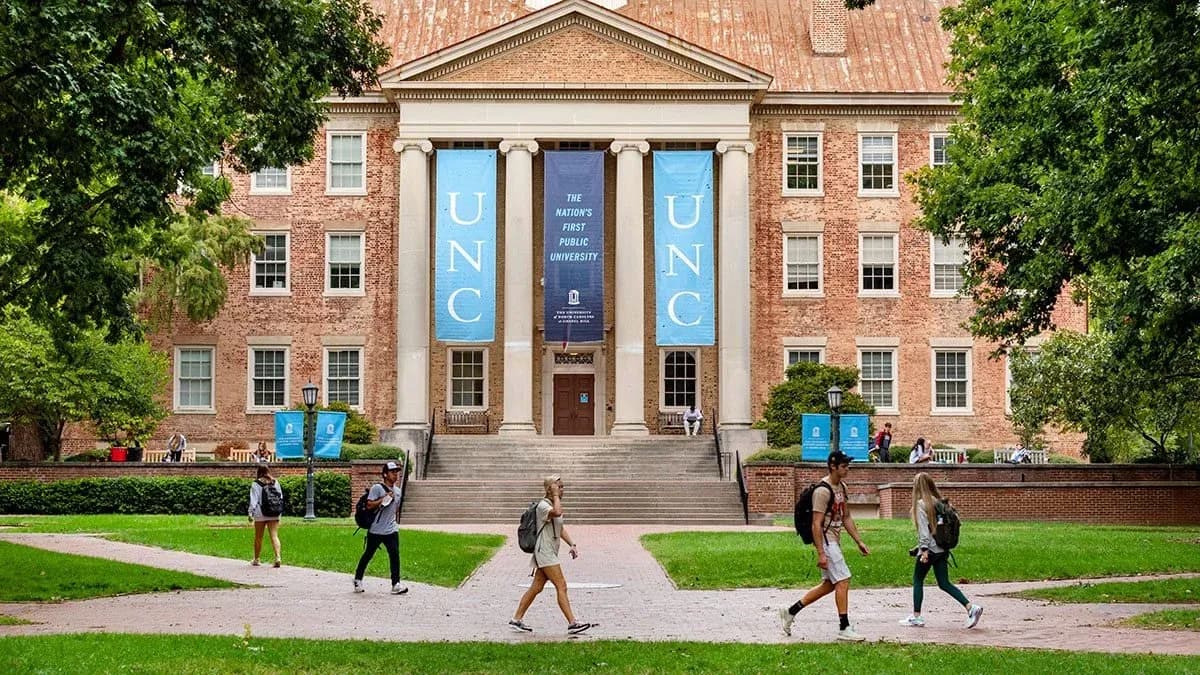

Interdisciplinary Studies
The Interdisciplinary Studies Master of Arts program at the University of North Carolina offers a flexible academic structure that allows students to explore multiple areas across the humanities and social sciences while developing a unified intellectual direction. The curriculum is designed to help learners strengthen their academic identity by engaging with diverse thematic perspectives, theoretical approaches and methodological tools that promote deep analytical thinking. Students benefit from an environment that encourages curiosity driven exploration while developing critical analysis, integrative reasoning, research readiness and a broader understanding of complex societal contexts.
Throughout the program, students work closely with faculty mentors to connect conceptual insights with practical applications in real world environments. The emphasis on cross disciplinary collaboration enables learners to examine issues from multiple viewpoints and create meaningful academic contributions that reflect both depth and breadth. The curriculum supports the development of advanced research practices, improved communication skills and the ability to evaluate problems through balanced and informed judgment. By combining structured coursework with guided specialization, students gain confidence in applying their knowledge through analytical synthesis, contextual evaluation, methodological versatility and sustained academic engagement.
Key Facts
Key Facts
- Program Title: Interdisciplinary Studies
- Degree Type: Master of Arts
- Duration: 2 years
- Mode of Study: Full-time, On Campus
- Application Deadline: 01 August 2026
- Location: University of North Carolina at Chapel Hill, United States
- Field of Study: General Studies
- Language of Instruction: English
Program Structure
Semester 1 Foundations of Interdisciplinary Inquiry
• Introduction to Interdisciplinary Research
• Theories of Culture and Society
• Qualitative Methods in the Social Sciences
• Academic Writing and Scholarly Argumentation
Semester 2 Applied Perspectives in Humanities and Social Sciences
• Comparative Cultural Analysis
• Ethics and Contemporary Social Issues
• Quantitative Reasoning for Social Research
• Interdisciplinary Seminar and Case Studies
Semester 3 Specialization and Advanced Research Development
• Research Design and Proposal Preparation
• Advanced Topics in Interdisciplinary Theory
• Elective Course in Humanities or Social Sciences
• Independent Study for Specialization Focus
Semester 4 Integrated Project and Graduate Portfolio
• Master s Research Project
• Data Interpretation and Analytical Synthesis
• Graduate Portfolio Preparation
• Oral Presentation and Academic Review
Career Opportunities
Graduates of this program are prepared for professional paths that require individuals to interpret information from multiple perspectives, communicate effectively and analyze complex social, cultural or organizational challenges. Many pursue roles within education, public administration, cultural institutions and nonprofit organizations, where the ability to navigate diverse viewpoints is highly valued. Others enter fields related to research coordination, program development, community engagement, communication strategy or policy support. The programs strong emphasis on methodological competence and interdisciplinary thinking enables graduates to adapt quickly to evolving professional environments and contribute meaningfully to institutions that rely on informed decision making and thoughtful analysis. As a result, students develop a career foundation that is both flexible and resilient, allowing them to transition into varied sectors where broad analytical skills are essential.
Why Choose This Program
This program is well suited for students who seek an academic journey that values intellectual independence, cross disciplinary exploration and the pursuit of complex questions through multiple lenses. The curriculum encourages learners to examine how ideas intersect across fields, helping them build a well rounded understanding of cultural, social and institutional dynamics. Students benefit from a supportive academic community where faculty guide them through the process of designing a personalized study path that aligns with their long term aspirations. The structure promotes sustained engagement with theory and practice, allowing learners to develop integrated academic growth, broad analytical insight, research driven development and cross disciplinary depth as they refine their scholarly identity. Beyond coursework, students gain opportunities to participate in project based learning, collaborative discussions and individualized research that strengthen their confidence and prepare them for advanced academic or professional roles. With its emphasis on flexibility, depth and intellectual curiosity, the program offers a comprehensive experience that empowers students to navigate diverse challenges and contribute to meaningful academic and societal conversations.
Contact Information
Phone: +1 (919) 966-3621
Email: unchelp@admissions.unc.edu
Address: Jackson Hall, 174 Country Club Road, Chapel Hill, NC 27514, USA
