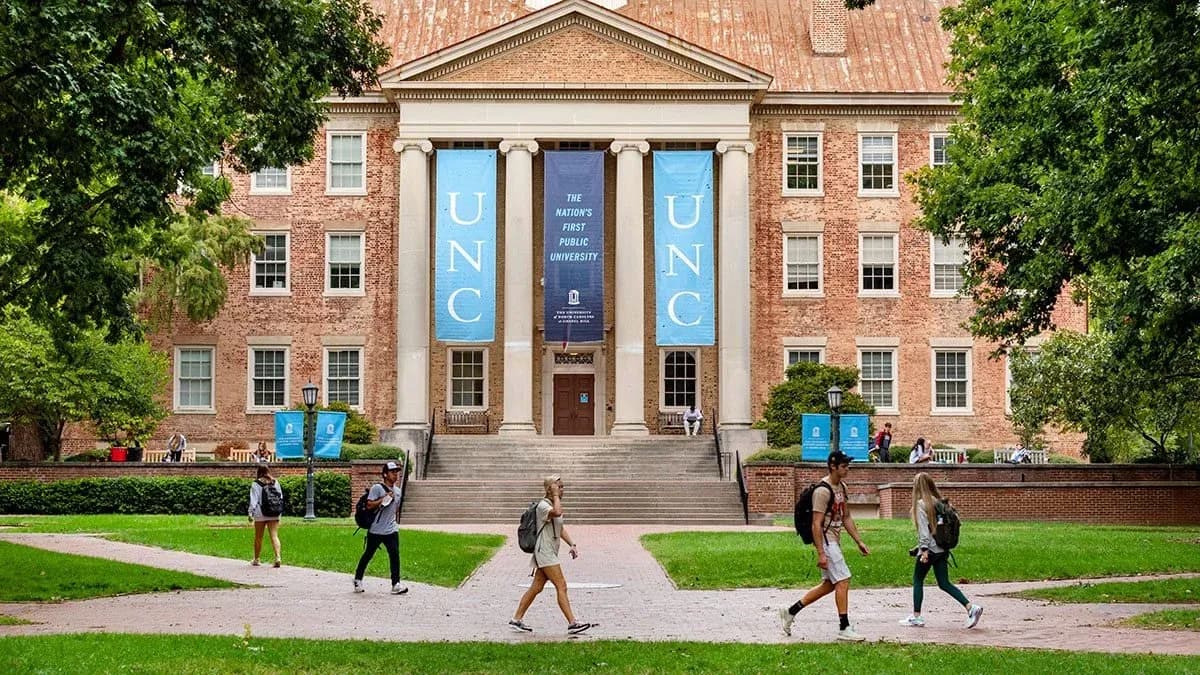

International Studies, Holocaust, Genocide and Human Rights
The International Studies, Holocaust, Genocide and Human Rights program at the University of North Carolina offers a critical and globally-oriented education focused on the historical and political dimensions of mass violence, human rights violations, and international responses. Students gain an in-depth understanding of the causes and consequences of the Holocaust and other genocides, alongside the development of human rights norms and international humanitarian frameworks. The curriculum blends historical analysis, political science, philosophy, and cultural studies, enabling students to examine global injustice through a multi-disciplinary lens.
Throughout the four-year program, students engage with survivor testimony, archival materials, case studies, and legal frameworks to evaluate both past atrocities and ongoing global issues. There is a strong emphasis on ethical responsibility, social justice, critical thinking, and policy awareness, encouraging learners to reflect on the global and local dimensions of historical memory and human rights advocacy. Faculty with expertise in international law, Holocaust history, and peace studies provide students with both academic rigor and emotional support as they navigate challenging but vital topics
Key Facts
Key Facts
- Program Title: International Studies, Holocaust, Genocide and Human Rights
- Degree Type: Bachelor of Arts
- Duration: 4 years
- Mode of Study: Full-time, On Campus
- Application Deadline: 01 February 2026
- Location: University of North Carolina at Chapel Hill, United States
- Field of Study: History
- Language of Instruction: English
Program Structure
Year 1 – Foundations in Global and Historical Contexts
• Introduction to International Studies
• World History: 20th Century Conflicts
• Foundations of Human Rights
• Critical Reading and Writing
• Language Requirement I (French, German, Hebrew, etc.)
Year 2 – Understanding Atrocity and Genocide
• The Holocaust: History and Memory
• Comparative Genocide Studies
• Ethics and International Relations
• Language Requirement II
• Elective: Political Violence or Transitional Justice
Year 3 – Human Rights in Practice and Theory
• Human Rights Institutions and International Law
• Media, Propaganda, and Genocide
• Refugees and Humanitarian Response
• Research Methods in Global Studies
• Internship or Study Abroad Option
Year 4 – Capstone and Advanced Studies
• Seminar in Holocaust and Genocide Research
• Capstone Project in Human Rights
• Advocacy and Policy Development
• Oral History and Memory Studies
• Final Thesis or Public Presentation
Career Opportunities
Graduates of this program pursue diverse roles in human rights organizations, government agencies, international NGOs, and educational institutions where ethical advocacy and historical insight are essential. They work in fields such as international policy, diplomacy, education, and community outreach, often taking on positions like policy analyst, advocacy coordinator, museum educator, or conflict researcher. Others choose to continue their academic journey in graduate programs related to global studies, law, history, or peacebuilding. With their training in both the historical roots and modern implications of atrocity, graduates are equipped to contribute to global dialogues on justice, prevention, and reconciliation.
Why Choose This Program
This program offers a unique opportunity to study the intersection of history, human rights, memory, and justice within an internationally focused and academically supportive environment. The University of North Carolina equips students not only with academic knowledge but with the empathy, analytical skills, and global awareness needed to face the challenges of today’s world. With a curriculum that addresses the complexity of international conflict and human suffering, the program fosters critical engagement, cross-cultural understanding, and ethical leadership. Students emerge not just as scholars but as informed individuals ready to advocate for human dignity and shape inclusive global futures.
Contact Information
Phone: +1 (919) 966-3621
Email: unchelp@admissions.unc.edu
Address: Jackson Hall, 174 Country Club Road, Chapel Hill, NC 27514, USA
