Bachelor of Science · Full-time · On Campus
Marmara University
Turkey
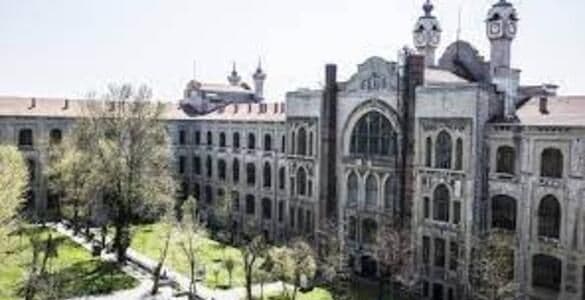
The PhD in Islamic Economics and Finance (English) at Marmara University is a doctoral programme offered by the Institute of Islamic Economics and Finance. The programme aims to develop experts in Islamic economics, finance, and ethical financial systems that comply with Sharia principles. Through interdisciplinary study combining economics, finance, history, Islamic law, and financial ethics, students will investigate topics such as participation banking, Islamic financial institutions, Zakat, Waqf, Islamic public finance, sustainable finance models, and alternative financial systems. The programme is designed for graduates holding a thesis-based Master’s degree, and the instruction is entirely in English.
Located in Istanbul — a crossroads of cultures, commerce, and academic research — this doctoral programme offers a rich setting for high-level study and research. Students benefit from a vibrant academic community, collaboration opportunities with public and private institutions, and access to seminars, workshops and international networks facilitated by the institute. With its focus on ethical finance, global economic issues, and Islamic financial systems, the programme provides a distinctive context for students to contribute to both scholarly research and practical financial solutions.
Semester 1 – Foundations of Islamic Economics & Finance
Semester 2 – Advanced Islamic Finance & Institutions
Semester 3 – Specialization & Research Development
Semester 4 – Doctoral Qualification Phase
Semesters 5–6 – Doctoral Research & Thesis
Graduates of this programme will be well-equipped for academic careers as researchers or faculty members specializing in Islamic economics and finance. They may also work in financial institutions such as participation banks, Islamic finance firms, and regulatory bodies dealing with ethical finance and Islamic banking. Other options include research centers, think tanks, NGOs, consultancy firms focusing on Islamic economic policy, social finance, and sustainable finance. Their expertise in both conventional economics and Islamic financial principles makes them valuable in bridging global finance and ethical, values-based financial systems.
Choosing the PhD in Islamic Economics and Finance means joining a programme that combines rigorous academic training with ethical, values-based finance and interdisciplinary scholarship. Students benefit from an institute dedicated to Islamic finance research, a curriculum that covers economics, finance, law, and history, and close collaboration with public and private institutions active in Islamic finance. The programme helps students build deep analytical and research skills that enable them to shape alternative financial systems and contribute to policy design.
Moreover, the programme supports international collaboration through its English-medium instruction and connection to global academic and financial networks. Students engage in seminars, workshops, and research projects that expose them to global debates in Islamic economics, sustainable finance, and ethical banking. This comprehensive training positions graduates for influential roles in academia, industry, policy, and finance sectors worldwide, offering meaningful contributions to the development of Islamic economic systems.
Marmara University – Student Advisory Service
Göztepe Campus
34722 Kadıköy, Istanbul, Turkey
Tel: +90 216 348 02 92
Fax: +90 216 348 13 69
Email: info@marmara.edu.tr
Institute of Islamic Economics and Finance (MÜİSEF) – Programme Contact (PhD in Islamic Economics and Finance)
Prof. Dr. Ömer Faruk Batırel Building, 3rd Floor
Göztepe Campus
34722 Kadıköy, Istanbul, Turkey
Tel: +90 216 777 19 60
Fax: +90 216 777 19 61
Email: muisef@marmara.edu.tr
International Office – Marmara University
Göztepe Campus
34722 Kadıköy, Istanbul, Turkey
Tel: +90 216 777 17 00
Fax: +90 216 777 17 99
Email: international@marmara.edu.tr
Bachelor of Science · Full-time · On Campus
Marmara University
Turkey
Bachelor of Architecture · Full-time · On Campus
Marmara University
Turkey
Bachelor of Science · Full-time · On Campus
Marmara University
Turkey
Bachelor of Dentistry · Full-time · On Campus
Marmara University
Turkey
