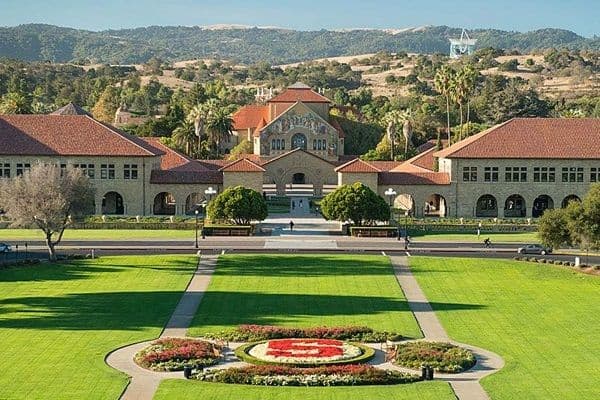

Materials Science and Engineering
The Bachelor of Science in Materials Science and Engineering at University of Stanford offers an in-depth exploration of how materials behave, transform, and influence modern technologies across multiple industries. This four-year program introduces students to the scientific principles that define the structure, performance, and functionality of metals, polymers, ceramics, semiconductors, and emerging advanced materials. Through a curriculum grounded in both theory and laboratory experience, learners develop a strong foundation in materials characterization, mechanical behavior, processing techniques, and thermodynamics, all of which are essential for understanding the full lifecycle of engineered materials. The program’s academic structure encourages students to analyze complex problems, assess material performance, and explore new pathways in materials design that support innovation in engineering solutions.
Across the program’s progression, students gain deeper exposure to research-driven methodologies, industry applications, and interdisciplinary problem-solving approaches. Advanced courses guide learners through topics such as nanomaterials, electronic materials, sustainable material systems, and computational modeling, allowing them to connect fundamental scientific concepts with real engineering challenges. With access to modern laboratory facilities and project-based learning opportunities, students refine their ability to apply theoretical knowledge to practical scenarios. By the time they graduate, they possess the technical insight, analytical depth, research capability, and design perspective necessary to contribute meaningfully to the rapidly evolving field of materials science.
Key Facts
Key Facts
- Program Title: Materials Science and Engineering
- Degree Type: Bachelor of Science
- Duration: 4 years
- Mode of Study: Full-time, On Campus
- Application Deadline: 05 January 2026
- Location: Stanford University, United States
- Field of Study: Materials Science
- Language of Instruction: English
Program Structure
Year 1 – Foundations of Materials Science
• General Chemistry for Engineers
• Physics of Matter and Mechanics
• Introduction to Materials Science
• Calculus and Linear Algebra
• Engineering Problem-Solving Laboratory
Year 2 – Core Principles & Experimental Methods
• Materials Thermodynamics
• Crystallography and Structural Analysis
• Mechanical Behavior of Materials
• Electrical and Magnetic Properties
• Laboratory: Materials Characterization Techniques
Year 3 – Advanced Materials & Engineering Applications
• Polymer Science and Engineering
• Ceramics and Composite Materials
• Electronic and Semiconductor Materials
• Computational Materials Modeling
• Elective Modules in Applied Materials Research
Year 4 – Specialization, Research & Capstone
• Advanced Topics in Materials Engineering
• Sustainable Materials Development
• Senior Research Project / Capstone
• Engineering Design and Analysis Seminar
• Technical Electives in Specialized Material Systems
Career Opportunities
Graduates of this program are well prepared to enter industries where materials innovation drives technological progress, including aerospace, energy, electronics, biomedical engineering, automotive manufacturing, and advanced manufacturing sectors. The curriculum equips students with practical laboratory skills, analytical reasoning, scientific problem-solving, and research proficiency, enabling them to pursue roles such as materials engineer, process engineer, metallurgist, product development specialist, or quality and reliability analyst. Many students also continue their academic journey into graduate research programs, where they contribute to breakthroughs in material design, sustainable technologies, and next-generation engineered systems.
Why Choose This Program
This program is an excellent choice for students who want to understand how materials shape the future of engineering and technological development. It offers a curriculum that blends scientific depth with hands-on experimentation, ensuring that learners can connect theoretical insight with real-world engineering challenges. With opportunities for independent research, industry-relevant projects, and focused academic guidance, students benefit from an environment that supports innovation, critical analysis, technical advancement, and cross-disciplinary exploration. Those seeking a comprehensive engineering education rooted in scientific rigor and future-oriented material solutions will find this program particularly rewarding.
Contact Information
For further information, please contact the admissions office at:
Phone: +1 650 000 0000
Email: admissions@standord.edu
Address: University of Standord, 450 Serra Mall, Stanford, CA 94305, United States
