Master of Science · Full-time · On Campus

Johns Hopkins University
Baltimore, United States
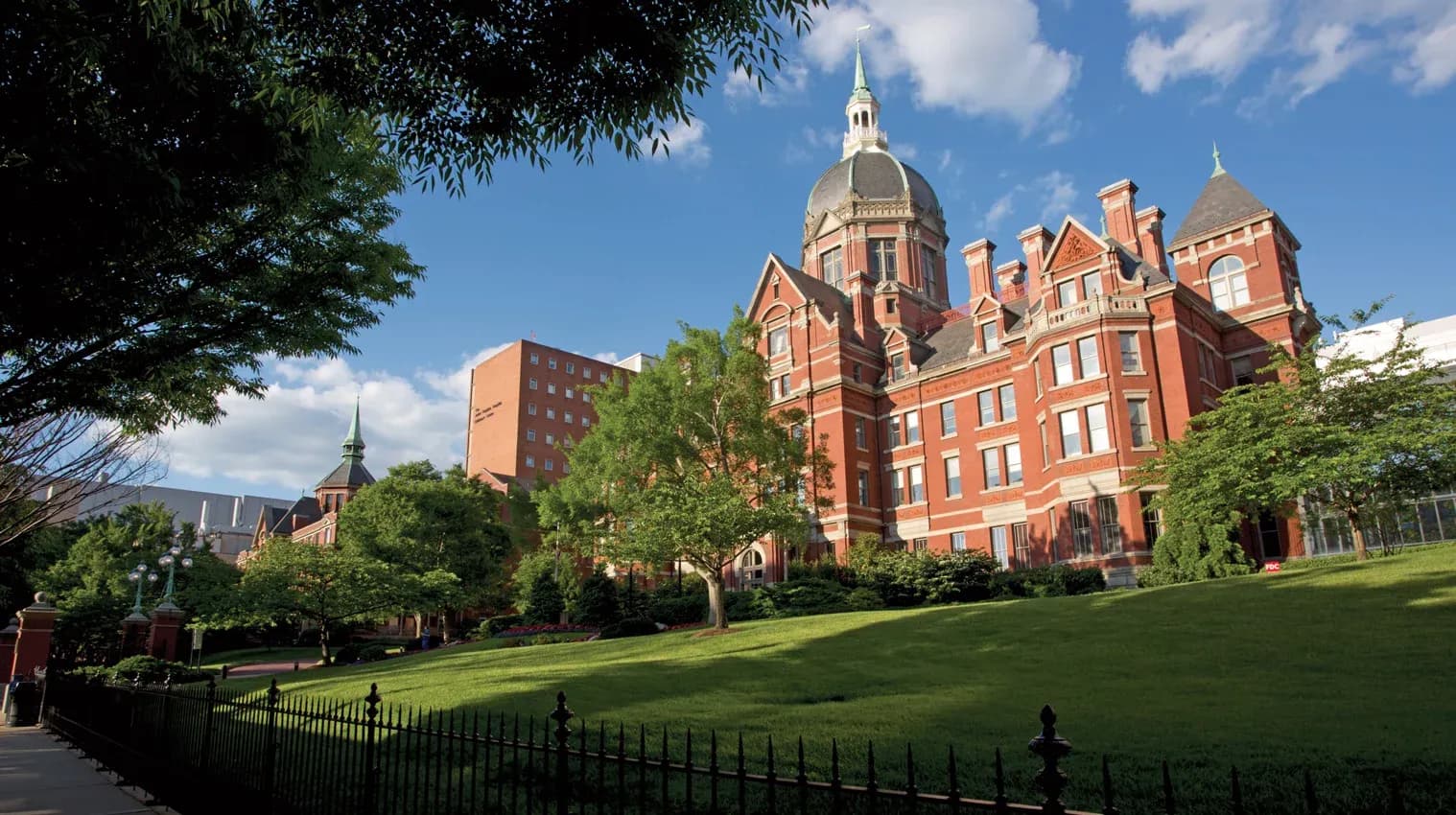
The Mechanical Engineering program provides a rigorous and broad-based foundation in engineering principles, preparing students to design, analyze, and optimize mechanical systems across a wide range of industries. Through core courses in dynamics, thermodynamics, fluid mechanics, and materials science, learners gain a deep understanding of how physical systems behave and interact. The curriculum emphasizes both theoretical knowledge and practical application, allowing students to solve real-world engineering problems through analytical thinking and creative design. Laboratory work, team projects, and simulation-based learning ensure that students develop technical competencies aligned with industry expectations.
Throughout the program, students are encouraged to engage in interdisciplinary learning, participate in hands-on research, and collaborate on design challenges that reflect current global needs. Opportunities to explore robotics, energy systems, biomechanics, and aerospace applications allow learners to tailor their studies to their specific interests. With guidance from faculty mentors and access to state-of-the-art facilities, students build the confidence to innovate, lead, and apply engineering solutions that are efficient, sustainable, and forward-thinking. This combination of academic depth and experiential learning prepares graduates to thrive in both advanced study and competitive professional environments.
Year 1 – Foundations in Engineering and Mathematics
Year 2 – Core Mechanics and Systems
Year 3 – Applied Engineering Analysis and Design
Year 4 – Capstone Projects and Professional Development
Graduates of the Mechanical Engineering program are highly sought after for their ability to integrate scientific knowledge with practical design skills across multiple technological sectors. Alumni pursue careers in aerospace engineering, automotive design, robotics, and energy systems, working on the development of advanced machinery, thermal systems, automation tools, and innovative product solutions. Many also contribute to the biomedical, defense, and manufacturing industries, applying their expertise to improve performance, safety, and sustainability. Others enter consulting roles or join R&D teams, using computational tools and data analysis to enhance mechanical operations or innovate within emerging technologies. The program’s strong foundation in both hardware and systems thinking also supports entrepreneurial ventures and startup innovation. Additionally, graduates are well prepared for advanced study in engineering, applied physics, or business, where their problem-solving ability, quantitative reasoning, and design mindset provide a solid platform for long-term leadership and impact.
This program is designed for students who want to combine technical depth with real-world problem-solving in a collaborative and research-oriented environment. At Johns Hopkins University, learners gain access to world-class laboratories, interdisciplinary design centers, and faculty who are actively engaged in cutting-edge research across engineering domains. The curriculum integrates classroom instruction with practical experience in prototyping, testing, and innovation, fostering the development of both creativity and precision. Students are encouraged to participate in internships, research assistantships, and global engineering initiatives, all of which enhance their professional readiness and broaden their perspective. The program’s emphasis on ethics, sustainability, and lifelong learning ensures that graduates are not only technically competent, but also socially conscious engineers who are ready to lead in an evolving technological landscape. With a strong academic core and a commitment to hands-on learning, this degree opens the door to meaningful and impactful engineering careers worldwide.
For further information, please contact the admissions office at:
Phone: +1 410 516 8000
Email: admissions@jhu.edu
Address: Johns Hopkins University, 3400 N. Charles Street, Baltimore, MD 21218, USA
Master of Science · Full-time · On Campus
Johns Hopkins University
Baltimore, United States
Master of Arts · Full-time · On Campus
Johns Hopkins University
Baltimore, United States
Master of Arts · Full-time · On Campus
Johns Hopkins University
Baltimore, United States
Master of Science · Full-time · On Campus
Johns Hopkins University
Baltimore, United States
