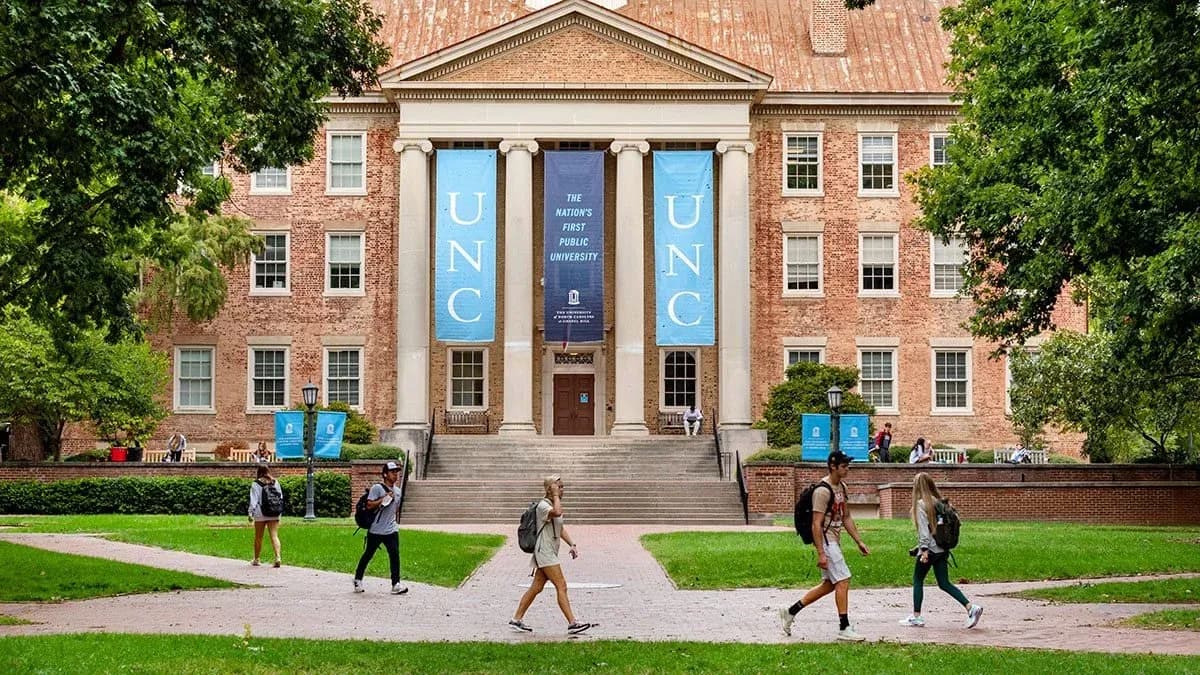

Mechanical Engineering, Energy Engineering
The Bachelor of Science in Mechanical Engineering with a focus on Energy Engineering at the University of North Carolina is a four year program designed for students interested in the design, analysis, and optimization of energy systems and sustainable technologies. The curriculum emphasizes thermodynamics, energy systems, renewable energy, mechanical design, and problem solving, providing students with the skills needed to develop innovative solutions for energy production, efficiency, and sustainability. Students study heat transfer, fluid mechanics, materials science, and energy conversion while developing technical, analytical, and project management skills essential for careers in engineering, energy consulting, and technology development. This program prepares graduates to address global energy challenges using advanced engineering principles and sustainable practices.
Throughout the program, students engage in laboratory work, applied projects, and research collaborations that connect theory with real-world energy applications. Coursework emphasizes energy modeling, system optimization, renewable technologies, and sustainability assessment, equipping graduates to design and implement energy systems, improve efficiency, and evaluate environmental impacts. By integrating mechanical engineering fundamentals with energy-focused technologies, the program cultivates professionals capable of contributing to energy innovation, sustainability initiatives, and industrial solutions.
Key Facts
Key Facts
- Program Title: Mechanical Engineering, Energy Engineering
- Degree Type: Bachelor of Science
- Duration: 4 years
- Mode of Study: Full-time, On Campus
- Application Deadline: 01 February 2026
- Location: University of North Carolina at Chapel Hill, United States
- Field of Study: Mechanical Engineering
- Language of Instruction: English
Program Structure
Year 1 - Foundations in Mechanical and Energy Engineering
• Introduction to Mechanical Engineering
• Calculus and Linear Algebra
• Academic Writing and Research Methods
• Fundamentals of Energy Systems
Year 2 - Developing Technical and Analytical Skills
• Thermodynamics and Fluid Mechanics
• Materials Science and Mechanics of Materials
• Electrical Systems and Control
• Energy Conversion Principles
Year 3 - Advanced Study and Applied Practice
• Renewable Energy Systems
• Energy Modeling and Simulation
• Mechanical Design and Optimization
• Internship or Applied Energy Project
Year 4 - Capstone and Professional Integration
• Senior Seminar in Energy Engineering
• Independent Research Project or Thesis
• Advanced Topics in Sustainable Energy
• Capstone Portfolio and Presentation
Career Opportunities
Graduates of this program are prepared for careers in mechanical engineering, energy systems design, renewable energy, sustainability consulting, and industrial technology. Potential roles include energy engineers, mechanical design engineers, renewable energy specialists, project managers, and sustainability consultants in energy companies, manufacturing, government agencies, and research institutions. The program also provides a foundation for graduate study in mechanical engineering, energy systems, or sustainable technology. Graduates gain technical, analytical, and problem-solving skills, enabling them to design, optimize, and implement energy systems for diverse industrial and environmental applications.
Why Choose This Program
This program is ideal for students seeking a curriculum that combines mechanical engineering principles, energy systems, and sustainable technology. Learners benefit from hands-on projects, laboratory work, and research opportunities that strengthen technical, analytical, and professional skills. The program emphasizes innovation, sustainability, and applied engineering practice, preparing graduates for careers in energy, mechanical systems, and technology development. By integrating theoretical study with practical experience, students acquire the expertise, confidence, and professional readiness necessary to pursue impactful careers or advanced study in energy and mechanical engineering.
Contact Information
Phone: +1 (919) 966-3621
Email: unchelp@admissions.unc.edu
Address: Jackson Hall, 174 Country Club Road, Chapel Hill, NC 27514, USA
