Master of Science · Full-time · On Campus

Imperial College London
London, United Kingdom
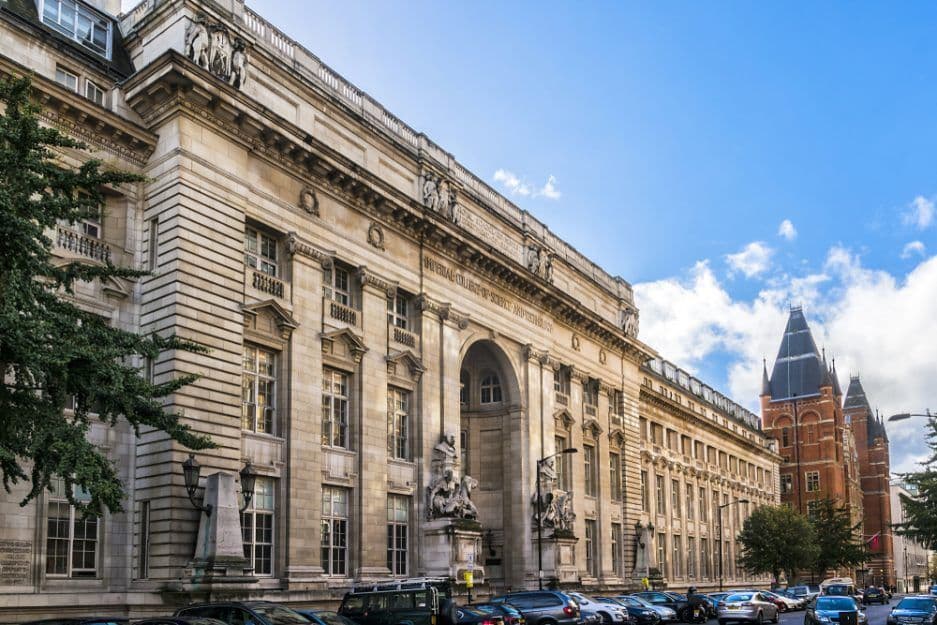
Designed for students who want to pair a rigorous mechanical engineering foundation with a clear specialism, this four-year integrated Master of Engineering (MEng) at Imperial College London treats mechanical and nuclear engineering as a single, connected discipline. It suits school-leavers aiming straight for a master's-level qualification and a career in the energy sector, taught full-time and on campus in London with English as the language of instruction. Applications for the programme close on 14 January 2026.
The structure builds year on year: early study in mechanics, thermodynamics and materials gives way to reactor physics, heat transfer, reactor design and computational fluid dynamics, before a final year covering advanced nuclear power systems, fusion energy and an independent research project. Graduates leave equipped for roles such as nuclear engineer, mechanical engineer, energy systems engineer or materials scientist across nuclear power, renewable energy, aerospace and automotive industries.
The Master of Engineering (Integrated Undergraduate Degree) in Mechanical Engineering with Nuclear Engineering at Imperial College London is a four-year, full-time program that combines mechanical engineering principles with specialized knowledge in nuclear engineering. Students will study core mechanical engineering topics such as thermodynamics, fluid dynamics, and materials science, while also exploring nuclear systems, radiation shielding, and reactor design. The program emphasizes the application of mechanical engineering skills to the design and operation of nuclear energy systems.
Graduates will be prepared for careers in the nuclear industry, energy production, and materials research, where they can work on the development and maintenance of nuclear power plants, reactor systems, and radiation safety technologies. The program’s unique combination of mechanical engineering and nuclear science ensures that students are equipped to contribute to the advancement of nuclear energy and safety systems.
Year 1 – Foundations in Mechanical and Nuclear Engineering
Year 2 – Advanced Mechanical and Nuclear Engineering Concepts
Year 3 – Specialized Nuclear and Mechanical Engineering
Year 4 – Advanced Topics and Final Research Project
Graduates of the Mechanical Engineering with Nuclear Engineering program are well-prepared for careers in nuclear energy, mechanical design, and advanced materials engineering. Career paths include roles such as Nuclear Engineer, Mechanical Engineer, Materials Scientist, Nuclear Reactor Operator, Energy Systems Engineer, or Research Scientist. Industries such as nuclear power generation, renewable energy, aerospace, automotive, and material science offer a wide range of opportunities. Graduates can also work in nuclear research or in safety and regulatory roles within nuclear energy organizations.
This program combines the principles of mechanical engineering with specialized nuclear engineering knowledge, preparing students for careers in the growing field of nuclear energy. Students will gain a deep understanding of nuclear reactor design, nuclear materials, and mechanical system design, while also gaining practical experience in nuclear safety and sustainable energy systems. The final year research project provides students with an opportunity to specialize in cutting-edge areas such as nuclear fusion, advanced reactor designs, or materials science for nuclear applications. The program’s comprehensive approach ensures graduates are well-equipped to address the challenges and opportunities in nuclear energy, energy systems, and advanced materials engineering.
For further information, please contact the admissions office at:
Phone: +44 (0)20 7589 5111
Email: admissions@imperial.ac.uk
Address: Imperial College London, South Kensington Campus, London SW7 2AZ, United Kingdom
Master of Science · Full-time · On Campus
Imperial College London
London, United Kingdom
Master of Engineering (Integrated Undergraduate Degree) · Full-time · On Campus
Imperial College London
London, United Kingdom
Bachelor of Science · Full-time · On Campus
Imperial College London
London, United Kingdom
Bachelor of Science · Full-time · On Campus
Imperial College London
London, United Kingdom
