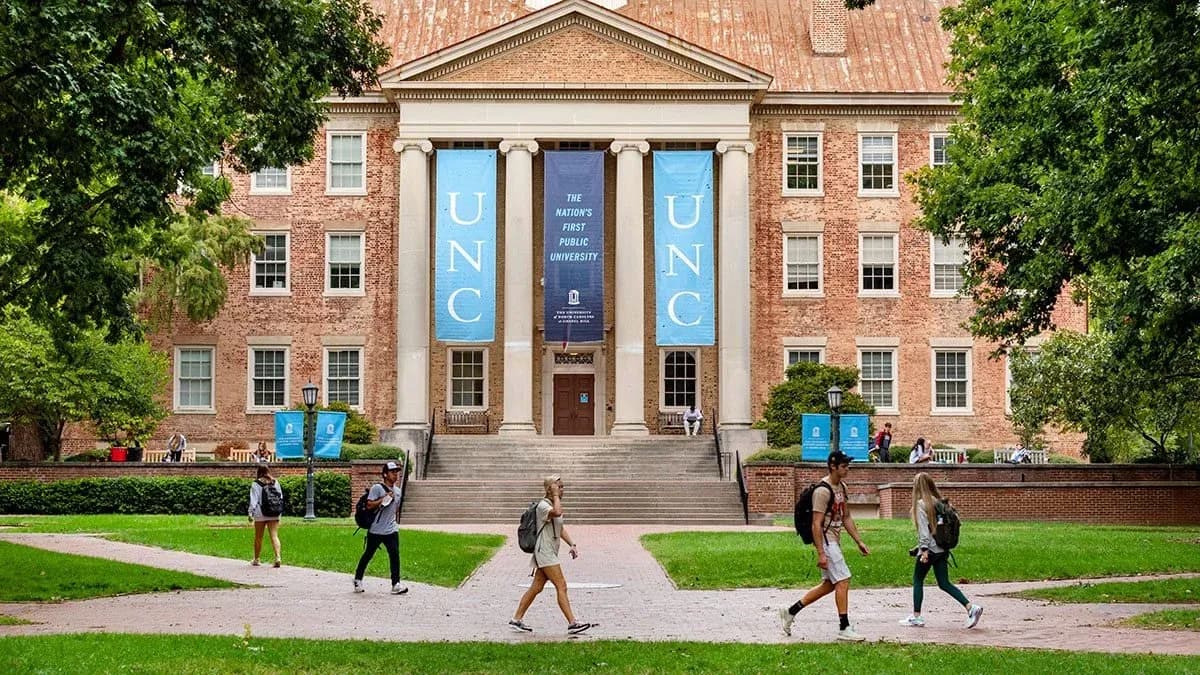

Meteorology
The Bachelor of Science in Meteorology at the University of North Carolina offers a comprehensive four year program designed for students passionate about understanding atmospheric processes and climate systems. The curriculum combines rigorous scientific training with practical forecasting experience, enabling learners to develop expertise in weather analysis, climate modeling, data interpretation, and atmospheric physics. Students engage with both theoretical and applied aspects of meteorology, exploring topics such as synoptic meteorology, severe weather phenomena, and climate change, while gaining hands on experience with modern meteorological tools and simulation software. This program prepares graduates to analyze complex environmental data and make informed decisions in research, public service, or private industry contexts.
As students advance through the program, they participate in laboratory work, field studies, and computational modeling projects that deepen their understanding of atmospheric dynamics and environmental interactions. Coursework emphasizes research skills, forecasting techniques, data analysis, and critical thinking, allowing learners to develop both technical proficiency and practical problem solving abilities. By integrating scientific theory with experiential learning, the program equips students with the knowledge and tools needed to pursue careers in weather forecasting, climate research, environmental consulting, and related fields, as well as to continue their education in graduate programs focused on atmospheric sciences or climate studies.
Key Facts
Key Facts
- Program Title: Meteorology
- Degree Type: Bachelor of Science
- Duration: 4 years
- Mode of Study: Full-time, On Campus
- Application Deadline: 01 February 2026
- Location: University of North Carolina at Chapel Hill, United States
- Field of Study: Climate Studies & Meteorology
- Language of Instruction: English
Program Structure
Year 1 - Foundations in Atmospheric Science
• Introduction to Meteorology
• General Physics I & Lab
• Calculus I
• Earth and Environmental Science
Year 2 - Developing Analytical and Meteorological Skills
• Atmospheric Dynamics
• Thermodynamics and Weather Processes
• Statistical Methods for Climate Studies
• Remote Sensing and Meteorological Data
Year 3 - Advanced Meteorology and Climate Applications
• Synoptic and Mesoscale Meteorology
• Severe Weather Analysis and Forecasting
• Climate Modeling and Simulation
• Field Studies in Meteorology
Year 4 - Professional Integration and Capstone
• Capstone Research Project in Meteorology
• Applied Climate and Weather Analysis
• Data Visualization and Communication
• Seminar in Emerging Meteorological Technologies
Career Opportunities
Graduates of this program are prepared for careers that require strong analytical, computational, and observational skills in atmospheric sciences. They may work as meteorologists, climate analysts, forecasting specialists, or environmental consultants in government agencies, private weather services, research institutions, or environmental organizations. Additional opportunities exist in aviation, renewable energy planning, and emergency management, where accurate weather and climate data are critical. The program also provides a strong foundation for students interested in graduate studies in meteorology, climate science, or environmental research, allowing them to contribute to scientific knowledge and applied solutions in climate and atmospheric studies.
Why Choose This Program
This program is ideal for students seeking a curriculum that combines scientific rigor with practical application in weather and climate analysis. Learners benefit from hands on laboratory work, field experiences, computational modeling, and faculty mentorship, all of which enhance both technical skill and critical thinking. The curriculum emphasizes observation, data driven analysis, and problem solving, providing students with the tools to excel in diverse meteorological and climate focused careers. With access to advanced research facilities, collaborative projects, and interdisciplinary learning opportunities, graduates are well prepared to contribute meaningfully to scientific understanding, policy development, and applied solutions in atmospheric and environmental sciences.
Contact Information
Phone: +1 (919) 966-3621
Email: unchelp@admissions.unc.edu
Address: Jackson Hall, 174 Country Club Road, Chapel Hill, NC 27514, USA
