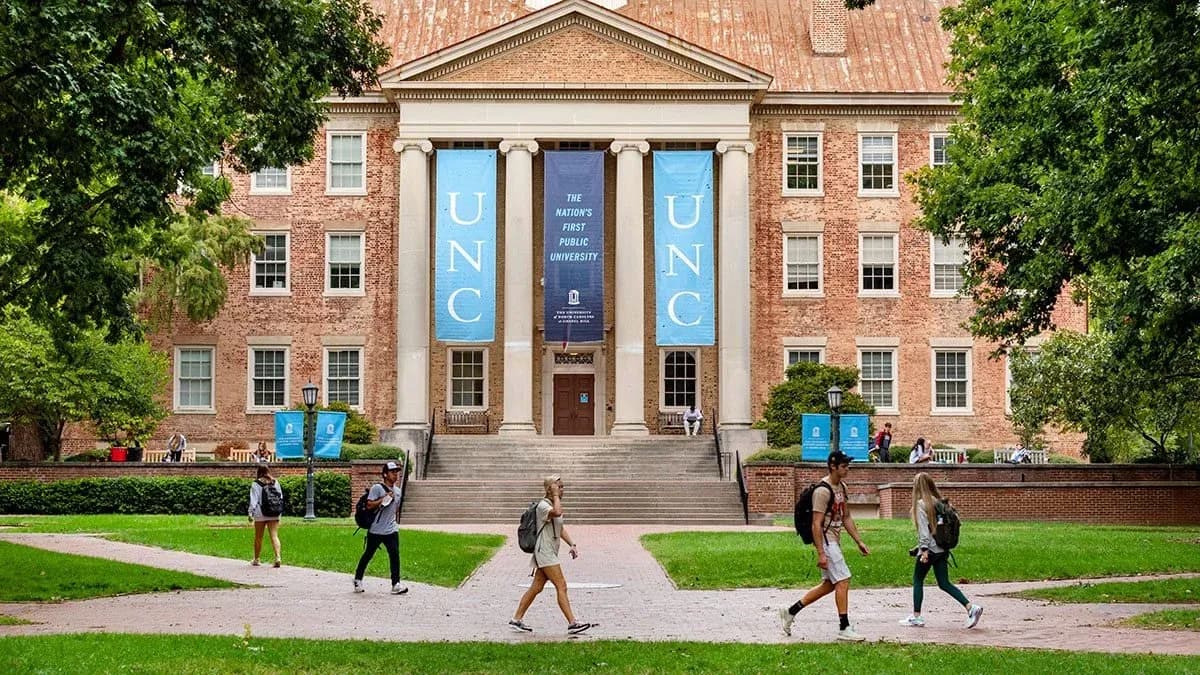

Music, Instrumental or General Music Education
The Music, Instrumental or General Music Education Bachelor of Music program at the University of North Carolina is designed for students who are passionate about music and committed to sharing that passion through teaching. This program prepares future music educators with strong foundations in music theory, performance, pedagogy, and classroom leadership. Students study instrumental techniques, ensemble direction, child development, and educational psychology, gaining the skills needed to teach music at the elementary and secondary school levels. The curriculum blends academic study, practical teaching experience, and musical development in a comprehensive and supportive environment.
Students work closely with faculty in both the music and education departments, gaining hands-on experience through observations, fieldwork, ensemble participation, and student teaching. Emphasis is placed on conducting, lesson planning, classroom management, and adapting instruction for diverse learners. Whether students pursue instrumental or general music education tracks, they graduate with the qualifications and confidence needed to meet state licensure requirements and lead dynamic music programs. The program also fosters musicianship and creativity, ensuring that students grow not only as educators but also as expressive performers and cultural contributors.
Key Facts
Key Facts
- Program Title: Music, Instrumental or General Music Education
- Degree Type: Bachelor of Music
- Duration: 4 years
- Mode of Study: Full-time, On Campus
- Application Deadline: 01 February 2026
- Location: University of North Carolina at Chapel Hill, United States
- Field of Study: Education
- Language of Instruction: English
Program Structure
Year 1 – Musicianship and Educational Foundations
• Music Theory I and Aural Skills
• Class Piano or Voice
• Introduction to Music Education
• College Writing and Communication
• General Education in Social Sciences
Year 2 – Teaching Preparation and Ensemble Experience
• Music Theory II and III
• Educational Psychology
• Instrumental Techniques (Brass, Woodwinds, Strings)
• Conducting I
• Participation in Major Ensembles
Year 3 – Curriculum and Pedagogical Focus
• General Music Methods (K–8)
• Instrumental Music Methods (Middle/High School)
• Classroom Management for Music Educators
• Practicum in Public School Settings
• Elective in Choral Techniques or World Music
Year 4 – Student Teaching and Professional Development
• Full-Time Student Teaching Residency
• Seminar in Music Teaching and Learning
• Assessment and Evaluation in Music
• Philosophy of Music Education
• State Licensure Preparation
Career Opportunities
Graduates of the Music Education B.M. program are well-prepared to lead and inspire music learners in a variety of educational settings. Most alumni pursue careers as elementary music teachers, middle or high school band directors, general music instructors, or instrumental ensemble leaders in public or private schools. Some also find roles in after-school arts programs, youth music organizations, or community music centers. With strong foundations in both education and musicianship, many graduates go on to advanced study in music education, conducting, or performance, while others earn certifications in special education or curriculum development. Alumni may also contribute to education policy, music curriculum design, or teacher mentoring initiatives. As arts programs continue to demonstrate their value in cognitive, emotional, and social development, qualified music educators are increasingly in demand. This degree provides the tools to build successful and inclusive classrooms where music becomes a vehicle for expression, connection, and lifelong learning—making it ideal for those drawn to creative leadership, educational impact, and musical growth.
Why Choose This Program
This program is ideal for students who wish to combine their love for music with a calling to educate and lead future generations. It offers a comprehensive blend of artistic training, teaching practice, and educational theory, preparing graduates to confidently enter classrooms and rehearsal spaces. The University of North Carolina provides exceptional resources, including expert faculty, modern rehearsal facilities, and rich partnerships with local schools for early field experience. Students benefit from a strong performance culture as well as in-depth preparation for licensure and teaching. Whether your goal is to teach elementary music, conduct a high school band, or contribute to curriculum innovation, this degree empowers you with the knowledge and practice to succeed. The program nurtures both musicianship and pedagogy, making it a perfect choice for those seeking to lead with passion, professionalism, and musical excellence in diverse educational settings.
Contact Information
Phone: +1 (919) 966-3621
Email: unchelp@admissions.unc.edu
Address: Jackson Hall, 174 Country Club Road, Chapel Hill, NC 27514, USA
