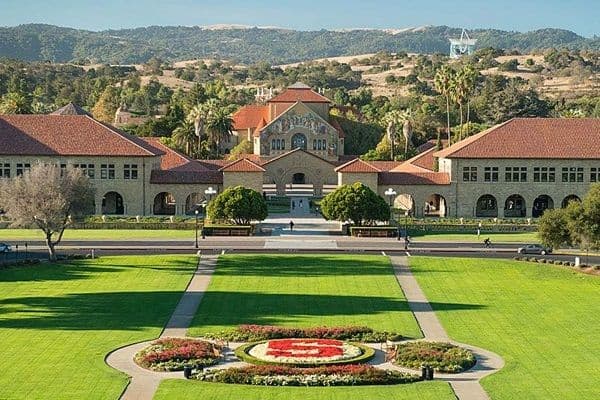

Philosophy and Religious Studies
The Philosophy and Religious Studies program at University of Stanford offers students an interdisciplinary approach to understanding human thought, ethical systems, and religious traditions across history. Students engage with philosophical reasoning, textual interpretation, and cultural analysis to explore questions about morality, existence, and spiritual practice. The curriculum emphasizes the development of critical thinking, ethical reasoning, analytical skills, and textual interpretation, providing a framework for evaluating complex ideas and engaging with diverse perspectives.
Over four years of full-time study, students study foundational topics in philosophy, comparative religion, and theology, progressing to specialized courses in ethics, metaphysics, and the philosophy of religion. Seminars, research projects, and independent study opportunities allow learners to apply theoretical knowledge to real-world questions, enhancing intellectual rigor and cultural literacy. As they advance, students strengthen their abilities in argument analysis, philosophical inquiry, research methodology, and cultural interpretation, preparing them for professional careers, public service, or advanced study in philosophy, theology, or related disciplines.
Key Facts
Key Facts
- Program Title: Philosophy and Religious Studies
- Degree Type: Bachelor of Arts
- Duration: 4 years
- Mode of Study: Full-time, On Campus
- Application Deadline: 05 January 2026
- Location: Stanford University, United States
- Field of Study: Philosophy
- Language of Instruction: English
Program Structure
Year 1 – Foundations of Philosophy and Religion
· Introduction to Philosophy
· Introduction to Religious Studies
· Academic Writing and Research Skills
· Ethics and Moral Reasoning
Year 2 – Developing Critical Perspectives
· History of Philosophy
· Comparative Religion
· Logic and Analytical Reasoning
· Research Methods in Humanities
Year 3 – Advanced Study & Specialization
· Philosophy of Religion
· Ethics and Social Philosophy
· Field Research or Applied Projects
· Electives in Philosophy, Religion, or Cultural Studies
Year 4 – Honors Thesis & Advanced Scholarship
· Honors Thesis / Independent Research
· Advanced Seminar in Philosophy and Religion
· Analytical Tools for Ethical and Religious Study
· Academic Portfolio and Presentation Development
Career Opportunities
Graduates of this program are prepared for careers that require strong analytical, ethical, and research skills, with an ability to interpret and engage with diverse ideas and belief systems. Many find opportunities in education and academia, nonprofit organizations, public policy, and religious institutions, applying their skills to teaching, program development, community outreach, and advisory roles. The interdisciplinary nature of the program equips students for careers in ethics consultation, cultural research, and leadership positions that require nuanced understanding of philosophical and religious issues. Additionally, graduates are well-prepared for advanced studies in philosophy, theology, law, public administration, or other disciplines where critical thinking, ethical reasoning, and analytical problem-solving are essential. The program ensures that students develop both intellectual depth and practical skills necessary for contributing meaningfully to societal and academic contexts.
Why Choose This Program
This program is ideal for students who wish to explore human thought, morality, and religious traditions through a rigorous academic framework that combines theory with applied inquiry. The curriculum emphasizes critical analysis, research, and philosophical reasoning, enabling students to engage deeply with ethical questions and cultural diversity. Learners cultivate strong interpretive skills, independent thinking, and scholarly discipline, preparing them for professional or academic advancement. This preparation is strengthened through comprehensive philosophical and religious studies training, equipping graduates to contribute effectively in intellectual, cultural, and professional environments.
Contact Information
For further information, please contact the admissions office at:
Phone: +1 650 000 0000
Email: admissions@standord.edu
Address: University of Standord, 450 Serra Mall, Stanford, CA 94305, United States
