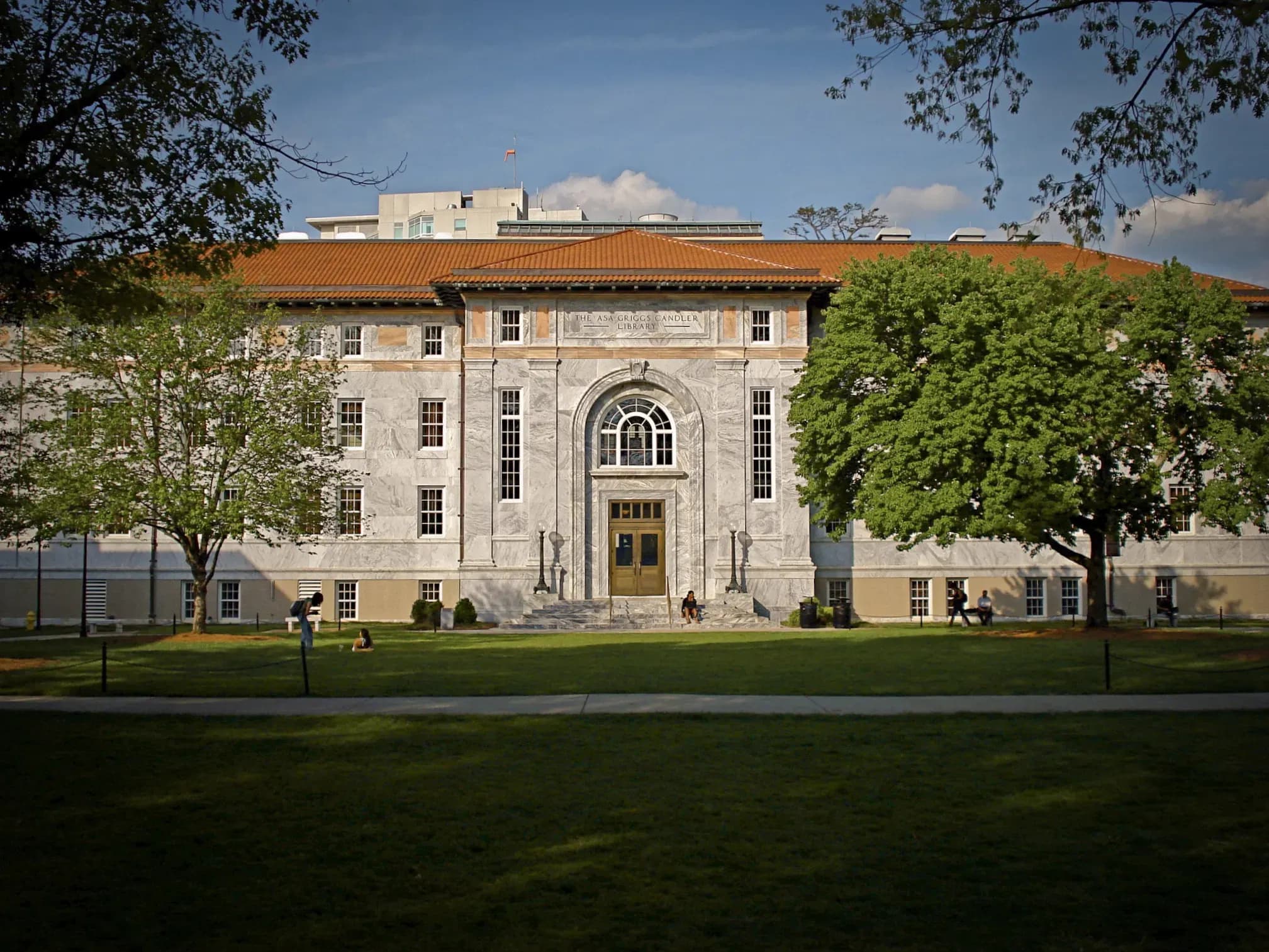

Physics and Astronomy
The Bachelor of Arts in Physics and Astronomy provides students with a comprehensive understanding of the fundamental laws governing the universe, combining the principles of physics with the study of celestial phenomena. Over four years, students explore topics such as mechanics, electromagnetism, quantum mechanics, thermodynamics, astrophysics, and cosmology, developing analytical, computational, and experimental skills. The program emphasizes both theoretical reasoning and practical laboratory experience, allowing students to understand and model complex physical systems from the subatomic to the cosmological scale.
Students gain hands-on experience through observational astronomy, laboratory experiments, computational modeling, and independent research projects. The curriculum integrates mathematics, computer science, and physics, fostering problem-solving, critical thinking, and data analysis skills. By examining the universe’s structure, dynamics, and evolution, students develop a strong foundation for understanding natural phenomena and addressing scientific challenges. The interdisciplinary approach encourages exploration of advanced topics such as planetary science, stellar evolution, galactic dynamics, and space instrumentation.
Key Facts
Key Facts
- Program Title: Physics and Astronomy
- Degree Type: Bachelor of Arts
- Duration: 4 years
- Mode of Study: Full-time, On Campus
- Application Deadline: 01 January 2026
- Location: Emory University, United States
- Field of Study: Physics
- Language of Instruction: English
Program Structure
Year 1 – Foundations in Physics and Astronomy
• General Physics I & II with Lab
• Calculus I & II
• Introduction to Astronomy
• College Writing and Scientific Communication
Year 2 – Core Physics Concepts
• Classical Mechanics
• Electromagnetism
• Multivariable Calculus
• Linear Algebra
Year 3 – Advanced Physics and Observational Techniques
• Thermodynamics and Statistical Mechanics
• Quantum Mechanics
• Computational Physics
• Observational Astronomy and Lab Methods
Year 4 – Integration and Capstone
• Astrophysics or Stellar Dynamics
• Senior Research Project or Thesis
• Elective: Planetary Science / Cosmology
• Internship or Observatory-Based Study
Career Opportunities
Graduates of this program are well-prepared for careers in research, space science, engineering, data analysis, technology, education, and scientific communication. They may also pursue advanced study in physics, astronomy, astrophysics, planetary science, or engineering, opening opportunities in academic and professional research environments. Employers value graduates’ quantitative reasoning, analytical skills, and problem-solving abilities, as well as their experience with computational modeling and observational methods. Graduates are prepared to contribute to research institutions, government agencies, technology firms, observatories, and educational organizations, where scientific insight and technical expertise are essential.
Why Choose This Program
This program is ideal for students passionate about exploring the universe and understanding the fundamental principles that govern it. Emory University provides a research-oriented, collaborative environment with access to modern laboratories, telescopes, and computational resources. The curriculum balances rigorous theoretical study with practical observation and experimentation, encouraging students to apply knowledge in real-world contexts. Students graduate with critical thinking, problem-solving, and analytical skills, as well as a strong foundation for advanced studies or careers in science, technology, and education. This program prepares graduates to engage thoughtfully and innovatively with the mysteries of the cosmos.
Contact Information
For further information, please contact the admissions office at:
Phone: +1 404 727 6123
Email: contentedit@emory.edu
Address: University of Emory, 201 Dowman Drive, Atlanta, GA 30322, United States
