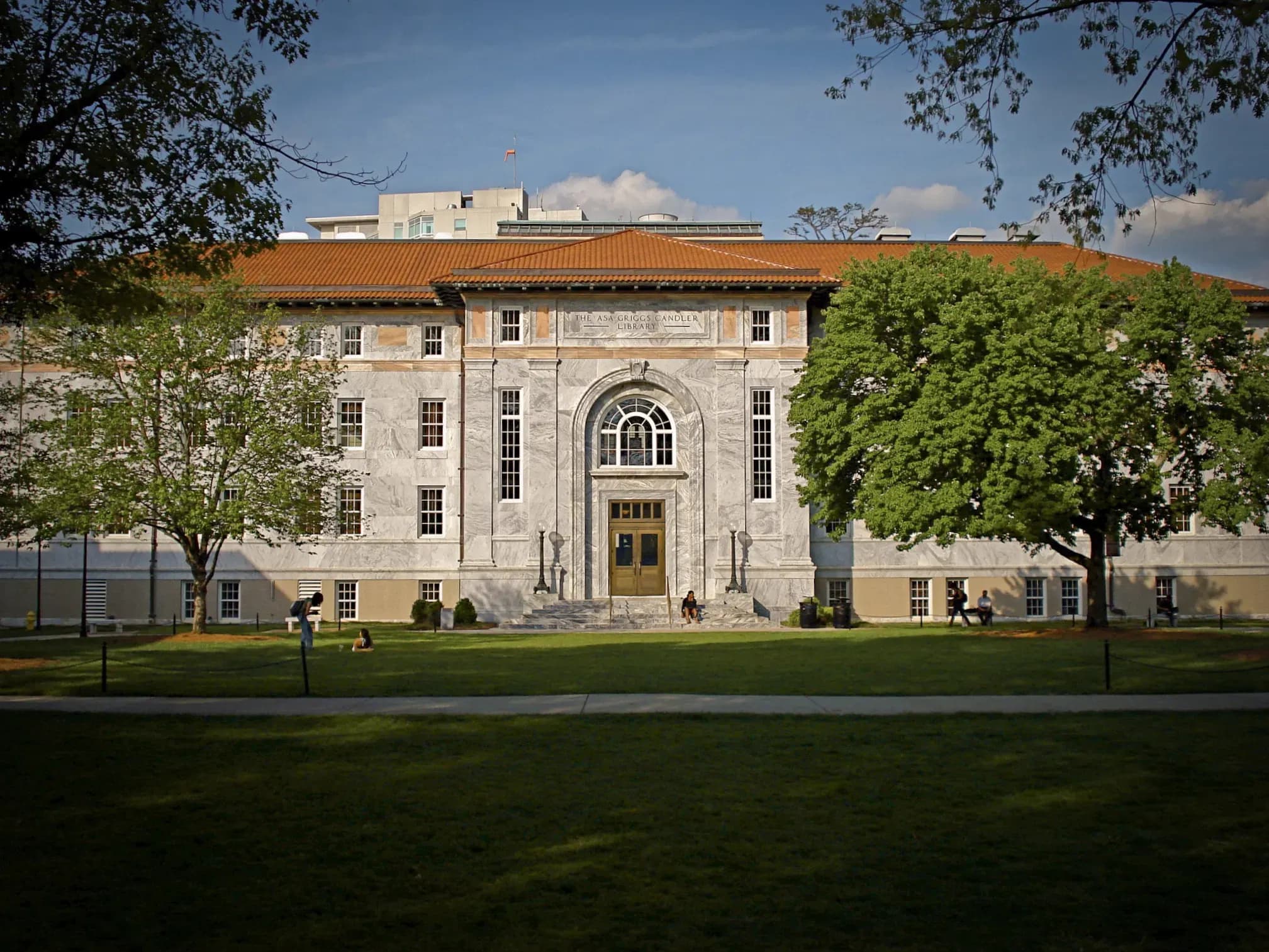

The Bachelor of Science in Physics offers students a comprehensive and rigorous foundation in the fundamental principles governing the natural world. Over four years, students explore classical and modern physics, including mechanics, electromagnetism, thermodynamics, quantum mechanics, and relativity, while developing advanced analytical, mathematical, and problem-solving skills. The program emphasizes both theoretical understanding and experimental practice, preparing students to analyze complex physical systems, interpret data, and apply quantitative reasoning to scientific challenges. Students are encouraged to engage in interdisciplinary approaches, connecting physics with engineering, computational science, and related disciplines.
Throughout the program, students gain hands-on experience in state-of-the-art laboratories, participating in experiments that illustrate fundamental principles and explore cutting-edge phenomena. The curriculum integrates coursework in mathematics, computational modeling, and scientific communication, ensuring that students are well-equipped to tackle problems across scientific and technological fields. By combining rigorous analytical training with practical experimentation, the program cultivates critical thinking, innovation, and intellectual adaptability, preparing graduates for a wide range of academic and professional paths.
Key Facts
Key Facts
- Program Title: Physics
- Degree Type: Bachelor of Science
- Duration: 4 years
- Mode of Study: Full-time, On Campus
- Application Deadline: 01 January 2026
- Location: Emory University, United States
- Field of Study: Physics
- Language of Instruction: English
Program Structure
Year 1 – Foundations of Physics
• General Physics I & II with Lab
• Calculus I & II
• Introduction to Computer Programming
• College Writing and Communication
Year 2 – Core Principles
• Classical Mechanics
• Electromagnetism
• Multivariable Calculus
• Linear Algebra
Year 3 – Advanced Concepts
• Quantum Mechanics
• Thermodynamics and Statistical Mechanics
• Mathematical Methods for Physics
• Laboratory Techniques in Physics
Year 4 – Specialization and Capstone
• Advanced Electrodynamics or Quantum Field Theory
• Senior Research Project or Thesis
• Elective: Astrophysics / Condensed Matter / Particle Physics
• Computational Physics or Simulation
Career Opportunities
Graduates of the Physics program are well-prepared for careers in research, engineering, data science, education, technology, and finance, as well as for advanced study in physics, engineering, astronomy, computational science, or applied mathematics. They may work in research laboratories, aerospace and technology firms, national laboratories, teaching, or consulting, applying their analytical and quantitative skills to complex technical and scientific problems. Employers value graduates’ ability to model systems, solve challenging problems, and communicate complex concepts effectively. The program provides a strong foundation for careers that require intellectual rigor, technical proficiency, and adaptability in a rapidly evolving global landscape.
Why Choose This Program
This program is ideal for students passionate about understanding the fundamental laws of nature and applying scientific methods to investigate complex phenomena. Emory University offers a rigorous, research-oriented environment with access to modern laboratories, expert faculty, and collaborative projects. The curriculum emphasizes hands-on experimentation, analytical reasoning, and interdisciplinary connections, preparing students for both professional careers and graduate studies. By combining theoretical mastery, practical skills, and scientific inquiry, graduates are equipped to excel in a variety of scientific, technological, and educational endeavors, making a meaningful impact in both research and applied contexts.
Contact Information
For further information, please contact the admissions office at:
Phone: +1 404 727 6123
Email: contentedit@emory.edu
Address: University of Emory, 201 Dowman Drive, Atlanta, GA 30322, United States
