Master of Engineering · Full-time · Blended

Massachusetts Institute of Technology (MIT)
Cambridge, United States
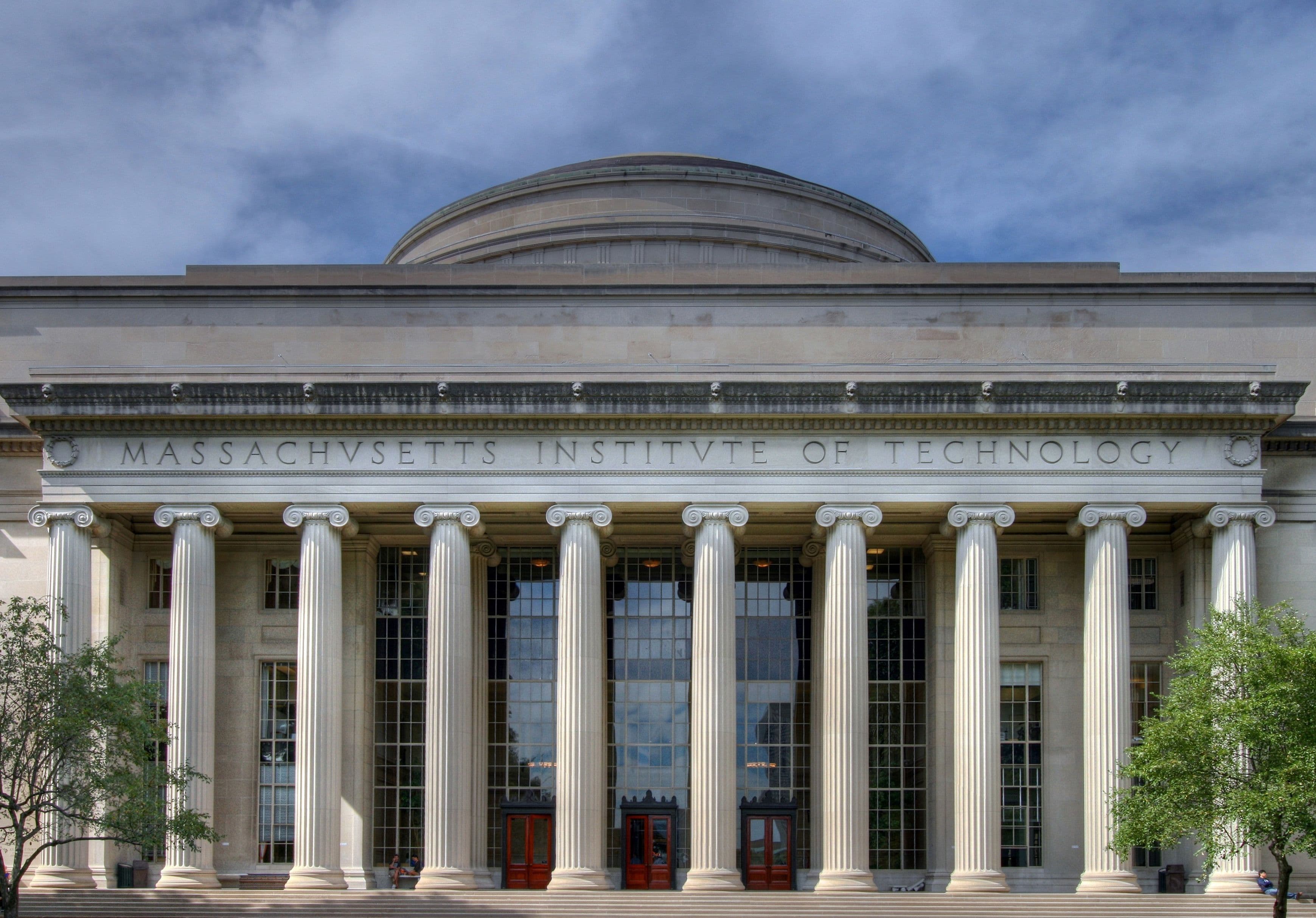
The Physics Bachelor of Science program offers a rigorous exploration of the fundamental principles governing the natural world, from classical mechanics to quantum phenomena. Students develop a strong foundation in mathematical modeling, experimental methods, and theoretical reasoning, learning to analyze complex physical systems across scales. The curriculum emphasizes both conceptual understanding and practical application, enabling learners to connect abstract theories with real-world phenomena. By combining analytical thinking with hands-on laboratory experiences, the program prepares students to tackle scientific challenges and develop innovative solutions in physics and related disciplines.
Throughout the program, students engage in extensive laboratory work, research projects, and advanced coursework that cultivate technical expertise and problem-solving abilities. They gain experience in data analysis, computational modeling, and experimental design, which strengthens their capacity to interpret and predict physical behavior. Access to faculty mentorship, research groups, and state-of-the-art facilities allows students to explore specialized areas such as condensed matter, astrophysics, or particle physics. Graduates leave with a comprehensive skill set that supports careers in research, education, technology, and further academic study in physics or interdisciplinary scientific fields.
Year 1 – Foundations in Physics and Mathematics
• General Physics with Laboratory
• Calculus and Linear Algebra
• Introduction to Programming and Computational Tools
• Fundamental Mechanics and Thermodynamics
Year 2 – Core Physics Principles
• Electricity and Magnetism
• Classical Mechanics
• Waves, Optics, and Modern Physics
• Mathematical Methods for Physicists
Year 3 – Advanced Physics Topics
• Quantum Mechanics
• Statistical Mechanics and Thermodynamics
• Experimental Physics and Laboratory Techniques
• Electives in Astrophysics, Condensed Matter, or Computational Physics
Year 4 – Integration, Specialization & Capstone
• Advanced Topics in Physics
• Research Methods and Computational Modeling
• Capstone Research Project
• Specialized Electives in Physics or Interdisciplinary Applications
Graduates of this program are prepared for careers in research, technology, education, and applied sciences. Many work in scientific research, engineering development, data analysis, or teaching, applying analytical and computational skills to solve complex problems. Others pursue graduate study in physics, engineering, or interdisciplinary fields that demand strong mathematical and experimental foundations. The program equips students with versatile problem-solving abilities, critical thinking, and technical expertise that are highly valued in both academic and industrial environments.
This program is ideal for students who want to explore the laws of nature through both theoretical and experimental approaches. The curriculum emphasizes analytical reasoning, laboratory practice, and computational modeling, enabling learners to investigate fundamental and applied physics problems. Students benefit from research opportunities, faculty guidance, and exposure to advanced instrumentation and techniques. With its focus on both core principles and innovative applications, the program provides a solid foundation for students aiming for careers in science, technology, or advanced research.
For further information, please contact the admissions office at:
Phone: +1 617-253-1000
Email: admissions@mit.edu
Address: University of MIT, 77 Massachusetts Avenue, Cambridge, MA 02139, USA
Master of Engineering · Full-time · Blended
Massachusetts Institute of Technology (MIT)
Cambridge, United States
Master of Science · Full-time · On Campus
Massachusetts Institute of Technology (MIT)
Cambridge, United States
Master of Architecture · Full-time · On Campus
Massachusetts Institute of Technology (MIT)
Cambridge, United States
Bachelor of Science · Full-time · On Campus
Massachusetts Institute of Technology (MIT)
Cambridge, United States
