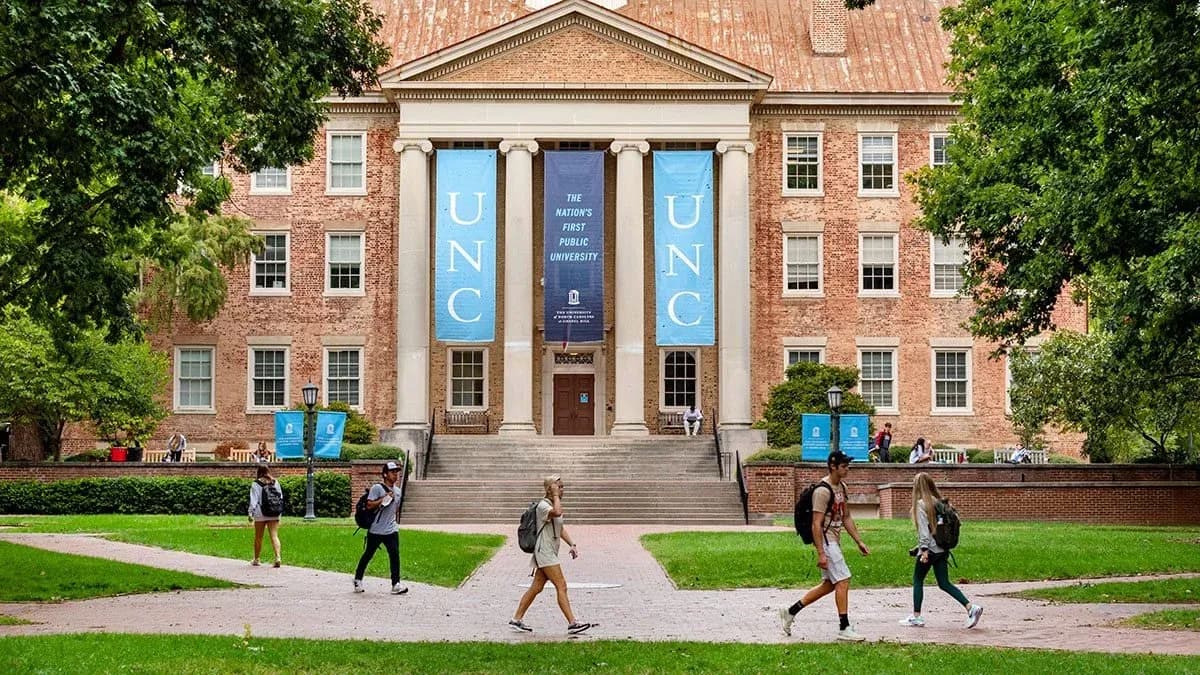

Physics
The Physics Bachelor of Arts program at the University of North Carolina offers a broad-based and flexible education for students interested in the principles of matter, energy, motion, and the universe. Unlike the B.S. path, the B.A. track is ideal for those who seek a strong foundation in physics while also pursuing interests in other disciplines such as education, business, law, or policy. Through a mix of theoretical coursework and laboratory experience, students develop critical thinking, problem-solving, and quantitative analysis skills essential across scientific and interdisciplinary careers.
The curriculum emphasizes the core principles of physics, including classical mechanics, electromagnetism, quantum theory, and thermodynamics, while allowing room for minors or double majors. Students work with faculty who encourage curiosity-driven inquiry and hands-on experimentation. The program nurtures intellectual versatility and prepares graduates to apply scientific knowledge in diverse contexts. Whether advancing to graduate studies or entering professional sectors, students leave with a well-rounded perspective and the ability to bridge science with real-world impact.
Key Facts
Key Facts
- Program Title: Physics
- Degree Type: Bachelor of Arts
- Duration: 4 years
- Mode of Study: Full-time, On Campus
- Application Deadline: 01 February 2026
- Location: University of North Carolina at Chapel Hill, United States
- Field of Study: Physics
- Language of Instruction: English
Program Structure
Year 1 – Foundations of Physics and Mathematics
• General Physics I (Mechanics)
• Calculus I
• Scientific Writing and Communication
• College Composition
• General Education Elective
Year 2 – Core Concepts and Laboratory Skills
• General Physics II (Electricity & Magnetism)
• Calculus II
• Introduction to Modern Physics
• Physics Laboratory I
• Philosophy of Science or History of Science
Year 3 – Advanced Topics and Applications
• Thermodynamics and Statistical Mechanics
• Classical Mechanics
• Electronics or Computational Physics
• Multivariable Calculus or Linear Algebra
• General Elective or Minor Course
Year 4 – Capstone and Integration
• Quantum Mechanics
• Physics Seminar or Capstone Project
• Interdisciplinary Science Elective
• Research Methods in Physics
• Advanced Lab or Elective
Career Opportunities
Graduates of this program gain a unique blend of technical skill and academic flexibility that enables them to thrive in multiple industries. Common career paths include roles in education, technical consulting, data analysis, and science communication, especially for students who combine physics with another area like economics, environmental studies, or political science. Many alumni also pursue graduate education in physics, engineering, medicine, or law. The analytical and mathematical training prepares students to work in finance, software development, public policy, and technology-focused roles. Employers value the logical thinking, numerical precision, and scientific insight that physics majors consistently bring to complex challenges in both scientific and non-scientific settings.
Why Choose This Program
This program is ideal for students who want to understand the natural world through scientific reasoning while also exploring broader academic or career interests. The B.A. in Physics offers a flexible academic path, rigorous scientific training, and interdisciplinary possibilities. The University of North Carolina fosters an environment where students are encouraged to engage with both theory and application, participate in undergraduate research, and learn from faculty with diverse scientific expertise. With the freedom to integrate physics with another field, students are empowered to create academic experiences that align with their goals. Whether your path leads to graduate school, teaching, policy, or a technology sector, this degree equips you to think critically and act confidently in any setting where physics meets the world.
Contact Information
Phone: +1 (919) 966-3621
Email: unchelp@admissions.unc.edu
Address: Jackson Hall, 174 Country Club Road, Chapel Hill, NC 27514, USA
