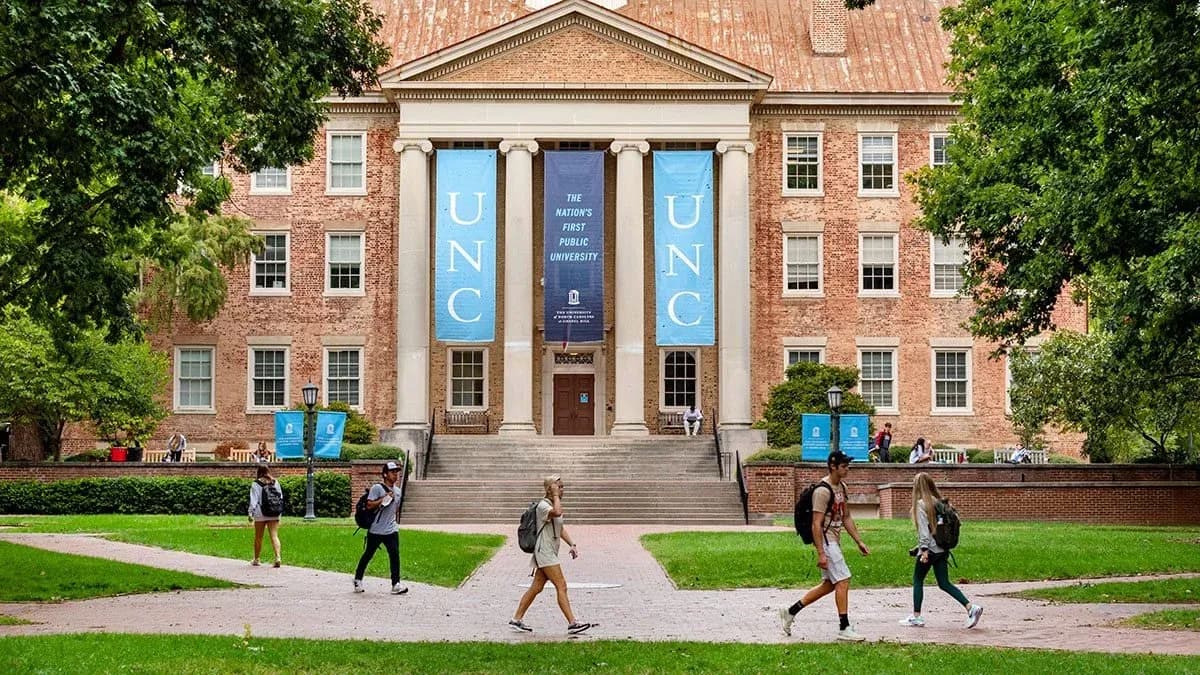

Public Health and Anthropology Dual Degree
The Public Health and Anthropology Dual Degree Master of Public Health program at the University of North Carolina provides an interdisciplinary framework for understanding health from both scientific and cultural perspectives. The curriculum emphasizes epidemiology, health policy, and anthropological methods to examine social determinants of health and population well being. Students strengthen public health research, cultural analysis, policy evaluation and data interpretation skills, equipping them to address complex health challenges in diverse communities and global contexts.
Throughout the program, learners engage in fieldwork, community based research and applied projects that integrate anthropological insight with public health practice. Faculty mentorship supports students in designing, implementing and analyzing interventions that consider both biological and social factors influencing health outcomes. By combining theoretical knowledge with practical experience, students develop research competence, analytical reasoning, community engagement and evidence based problem solving abilities. This preparation enables graduates to contribute effectively to public health initiatives, policy development and health promotion programs that are informed by cultural and societal understanding.
Key Facts
Key Facts
- Program Title: Public Health and Anthropology Dual Degree
- Degree Type: Master of Public Health
- Duration: 2 years
- Mode of Study: Full-time, On Campus
- Application Deadline: 01 August 2026
- Location: University of North Carolina at Chapel Hill, United States
- Field of Study: Anthropology
- Language of Instruction: English
Program Structure
Semester 1 Foundations in Public Health and Anthropology
• Introduction to Public Health Principles
• Epidemiology and Biostatistics
• Medical Anthropology and Cultural Studies
• Health Policy and Systems
Semester 2 Applied Research and Community Health
• Global Health Challenges
• Program Planning and Evaluation
• Qualitative Research Methods in Anthropology
• Fieldwork in Community Health
Semester 3 Advanced Public Health Practice
• Environmental and Occupational Health
• Health Behavior and Promotion
• Applied Anthropological Methods
• Research Project in Public Health
Semester 4 Integration and Capstone
• Public Health Intervention Design
• Health Policy Analysis
• Capstone Project in Public Health and Anthropology
• Professional Development and Portfolio
Career Opportunities
Graduates of this dual degree program are well prepared for careers that require expertise in public health, research skills, and cultural understanding. Many pursue roles in government health agencies, nonprofit organizations, international health programs and community health centers, where they design, evaluate and implement health interventions. Others work in research institutions, policy development organizations or global health initiatives, analyzing population data and social determinants to improve health outcomes. The programs interdisciplinary emphasis equips graduates to address complex health issues, engage diverse communities and develop culturally informed strategies for health promotion and disease prevention.
Why Choose This Program
This program is ideal for students who want to integrate public health knowledge with anthropological insight to understand and address health challenges in a holistic way. Its curriculum encourages learners to examine both biological and social determinants of health while developing research and analytical skills necessary for effective intervention design. Faculty mentorship guides students in applying theory to practice through fieldwork, research projects and community engagement, enhancing their ability to develop culturally sensitive and evidence based solutions. Through applied learning and interdisciplinary study, students develop comprehensive public health expertise, cultural and social insight, research oriented problem solving and applied intervention skills, preparing them to lead and contribute to initiatives that promote health equity and improve population well being in diverse settings.
Contact Information
Phone: +1 (919) 966-3621
Email: unchelp@admissions.unc.edu
Address: Jackson Hall, 174 Country Club Road, Chapel Hill, NC 27514, USA
